
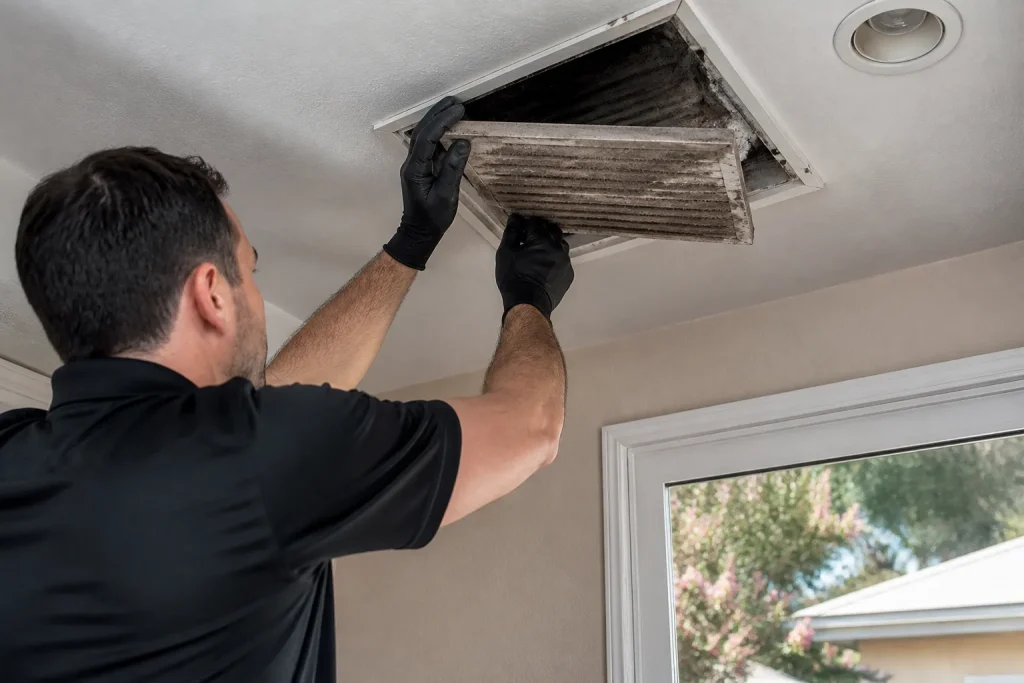
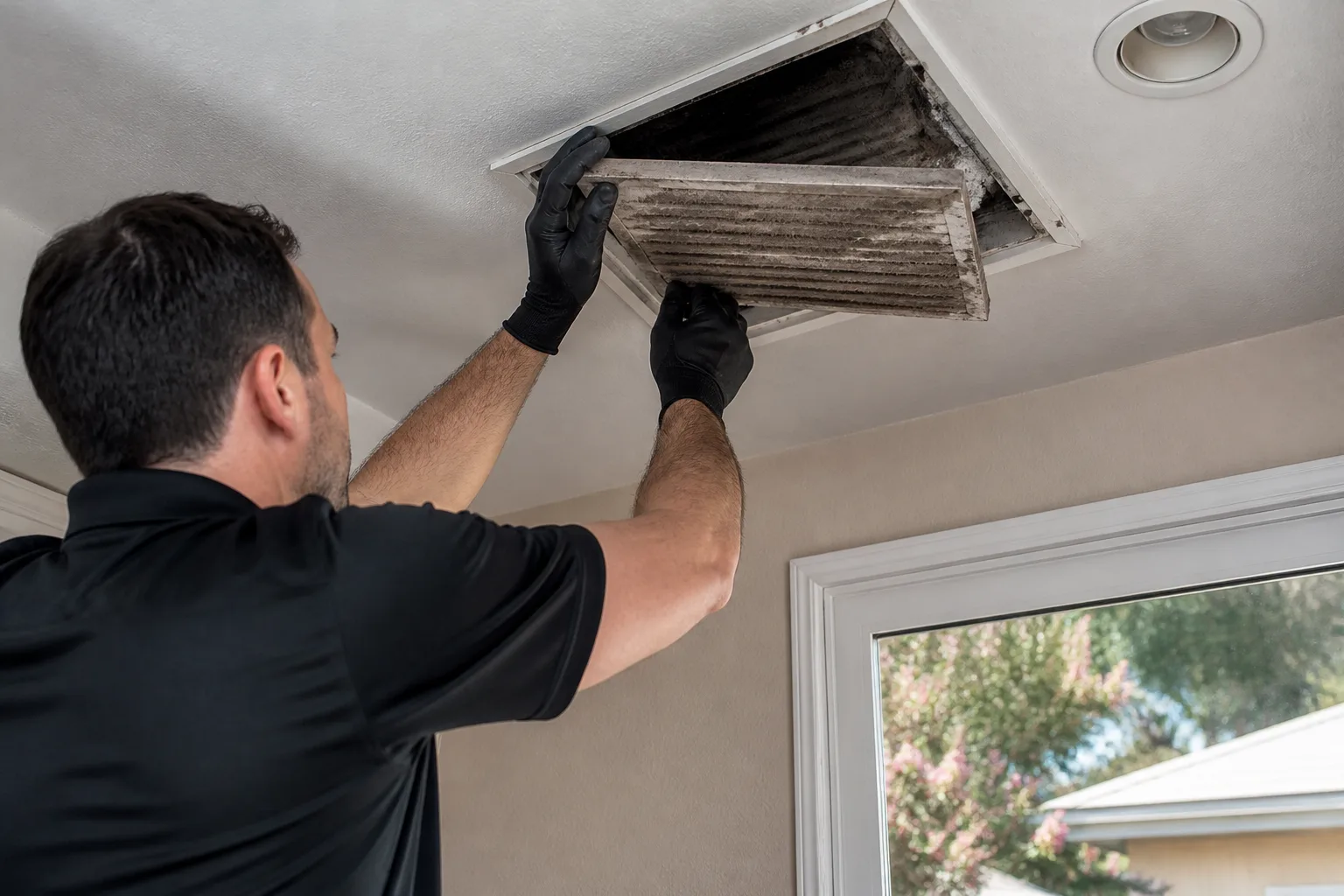
Emergency Air Duct Cleaning Near Me: What Visalia Homeowners Should Do First
The most common mistake we see after a house fire, a sewage backup, or a rodent discovery is the homeowner walking to the thermostat and hitting “cool.” It feels harmless. It isn’t. Within minutes, the blower can push smoke residue, mold spores, or pathogen-laden debris out of the ductwork and into every room of the house. If you’re searching for emergency air duct cleaning in Visalia, CA right now, your first move is to leave the system off. Then work through the steps below in order. If you’d rather have a specialist take it from here, call (855) 970-3448.
Key Takeaways
- Turn the HVAC system off immediately, then leave it off until a professional assesses the ductwork.
- Only three situations are true duct emergencies: post-fire smoke infiltration, sewage backup reaching the air handler, and confirmed rodent infestation inside the ducts.
- Document everything with photos and video before anyone touches the system. Your adjuster will need it.
- Never run a shop vac or household blower inside the ducts. It spreads contamination instead of removing it.
- Ask any provider who claims emergency service exactly what containment equipment they run. If they can’t name it, they don’t have it.
What Counts as a Real Duct Emergency in Visalia?
Three scenarios qualify. Post-fire smoke infiltration is the first: soot and combustion byproducts settle inside the duct run and bond to the metal, and every fan cycle redistributes them. Sewage backup that reaches the air handler or ductwork is the second, and it’s the one homeowners underestimate most. That’s a Category 3 water event by any restoration standard, meaning the contamination is genuinely hazardous and the ductwork needs professional handling, not a rinse and a fan. Confirmed rodent infestation is the third. Droppings, urine, nesting material, and shed hair inside a duct run aren’t a vacuuming job; they’re a contamination event.
Everything else is urgent but not an emergency. Weak airflow and stale odors are real problems, and they deserve prompt attention, but they don’t put a hazardous plume through your living room. Visible dust blowing from a vent, a dusty smell that lingers, a renovation that kicked up drywall dust – those belong in a scheduled air duct cleaning slot, not a same-day scramble. In our experience around Visalia, that distinction is the difference between spending the day calling around in a panic and simply booking the right job.
Step One: Shut the System Down and Document Everything
Before you move anything, kill the system. Switch the thermostat to off. If the system is a packaged unit or you have quick access to the breaker serving the air handler, shut the breaker too. This stops the blower from pulling more contaminated air into the return and pushing it through supply runs. Then document the situation methodically, because your insurance adjuster will ask for it and once cleaning starts, the evidence is gone.
- Photograph the source. Fire-damaged rooms, the water line from a backup, or rodent droppings and damage near vents and the air handler.
- Photograph every supply and return vent in the affected area, close up.
- Record a short video walk-through with narration: the date, what happened, and what you’ve observed. Talk like you’re explaining it to a friend.
- Keep every receipt related to the incident, including the cost of temporary lodging or equipment rental if it applies to your claim.
- Write down the timeline on paper. Memory fades fast during a stressful week.
What not to do is just as important. Don’t run the system “to see if it clears up.” Don’t spray air freshener into returns to mask the smell, which only confuses the assessment. And don’t run a shop vac inside a vent. A shop vac handles chunks; it recirculates the fine particles that matter most. Leave the ducts closed until someone qualified looks at them.
Why Emergency Duct Cleaning Takes Different Equipment Than Routine Cleaning
A routine duct cleaning in Visalia job is about accumulated dust and general upkeep. Emergency work is about containment. The contamination source is concentrated inside the duct run, and the moment you agitate it, it wants to spread. That’s why the equipment list looks like a restoration job rather than a housekeeping one. This is where a specialist shop separates from a generalist with a blower.
- Rotobrush rotary-brush systems agitate and lift debris off duct walls mechanically, the way restoration contractors clean ductwork after a loss event. It’s the same class of tool, not a consumer-grade blower.
- Nikro HEPA-rated vacuum rigs capture fine particulates at the source. Standard shop-vac setups pull the bulk volume but leave the respirable fraction airborne.
- Abatement Technologies air-filtration units run during the service, holding dislodged particulates inside the home’s work zone rather than recirculating them through the rooms you’re trying to protect. We contain what we clean.
- Negative air pressure keeps the duct system under slight vacuum during cleaning so contamination travels toward the collection equipment, not toward your bedroom.
Cross-contamination prevention is the whole point. A crew without containment can technically clean a duct; they just can’t keep what they dislodge out of the rest of your house. That’s the difference between a real emergency response and a routine cleaning with a higher price tag.
How to Work With Your Insurance Adjuster on Duct Contamination
Duct cleaning tied to a larger insurance claim usually gets covered when the contamination is part of the covered peril – fire, water, or a documented pest event. Getting paid is mostly a documentation problem. Call your insurer to open the claim before cleaning begins, and make clear that the HVAC ductwork is part of the damage, not just the floors and walls. Ask your adjuster directly whether duct cleaning is included in the scope or needs a separate line item.
What you need ready when the adjuster reviews it: your photo and video record, a written scope of the duct work needed, and an itemized estimate from the provider. Ask the provider to note in writing what contamination was found and why cleaning (rather than repair or replacement of duct sections) is the appropriate step. If your ductwork has damaged or leaking sections, that repair capability matters here – a leaking duct is a documented part of the loss, and having one provider handle both the cleaning and the Visalia duct repair keeps the scope in one document. Where a provider can recommend filtration products like Honeywell or Aprilaire for the post-cleaning period, ask if that belongs in the scope too; adjusters sometimes approve it and sometimes don’t, and it’s easier to find out early. We can work with your insurer and give you the written scope your adjuster needs. One honest note: an insurance claim is not the place for a cheerful “we’ve got you covered” – it’s a paperwork exercise, so keep every document.
What to Ask Before You Hire an “Emergency” Duct Cleaner
“Emergency” is a marketing word, and plenty of companies use it without owning a single piece of containment equipment. The industry’s bait-and-switch reputation exists for a reason: a teaser price turns into a much larger invoice once the technician is standing in your living room. Ask these questions on the phone before anyone comes out, and listen for specific answers rather than reassurances.
- What containment and filtration equipment will you bring? Look for named equipment – HEPA vacuum rigs, air-filtration units, rotary-brush systems – not “top of the line” or “professional grade.”
- How do you prevent cross-contamination? If they can’t explain negative pressure or containment, they’re not set up for emergency work.
- What’s the price, and is it flat per system? Anything quoted per vent or as a coupon flat rate is a warning sign. We price one flat rate per duct system, agreed before work starts, and show before-and-after photos of your own ducts when we’re done. That’s the proof most homeowners are really looking for.
- Do you document the process? For insurance, you’ll want photos before and after plus a written scope.
- Is your team trained specifically on duct systems? A single-trade specialist will ask different questions than a plumbing or HVAC outfit that added duct cleaning to the menu.
And one lighter rule of thumb: if a caller can’t describe how they prevent contamination, it’s a safe bet they don’t. Real emergency protocols come with specific vocabulary because the crew actually uses them every week. Our technicians have up to 15 years of experience with duct systems, which is why they can talk about containment in plain terms.
The Bottom Line
If you suspect a real duct emergency in Visalia – post-fire smoke, a sewage backup that reached the air handler, or confirmed rodent activity inside the ductwork – the sequence is: turn the system off, document everything, call your insurer, then bring in a specialist who can contain the contamination rather than spread it. The faster you shut the system down, the less work there is to do. If you’re in Visalia and need help, Duct Cleaning Visalia offers free estimates – call (855) 970-3448. We answer 24/7, with fast dispatch from 7am to 7pm, Sunday through Friday, closed Saturday. When it’s a routine job and not an emergency, that’s fine too; duct cleaning and dryer vent cleaning are both scheduled services, and we won’t upsell you into an emergency you don’t have.
Frequently Asked Questions
No. Leave the system off until a professional has inspected the ductwork. Running the blower after a fire, a sewage backup, or a rodent discovery can push smoke particles, mold spores, or pathogen-laden debris into every room of the house in minutes. Turn the thermostat off, shut the breaker if you can reach it safely, and call for an assessment. Call (855) 970-3448 for a free estimate.
Often, yes, when the duct contamination is part of a covered peril like a fire or water event. Coverage depends on your policy and how the adjuster scopes the claim, so open the claim early and ask directly whether ductwork is included. Gather photos, video, a written timeline, and an itemized estimate from the provider before cleaning starts. Call (855) 970-3448 – we can work with your insurer and put the scope in writing.
As soon as the source event is stabilized and the property is safe to work in. Soot, moisture, and biological contamination set deeper into duct surfaces over time, and every day the system sits is another day the damage can worsen. Don’t run the HVAC in the meantime. Call (855) 970-3448 and we’ll book the assessment.
Ask for before-and-after photos of your own ductwork and a written scope describing what was cleaned and what equipment was used. A legitimately equipped provider uses containment filtration (Abatement Technologies units), HEPA vacuum rigs (Nikro), and rotary-brush tooling (Rotobrush) – and can explain why each matters. We agree to one flat price per duct system before the work starts, never a per-vent price, and provide that photo record when the job is done. Call (855) 970-3448 for a free estimate.
Written by the team at Duct Cleaning Visalia.
Need Air Duct Cleaning Help?
Call Duct Cleaning Visalia - licensed & insured, with free written estimates in Visalia.
(855) 970-3448