
Last updated November 15, 2026
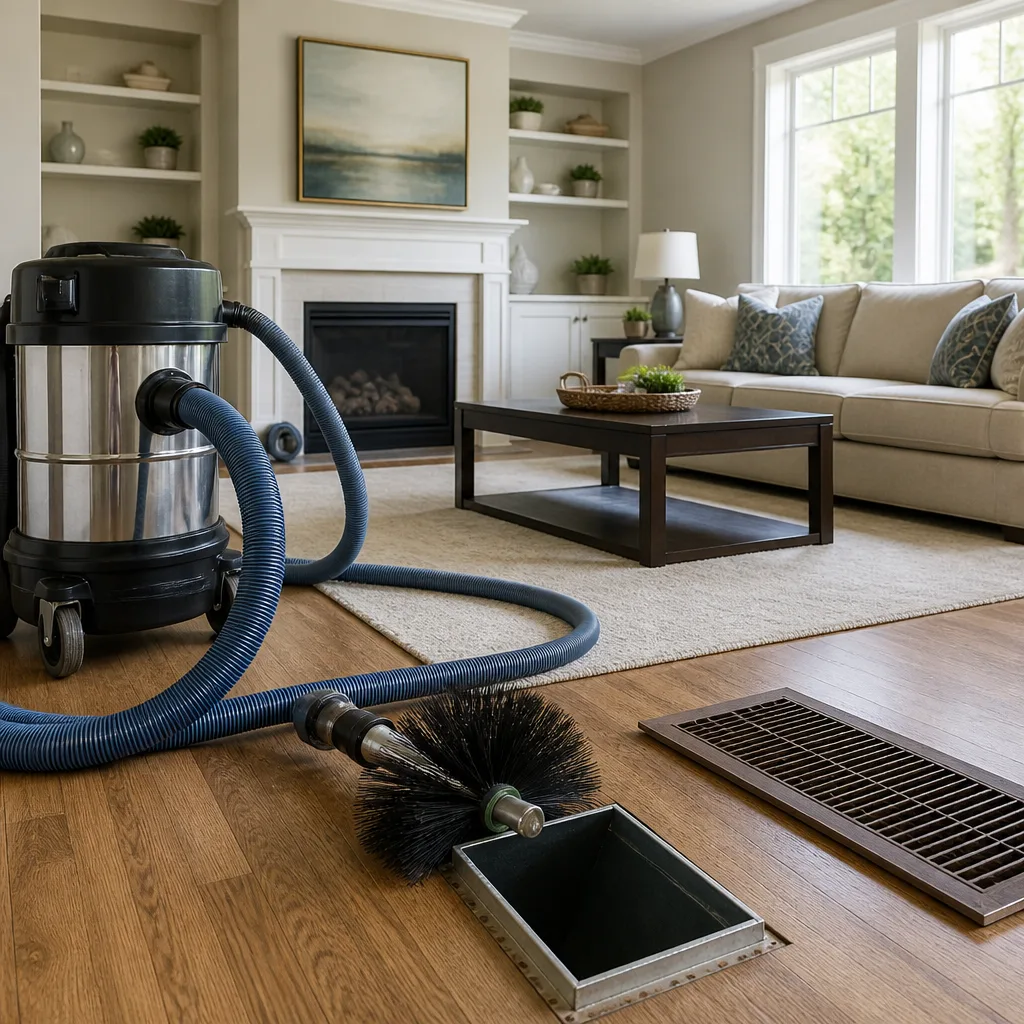 Whole-home duct cleaning
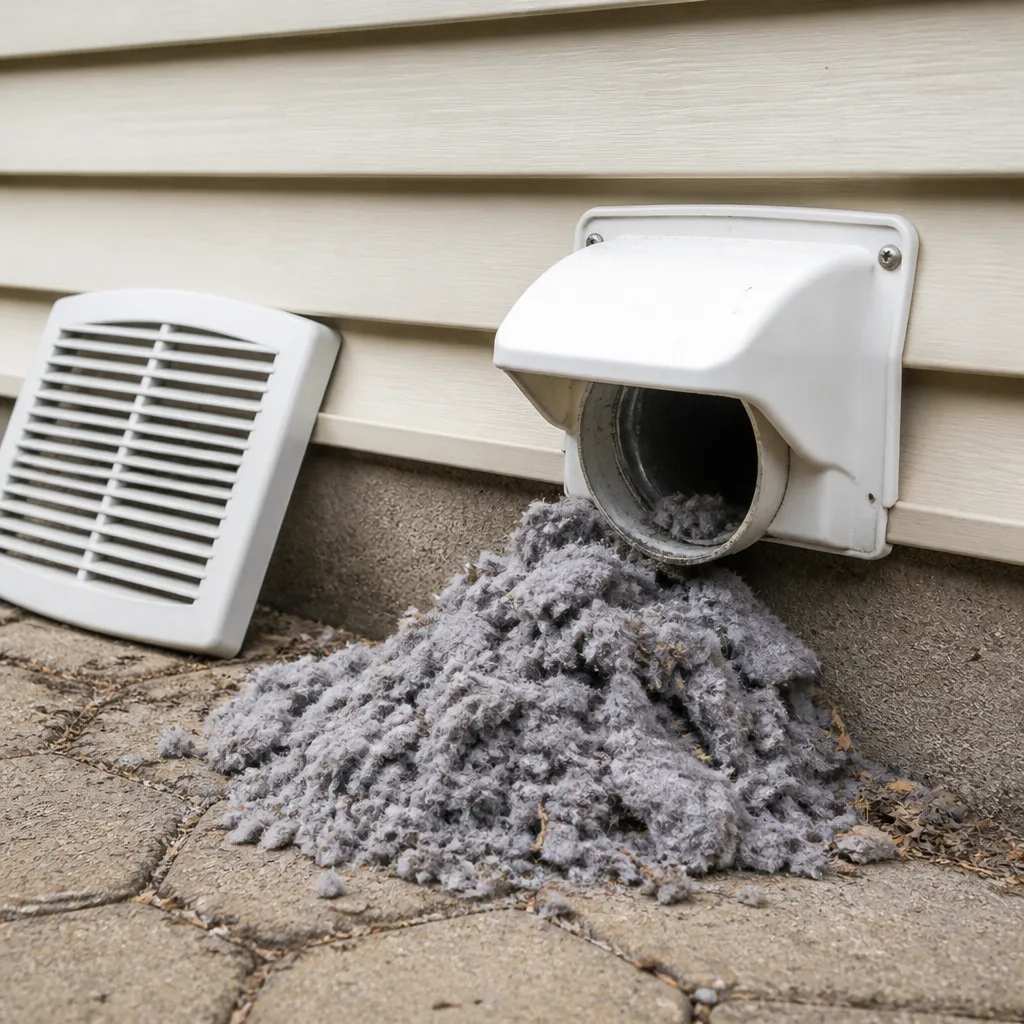 Dryer vent cleaning
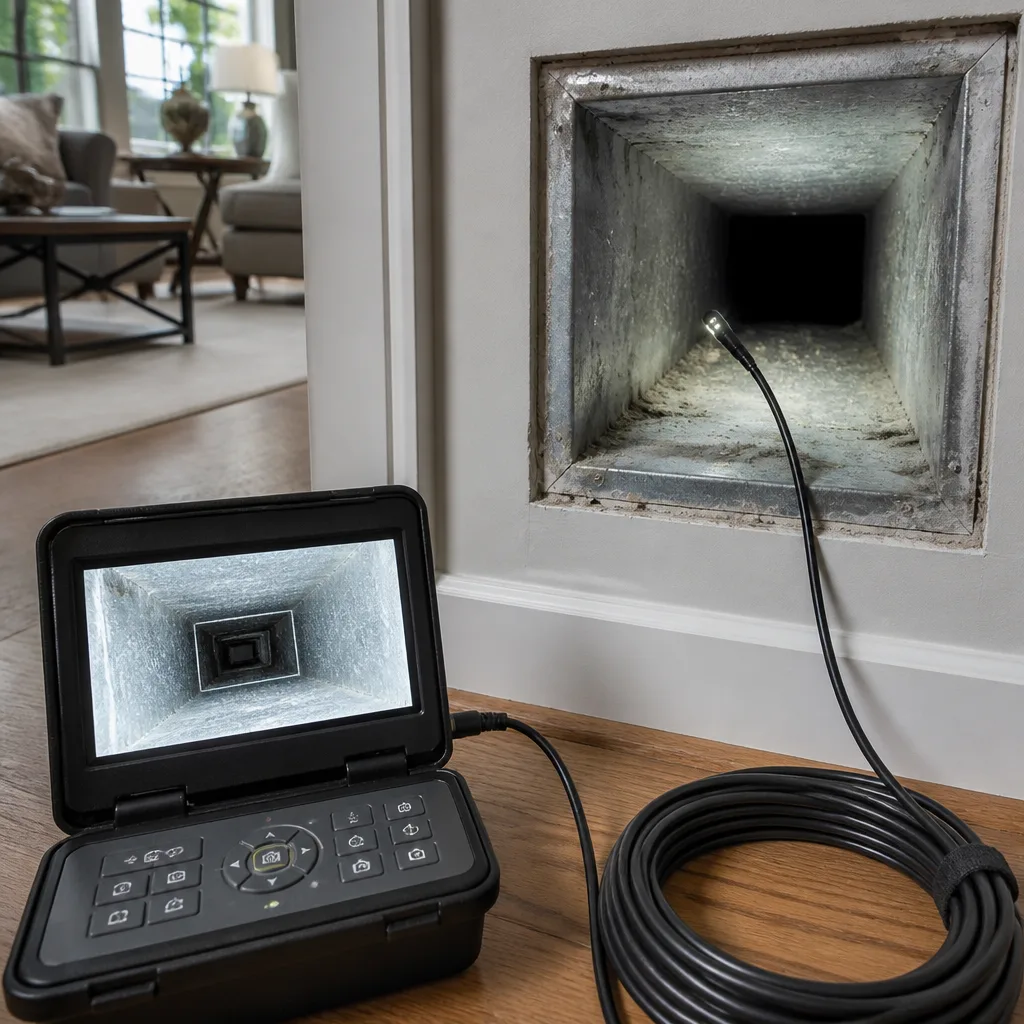 Camera inspection
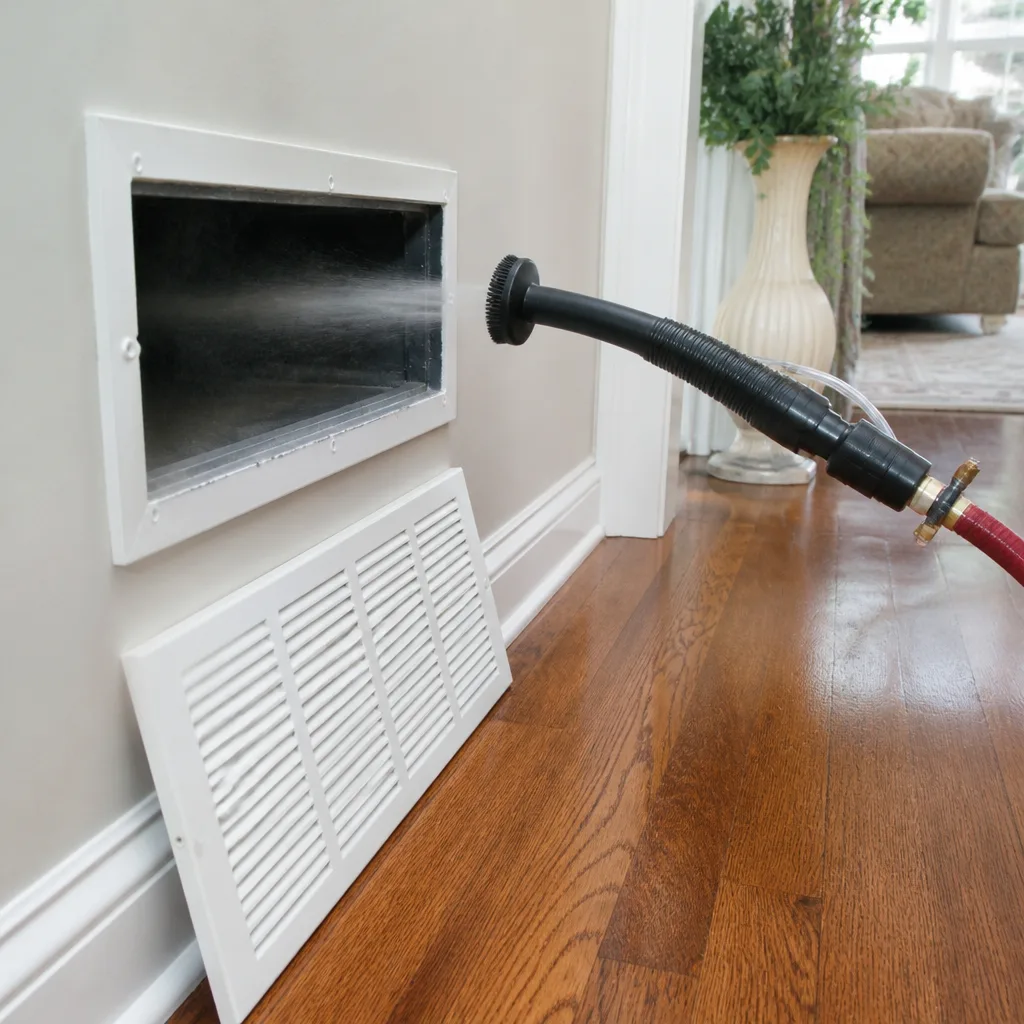 Sanitizing & deodorizing
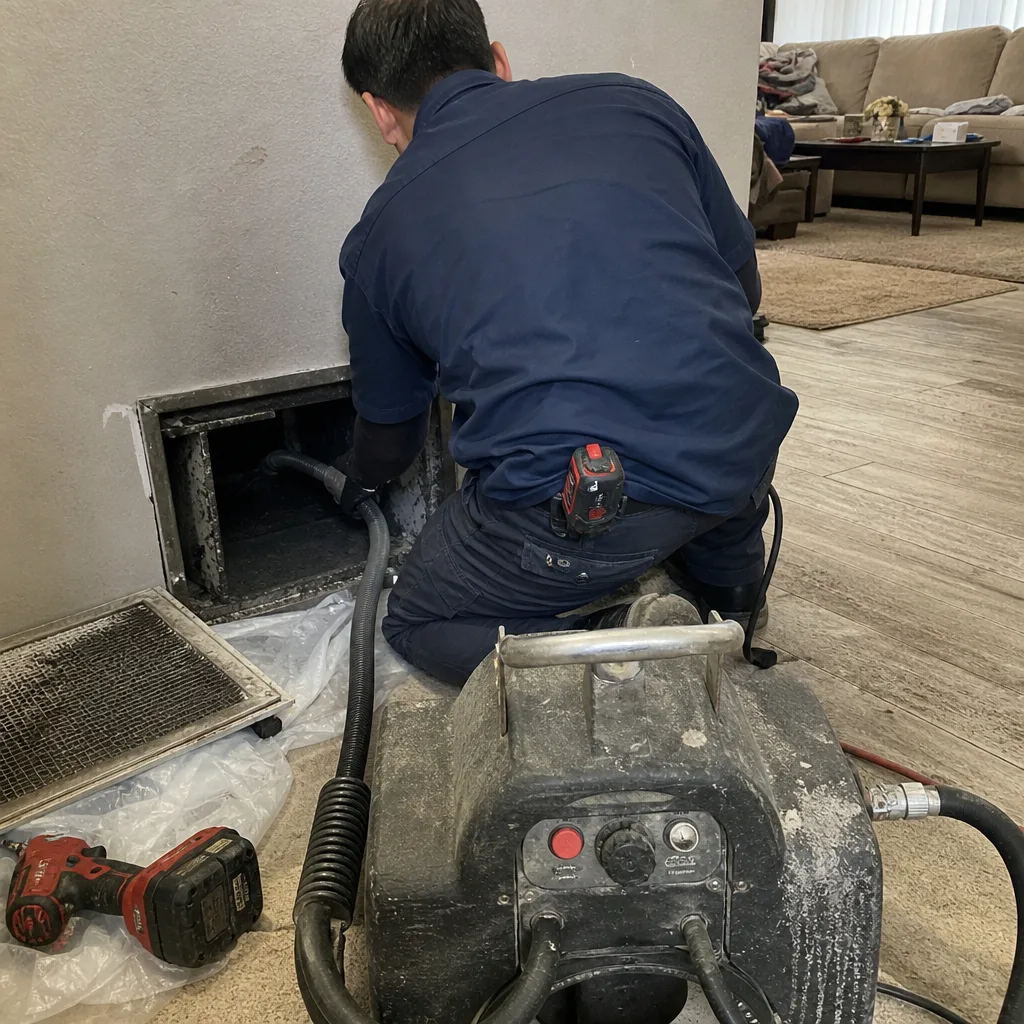
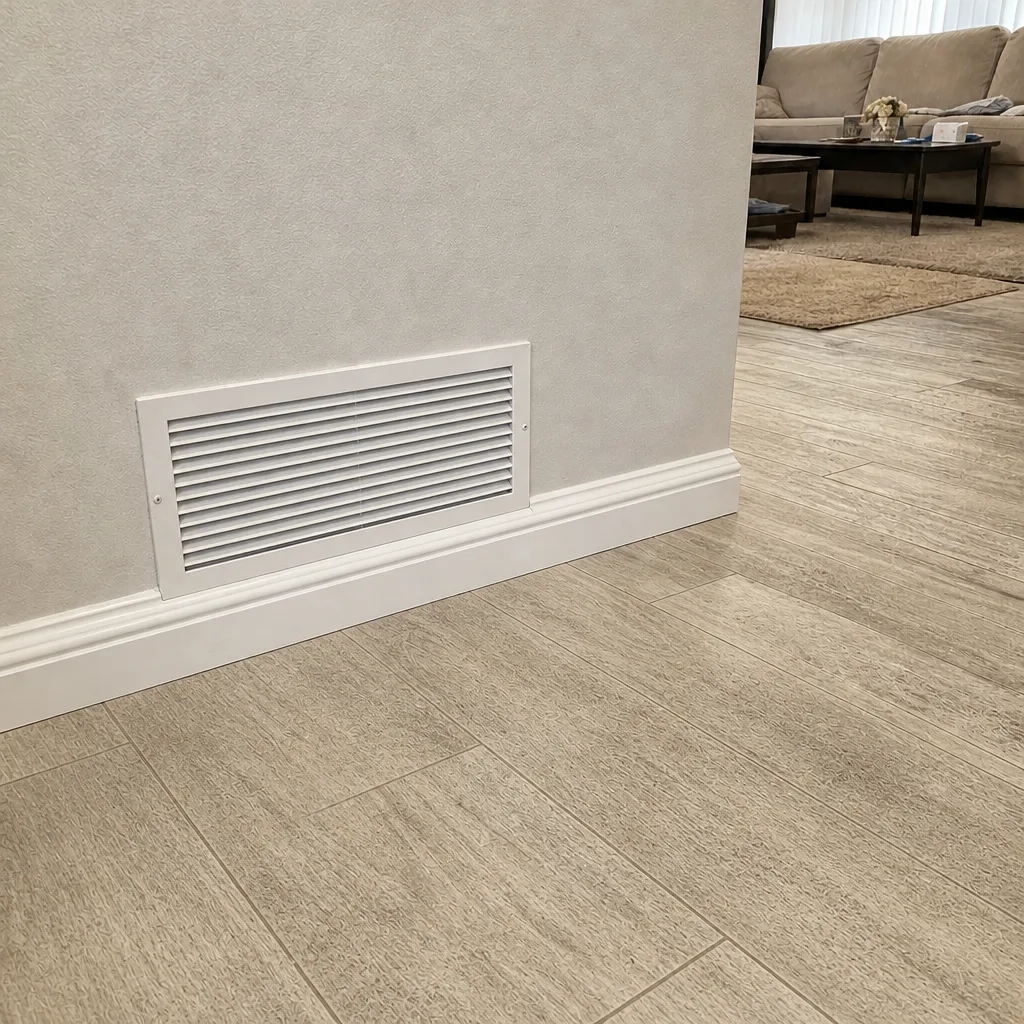
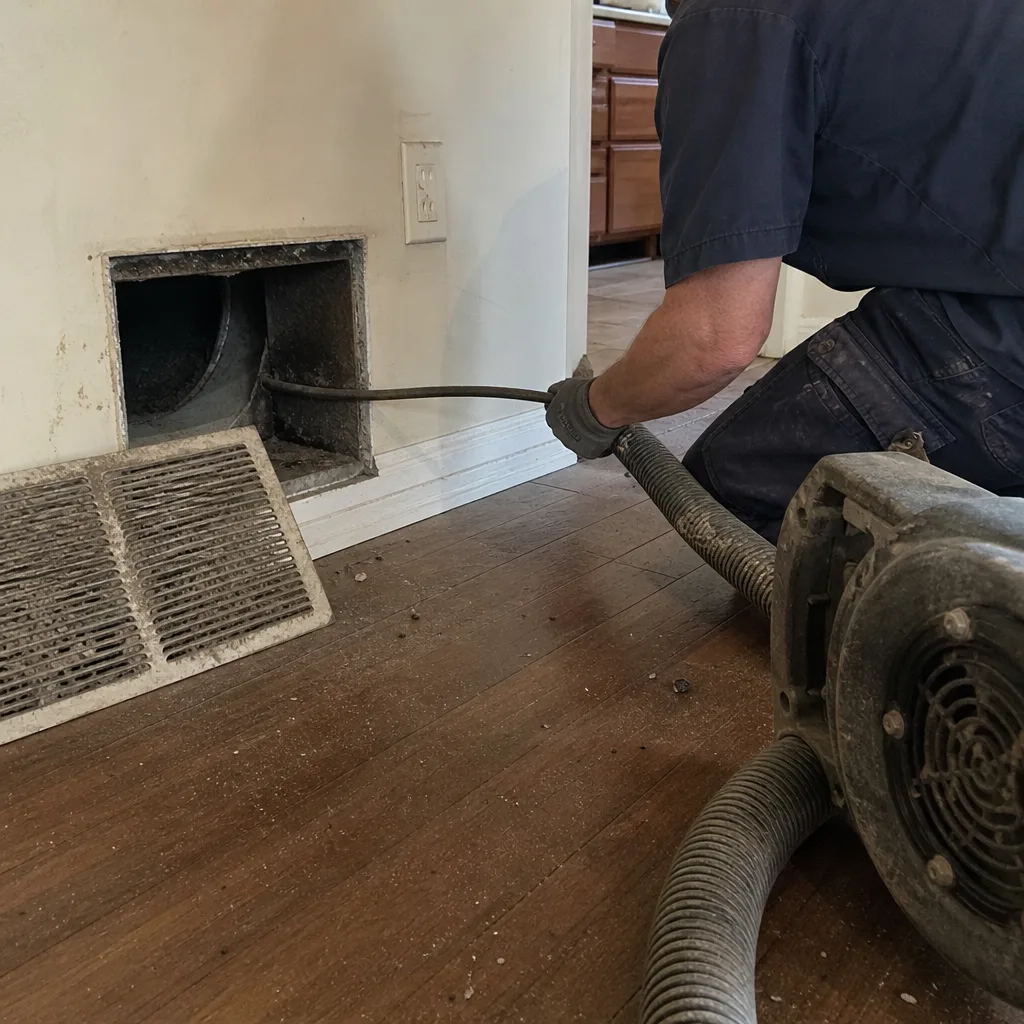
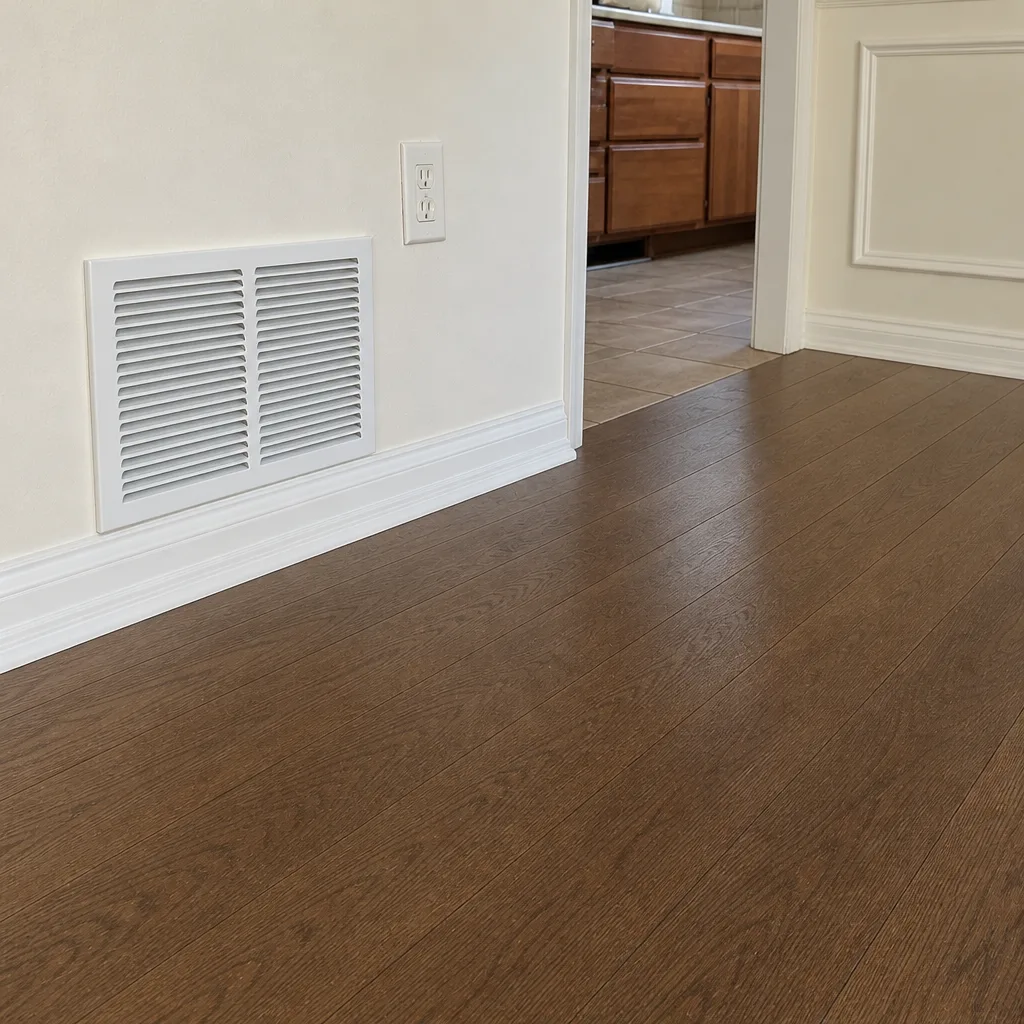
Whole-system duct and dryer vent check with before-and-after photos - you see exactly what came out of your vents
That "$99 whole-house special" is a bait ad - the real number appears once they are in your hallway, or the "clean" is a shop-vac at the register. We photograph the inside of your ducts before and after instead.
Air Duct Cleaning Permits, Codes & Inspections in Visalia, CA: What You Need to Know
Here’s the part most homeowners don’t expect: the duct cleaning itself is rarely the regulated event. The work it uncovers usually is. Thousands of Central Valley homes built before 1980 still carry duct wrap or mastic tape that can contain asbestos, and disturbing that material during a routine cleaning without the right protocol isn’t just a code problem. It’s a health event that can contaminate the whole house. This guide walks Visalia homeowners through where the cleaning scope ends and the regulated work begins: California asbestos rules, when a repair crosses into permit territory in Tulare County, what CDPH expects if a cleaning turns up mold, and how to get the paperwork that protects you at resale.
Quick Answer
In Visalia, ordinary air duct cleaning generally does not require a permit. Duct repairs that alter the mechanical system (reconnecting or replacing flex duct, replacing failed dampers, rebuilding deteriorated duct board) can require a Tulare County mechanical permit and should be done by a licensed contractor. If a cleaning disturbs suspect asbestos materials in a pre-1980 home, or uncovers active mold growth, the job shifts into regulated territory with its own state rules, and the work should stop until those rules are followed.
Styles & brands we work with
- Whole-home duct cleaning
- Dryer vent cleaning
- Camera inspection
- Sanitizing & deodorizing
Table of Contents
- Do You Need a Permit for Duct Cleaning in Visalia?
- Title 8 and Asbestos: What Pre-1980 Visalia Homes Hide
- When Duct Repairs Trigger a Mechanical Permit
- Mold in the Air Handler or Plenum: CDPH Rules
- Scope Creep: Why Unlicensed Repairs Hurt You
- How to Ask for Cleaning Documentation
- Inspections and What They Actually Check
- Visalia’s Climate and Duct Wear
Do You Need a Permit for Duct Cleaning in Visalia?
No. Routine air duct cleaning is a maintenance service, not a construction project, and cleaning a duct system that’s already installed doesn’t require a permit from the City of Visalia or Tulare County. A cleaning crew opens registers, runs a negative-pressure vacuum, agitates the duct walls, and dislodges accumulated dust and debris. Nothing about that transaction changes the building or its mechanical system.
That distinction matters because it’s where a lot of confusion starts. Homeowners hear “duct work” and assume a permit is involved somewhere. In practice, the permit question only comes up when the cleaning uncovers a physical problem the ducts can’t live with: a section that’s come apart, a damper that’s frozen open, a run of duct board that’s been collapsing under the house for years. That’s repair work, and repair work has its own rules.
In our experience running duct systems across Visalia, we’ve found that most homes need nothing more than cleaning. A meaningful share, though, have at least one disconnected or failing section hidden above the ceiling or under the floor, and those are the jobs where the conversation turns from cleaning to repair scope.
What a cleaning should never require is a signature on a same-day upsell before the technician has even opened a register. If someone tries to sell you a repair on the strength of a photo taken before any cleaning was done, that’s your cue to slow down and ask questions.
- Cleaning only: no permit, no regulated disturbance if the ducts are intact.
- Cleaning plus minor repair of a damaged section: sometimes a permit, depending on the repair.
- Cleaning that disturbs suspect asbestos: asbestos rules apply before anything else moves.
- Cleaning that turns up active mold: CDPH remediation rules apply.
Title 8 and Asbestos: What Pre-1980 Visalia Homes Hide
This is the section that matters most for anyone in an older Visalia neighborhood. California’s asbestos rules sit in Title 8 of the state code, and they govern how suspect materials are handled when they’re disturbed. Duct wrap, mastic sealant tape, and the adhesive holding ducts together are all materials that can contain asbestos in homes built before 1980. A duct cleaning machine agitates the duct interior with rotary brushes and high-velocity air, which is exactly the kind of activity that can lift fibers off a deteriorating wrap.
What that means in plain terms:
- A pre-1980 home with suspect duct materials should be assessed before cleaning, not after.
- Materials in good condition that are not disturbed may not need special handling.
- Materials that are friable (crumbling, flaking, or already damaged) require a different protocol entirely.
- The protocol usually means abatement by a contractor qualified to do it, not a cleaning crew.
- Cleaning that would disturb friable suspect material should not proceed until that’s sorted out.
We’ve walked into Visalia homes where the duct wrap looked fine from the register, then crumbled the moment it was handled. That’s not a cleaning problem. It’s an asbestos problem wearing a cleaning problem’s clothes, and any duct cleaner who pretends otherwise is putting your indoor air at risk. Professional-grade equipment like Nikro HEPA vacuums captures fine particulates, but no vacuum, however rated, substitutes for the legal requirement to avoid disturbing regulated material in the first place.
The practical rule for Visalia homeowners in older homes: ask about pre-1980 construction before the crew arrives, and expect a trained technician to know which materials in the system fall into the suspect category. If nobody asks, that’s a red flag.
When Duct Repairs Trigger a Mechanical Permit
A cleaning uncovers problems. It’s part of what the work does: once the debris is gone, disconnected joints, sagging runs, and failed dampers become visible. The question then is which of those repairs are simple maintenance and which ones cross into work that requires a Tulare County mechanical permit.
The general dividing line is whether the repair alters the mechanical system or simply restores it. Replacing a length of flex duct that’s fallen apart, rebuilding a collapsed section of duct board, or swapping a failed damper are the kinds of changes that can require a permit, depending on scope and where the work lands in the system. A licensed HVAC contractor is the party who knows for sure, and a licensed contractor is who should be doing permitted work.
Here’s what should give you pause: a duct cleaning company that offers to make structural duct repairs without the licensing to back it up. If the company can’t tell you who’s doing the repair and whether they hold the right license, the cost of saving a phone call gets expensive fast.
- Disconnected flex duct: can require a permit to reconnect properly, and always requires someone licensed to do it.
- Failed dampers: replacement work that alters system balance and may need a permit.
- Duct board deterioration: rebuilding a failed section can require a permit and always requires a competent hand.
- Leaking joints: often simple sealed work, but scope determines permit need.
What we look for on a Visalia inspection is straightforward: is the repair something a licensed contractor should sign off on, and does the scope match what the homeowner actually agreed to? Your ducts. Cleaned. Repaired. Done. That’s the sequence. Not cleaned, then a surprise invoice with a repair nobody licensed showed up to do.
Mold in the Air Handler or Plenum: CDPH Rules
If cleaning reveals active fungal growth inside the air handler or a plenum, the job stops being duct cleaning and becomes mold remediation. California’s Department of Public Health (CDPH) publishes standards for how that work should be evaluated and performed, and those standards matter for any Visalia home where condensation, a leaking coil, or a long-neglected air handler has created the conditions for growth.
The reason this is a separate scope: mold remediation isn’t just removing visible growth. It’s addressing the moisture source that allowed the growth, evaluating the extent, and documenting the work so a homeowner can prove what was done. A duct cleaning crew that wipes a patch of growth and moves on has done half a job and left the returning problem in place.
What CDPH guidance means for a homeowner:
- A cleaning that uncovers active growth should pause for a proper assessment.
- The assessment identifies the moisture source, not just the growth.
- Remediation within the HVAC system is work for a qualified mold remediation contractor.
- Once remediation is complete, the duct cleaning can resume on clean, dry surfaces.
- Documentation of the sequence matters for your records and disclosures.
In Visalia’s dry climate, mold in ductwork usually traces back to a specific mechanical issue: an oversized system short-cycling and leaving moisture in the coil, a plumbing leak near the air handler, or a return duct pulling humid air from a damp crawlspace. The cleaning reveals the problem. A proper remediation scope fixes the source.
Scope Creep: Why Unlicensed Repairs Hurt You, Not Just the Contractor
This is the part homeowners miss. When a duct cleaning company makes repairs it isn’t licensed to make, the immediate risk feels like it falls on the contractor. In reality, it falls on you. Unpermitted work discovered at resale can stall a sale, require a retroactive permit, or cost more to correct than the original repair saved.
A few ways this shows up in Visalia:
- The work isn’t inspected, so problems hide until they cause damage.
- Repairs made without a permit don’t appear in the property record, so a buyer’s inspector flags them as unexplained.
- Warranty protections on the system can be voided by unpermitted work.
- If the repair fails and damages concealed framing or insulation, insurance may push back.
- The homeowner has no documentation trail showing who did what.
We think the cleaner version of this is simple: a duct cleaning company should know exactly which side of its own scope it’s on, and stop at that line. If a repair needs a licensed HVAC contractor and a permit, the honest answer is that the repair gets referred to someone who does it right. That’s not a missed sale. That’s how you avoid becoming the homeowner in a story about a cheap repair that cost three times the original work to correct.
Professional-grade equipment, the kind licensed contractors run, doesn’t fix scope creep. Only the right professional in the right role does.
How to Ask for Cleaning Documentation
This one is small, easy, and routinely skipped. Any duct cleaning you commission should produce a document showing what was cleaned, what was observed, and what was and was not disturbed. That paperwork protects you at resale, in an insurance claim, and in any future question about the system’s condition.
What a solid cleaning record looks like:
- Before-and-after photos of your ducts: interior shots taken with a camera, not stock images.
- System scope: which supply runs, returns, and components were cleaned.
- Materials observation: any suspect materials noted and left undisturbed, or flagged for assessment.
- Repairs noted but not performed: anything that requires a licensed contractor should appear in writing.
- Equipment used: what was run on the system, including containment filtration.
We run Abatement Technologies air-filtration equipment during service to contain dislodged particulates inside the home rather than recirculating them. That’s not a marketing detail; it’s the difference between a cleaning that protects the indoor air and one that circulates it. When a Visalia homeowner asks why that matters, the answer is in the documentation: you can see exactly what the filtration system was doing while the ducts were being cleaned.
If a company can’t produce photos of the actual ducts in your home and a written record of the work, the cleaning may or may not have happened. There’s no way to know. And that’s a bad place to be at resale.
Inspections and What They Actually Check
When work requires a permit in Visalia, an inspection from the Tulare County building department follows. That inspection is about the system’s physical condition, not the cleaning. Understanding what inspectors look at tells you what a repair should include and what a proper cleaning sets the stage for.
An HVAC mechanical inspection typically covers:
- Whether the installed ductwork is intact and connected properly.
- Whether components are supported per manufacturer and code requirements.
- Whether the system has adequate airflow at the return and supply registers.
- Whether the installation matches what was stated on the permit application.
- Whether connections and transitions are sealed in a code-compliant way.
What inspectors don’t check is whether the system is clean. That’s not their job, and it’s not what a permit or inspection is for. Duct cleanliness is a homeowner’s maintenance responsibility, and no inspection will do the work for you. A cleaning done before a permit-driven repair means the repair happens on a clean system and the documentation trail shows the sequence.
In a Visalia home with a heavily loaded system, we sometimes advise homeowners to have the cleaning done first precisely so the repair scope is clear. An inspector doesn’t want to look at a duct buried in debris; a licensed contractor doesn’t want to repair a duct they can’t properly assess. Clean first, then repair to code.
Visalia’s Climate and Duct Wear
Visalia sits in the San Joaquin Valley, and the local climate shapes how ducts wear in ways a generic permit guide never mentions. Hot, dry summers and mild winters mean the HVAC system runs hard for a long stretch of the year, cycling air through ducts over and over. The heat itself isn’t the culprit. The combination of heavy run-time, agricultural dust in the air, and homes that are closed up tight against the heat all work together.
What that means for duct systems here:
- Soil and dust pulled in through returns accumulate faster than in cooler, wetter climates.
- Duct tape and mastic tend to dry out and lift sooner because of the temperature swing at the attic or crawlspace.
- Systems oversize for the home (a common problem here) short-cycle and leave condensation in the air handler.
- Attic duct runs bake through the summer, and the wrap on those runs degrades faster than the wrap on interior runs.
A home in Visalia near the agricultural edge of town sees more dust load in the ducts than a home on a tree-lined street closer to the center. Visalia is not a single microclimate, and the ducts in a house near Mooney Boulevard behave differently from the ducts in a house out toward Farmersville. That’s not a scheduling detail; it’s part of what determines how often the system needs cleaning and what the cleaning will uncover.
If your ducts have visibly loaded registers, a musty smell when the system kicks on, or an unusual dust level in the house despite regular surface cleaning, that’s the cue to schedule a cleaning and have the system assessed before problems get worse.
Common Mistakes to Avoid
- Booking a cleaning without asking about pre-1980 construction. Older Visalia homes can have asbestos-containing duct wrap or mastic. A cleaner who never asks hasn’t assessed the risk.
- Letting a repair happen on the spot without verifying licensing scope. The cleaning company and the licensed contractor doing the repair aren’t always the same party. They should be clear about it.
- Accepting a cleaning with no before-and-after photos of your own ducts. If you can’t see the interior of your system in the documentation, the work is unverifiable.
- Treating a low teaser price as the price. If the number you were quoted is unusually low, it’s usually a door-opener, not the actual cost of a full-system cleaning.
- Skipping the mold question when the air handler is damp. If there’s active fungal growth inside a plenum, CDPH remediation rules apply and the work belongs with a qualified remediation contractor.
- Assuming a permitted repair is a cleaning company’s job. Permitted mechanical work belongs to a licensed HVAC contractor, and the paperwork trail should show who did what.
- Not asking what equipment is being run. Rotary-brush systems and HEPA vacuums do a different job than a shop-vac blower. Onsite containment matters when the ducts are being agitated.
See the difference
 Before
 After
 Before
 After
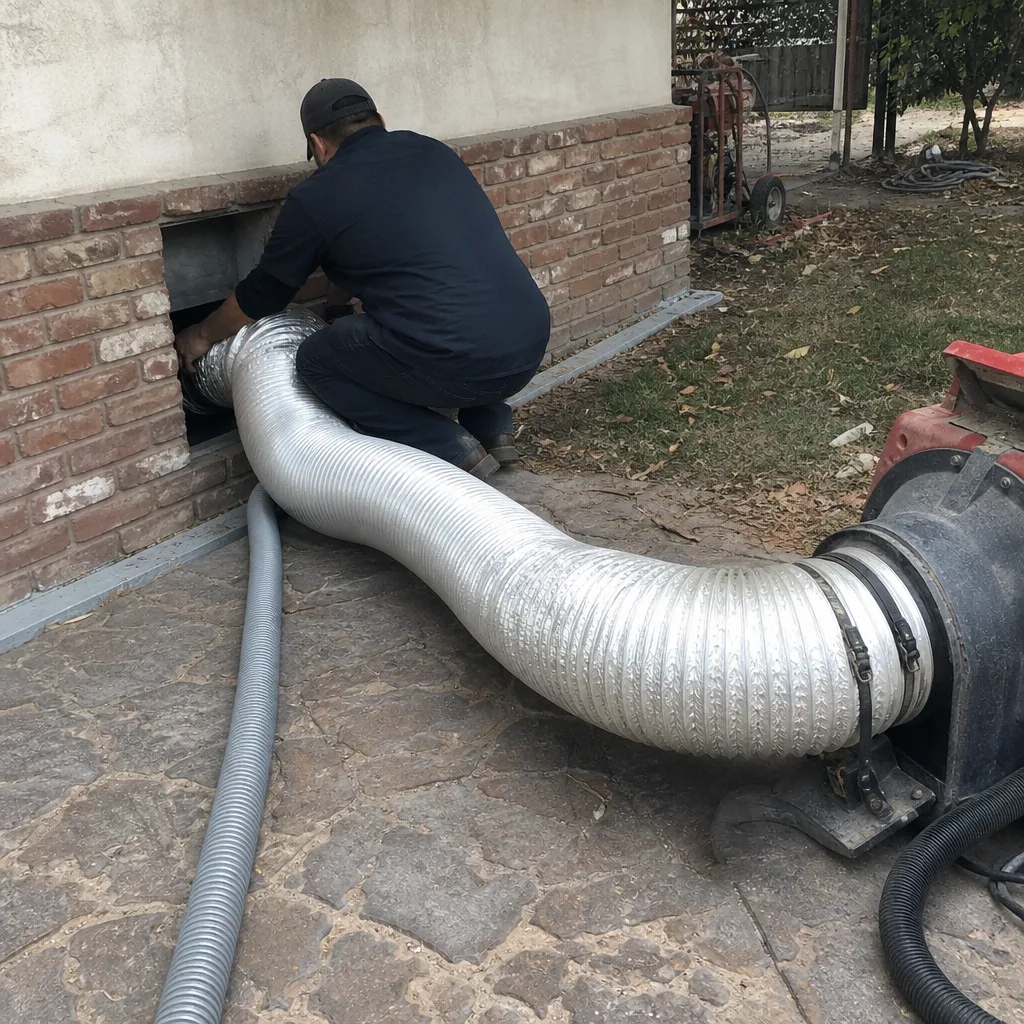 Before
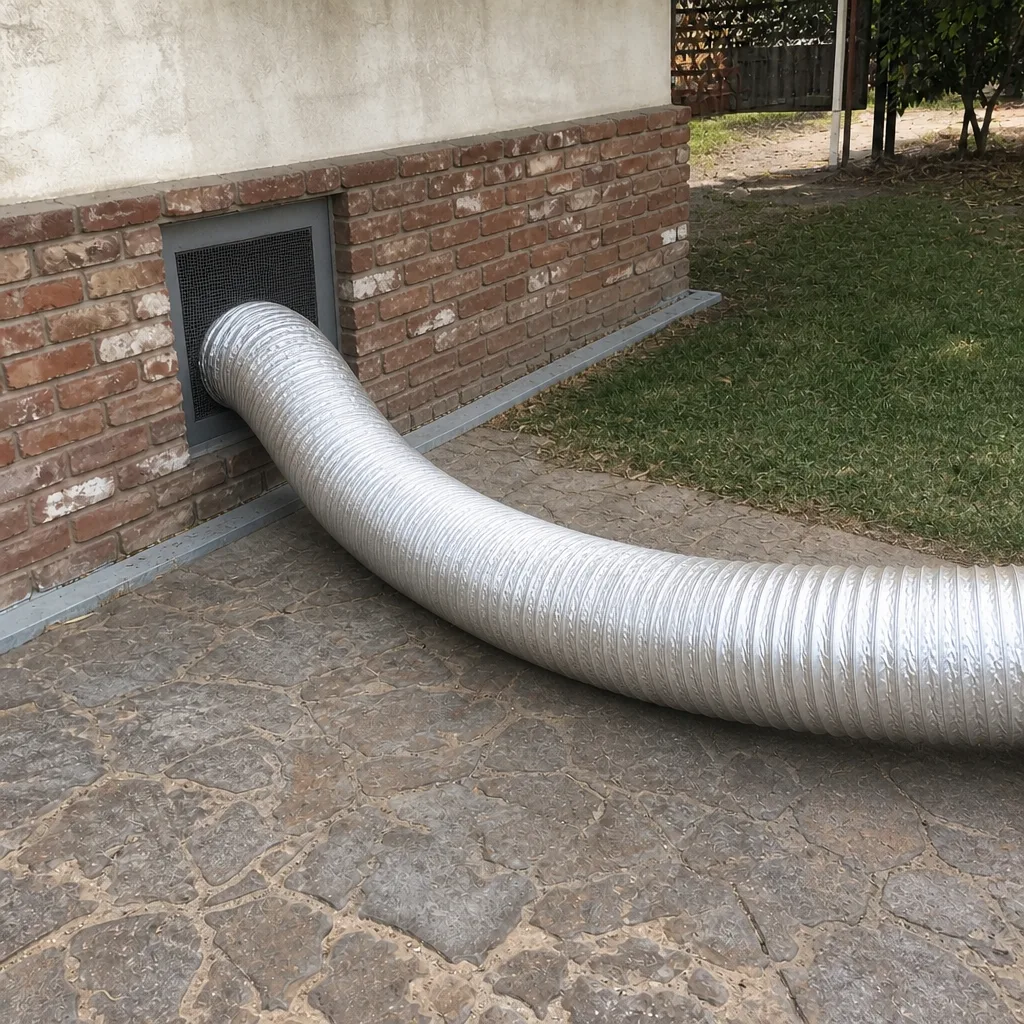 After
When to Call a Professional
If your home was built before 1980 and you don’t have documentation that the duct materials have been assessed, that’s the first scenario worth a professional look. Same with a system that produces a musty smell when the fan runs, a return that visibly pulls in agricultural dust, or a cleaning that turned up a disconnected duct or a failed damper the original crew didn’t fix. Any of those should prompt a real conversation, not a coupon. Duct Cleaning Visalia offers free estimates in Visalia. Call (855) 970-3448 to schedule one. Our technicians have up to 15 years of experience and handle cleaning, dryer vent cleaning, and air duct repair under one scope, so a cleaning that turns up a repair doesn’t need a second vendor.
Frequently Asked Questions
No. Routine air duct cleaning in Visalia does not require a permit because it doesn’t alter the building or the mechanical system. A permit becomes relevant only when the cleaning uncovers a repair that changes the system, such as reconnecting or replacing flex duct, rebuilding duct board, or swapping a failed damper. Call (855) 970-3448 for a free estimate on the cleaning, and we’ll flag anything we find that needs a licensed contractor.
Homes built before 1980 can have duct wrap, mastic tape, or adhesives that contain asbestos, and disturbing those materials during a cleaning is a regulated event under California Title 8. If the material is friable or already damage-prone, it needs assessment before any cleaning proceeds. We schedule an assessment conversation before we bring equipment into a pre-1980 home. Call (855) 970-3448 to talk through your system’s age and materials first.
Active mold growth inside an air handler or plenum is a CDPH remediation scope, not a duct cleaning scope. A qualified mold remediation contractor evaluates the moisture source, addresses the growth, and documents the work before cleaning can resume. A duct cleaner who wipes a patch of growth and moves on has done the wrong job. Call (855) 970-3448 and we’ll help you sequence the work correctly.
You should get before-and-after photos of your own ducts, a written scope of what was cleaned, a note on any suspect materials observed, and a written list of any repairs beyond the cleaning scope. That record protects you at resale, in an insurance claim, and in any future question about system condition. If a cleaner won’t produce documentation, the work is unverifiable. Call (855) 970-3448 for a free estimate with documentation built into the job.
Usually not. A teaser price well below what a full-system cleaning actually costs is generally a door-opener, and the real invoice arrives once the technician is standing in your home. We price one flat rate per system agreed before work starts, with no per-vent pricing and before-and-after photos of your own ducts. Call (855) 970-3448 for an honest range.
Most Visalia homes benefit from a cleaning every few years, but the actual interval depends on the system, the home’s dust load, and proximity to agricultural dust. Homes on the town’s agricultural edge tend to need it more often than homes near the older center of town. If you can see loaded registers, smell a musty scent when the fan runs, or notice more dust inside the house than usual, that’s the cue. Call (855) 970-3448 for a free estimate and we’ll talk through the right interval for your system.
The Bottom Line
Air duct cleaning itself doesn’t need a permit in Visalia. The work it uncovers sometimes does. Pre-1980 duct materials can contain asbestos and must be assessed before the cleaning begins. Repairs that alter the system (replacing flex duct, failed dampers, duct board) belong to a licensed contractor and can require a Tulare County mechanical permit. Active fungal growth inside the air handler means a CDPH remediation scope comes first. And documentation matters: photos, scope, and material notes protect you at resale. Ask the right questions before the crew shows up, and the cleaning stays what it’s supposed to be: a maintenance job done right.
Ready to schedule? Call (855) 970-3448 for a free estimate. We answer 24/7. Fast dispatch, 7am-7pm, Sunday through Friday. We run professional-grade equipment, contain what we clean, and stop exactly at the line where your repair needs a licensed contractor instead of a cleaning crew. When a Duct Cleaning Visalia team schedules your estimate, everything starts with a proper assessment of the system as it sits today.
Written by the team at Duct Cleaning Visalia.