
Last updated November 15, 2026
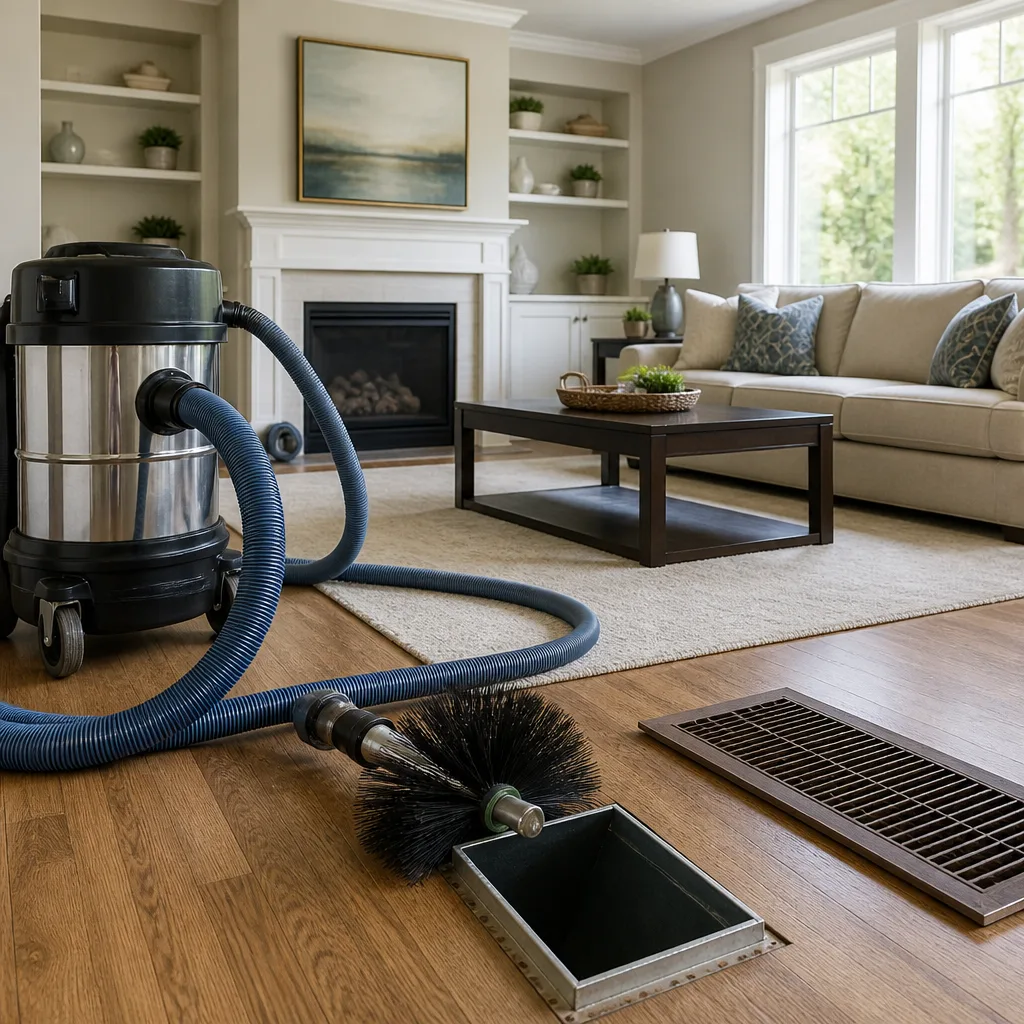 Whole-home duct cleaning
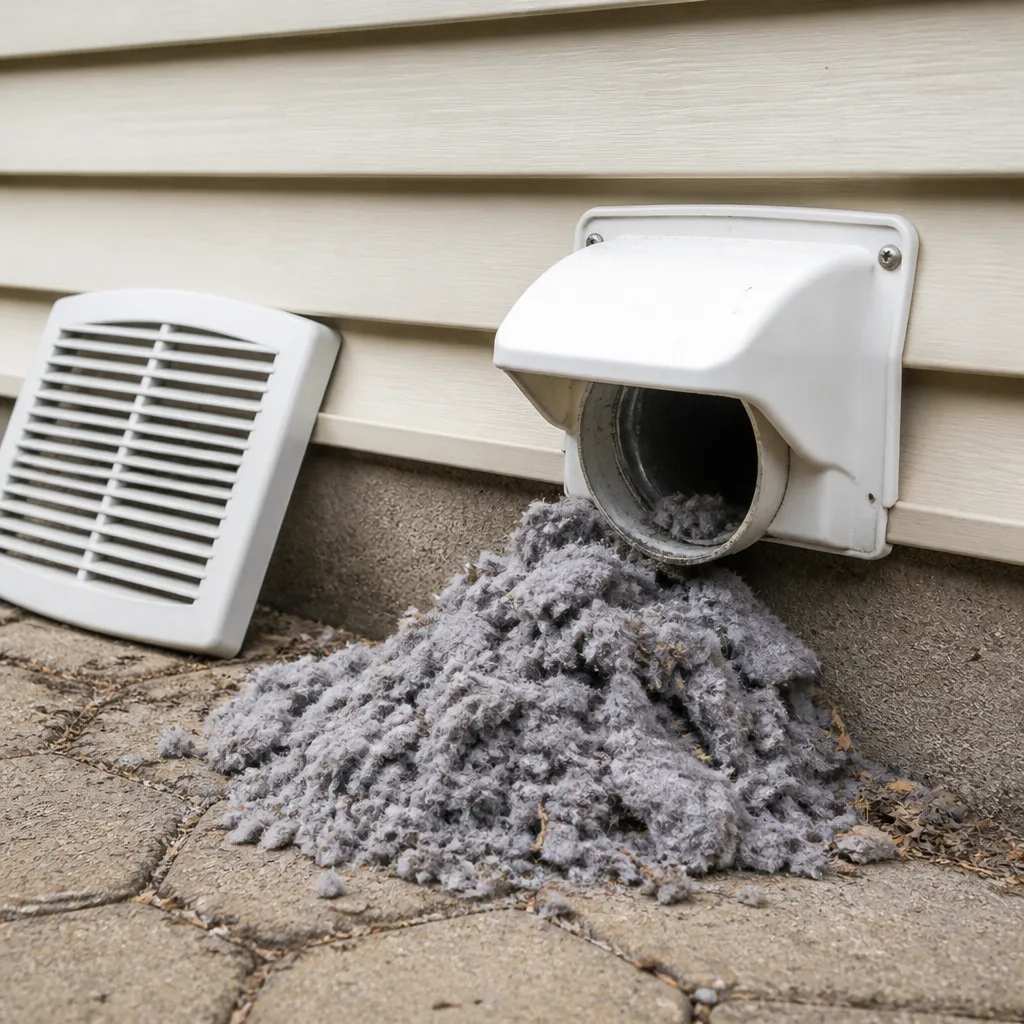 Dryer vent cleaning
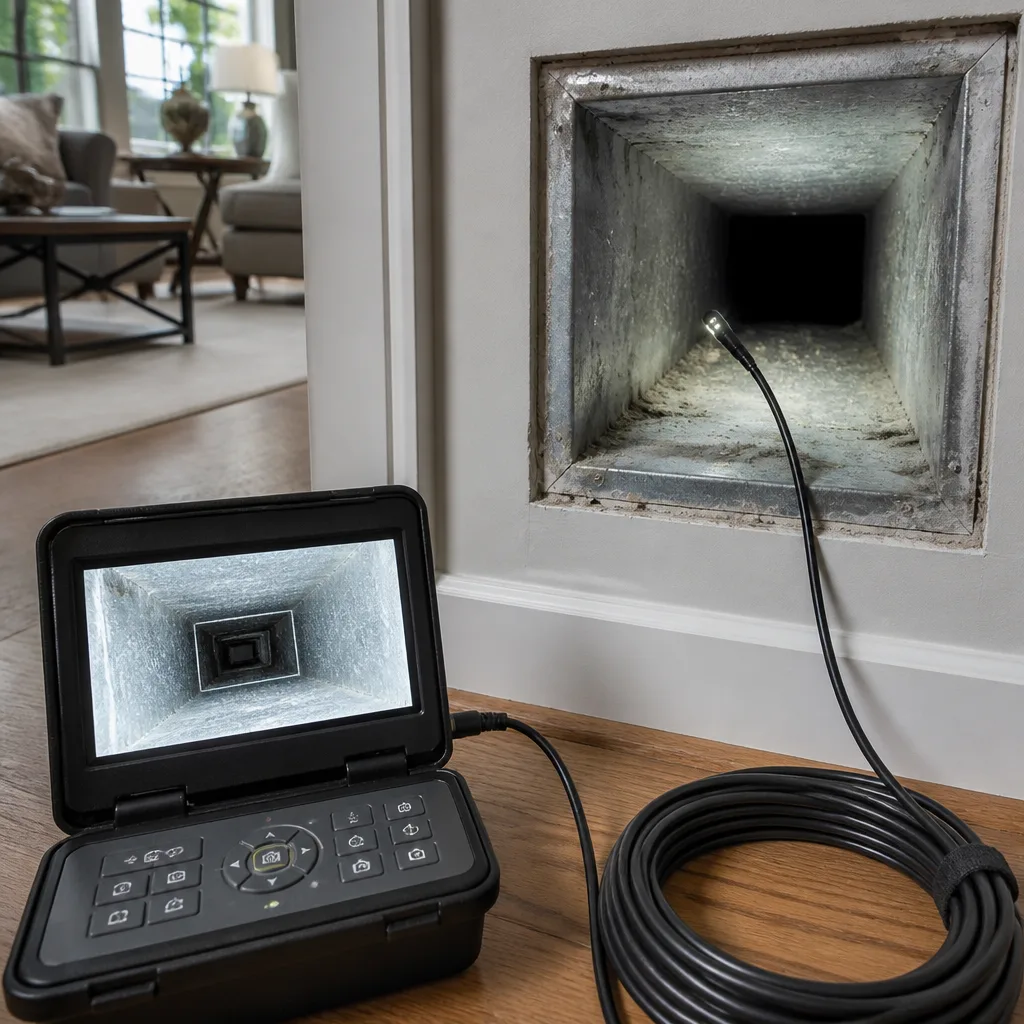 Camera inspection
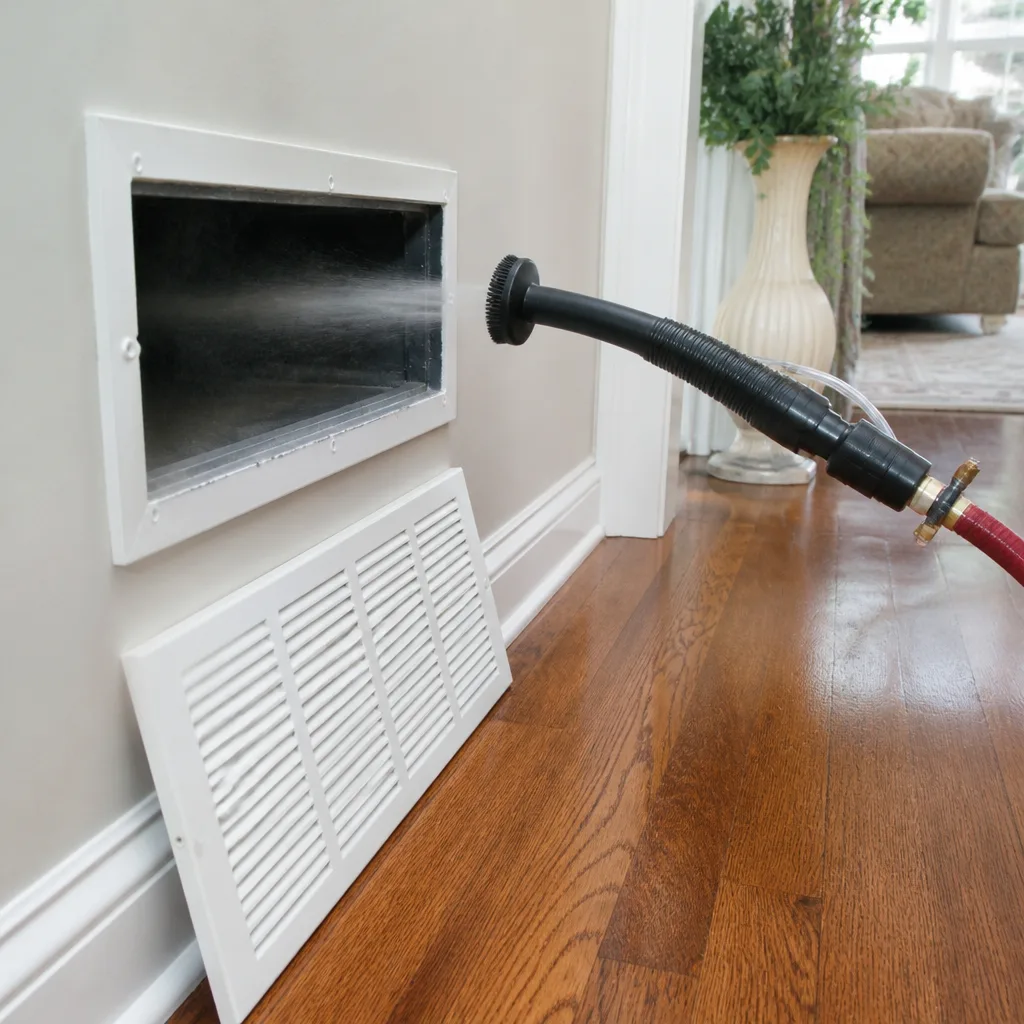 Sanitizing & deodorizing
Whole-system duct and dryer vent check with before-and-after photos - you see exactly what came out of your vents
That "$99 whole-house special" is a bait ad - the real number appears once they are in your hallway, or the "clean" is a shop-vac at the register. We photograph the inside of your ducts before and after instead.
Air Duct Cleaning Troubleshooting in Visalia: Common Problems and How to Fix Them
If a technician recommends duct cleaning before checking static pressure or looking for a disconnected flex run, they’ve skipped the diagnostic step entirely, and you’re about to pay for the wrong solution. That happens more than it should in Visalia, where a lot of ductwork runs through hot attics and the failures we see most often have nothing to do with dirt. This guide is built to help you read your own symptoms before you spend anything. You’ll learn which airflow, odor, and dust complaints actually come from dirty ducts, which come from leaks or design problems that cleaning can’t fix, and how to tell a real cleaning from a rushed one. By the end you’ll know whether you need cleaning, repair, or a closer look at the whole system.
Quick Answer
Most duct problems in Visalia fall into two categories: contaminant problems, where debris, dust, or biological growth inside the ducts needs to be removed, and leakage or design problems, where air is escaping, connected wrong, or never reached the room in the first place. Cleaning solves the first; sealing, reconnecting, or redesigning solves the second. Weak airflow, uneven room temperatures, and high dust counts often have non-duct causes too, including a dirty filter, a failing blower, or a clogged evaporator coil.
Styles & brands we work with
- Whole-home duct cleaning
- Dryer vent cleaning
- Camera inspection
- Sanitizing & deodorizing
Table of Contents
- How Much Does Air Duct Cleaning Cost in Visalia?
- Which Problems Actually Come From Dirty Ducts?
- How to Do a Basic Inspection Before You Call Anyone
- Contaminant Problems vs. Leakage and Design Problems
- What Musty Smells in Your Ducts Really Mean
- Warning Signs a Previous Cleaning Was Incomplete
- Dryer Vents: A Separate System With Its Own Troubleshooting
- Common Mistakes to Avoid
- When to Call a Professional
- Frequently Asked Questions
How Much Does Air Duct Cleaning Cost in Visalia?
Air duct cleaning in Visalia typically runs $350 to $700 for a standard single-story home, with two-story homes and larger systems landing in the $550 to $950 range. Those are honest whole-system estimates, not per-vent teaser prices, and the written estimate you receive before any work begins is the final number. If a quote is priced per vent, ask what the total comes to once every register is counted, because that’s the number you’ll actually pay. Duct repair, when a disconnected or crushed section needs reconnecting or replacement, is priced separately once the problem is identified.
| Service | Typical Visalia Range |
|---|---|
| Air duct cleaning, single-story home | $350 – $700 |
| Air duct cleaning, two-story home | $550 – $950 |
| Dryer vent cleaning (standalone) | $125 – $250 |
| Air duct repair (per section disconnected or replaced) | Priced on inspection |
One thing to understand about the local market: Visalia homes tend to have long flex-duct runs through unconditioned attic space, and attic temperatures here climb high in summer. That heat degrades the outer jacket on cheap flex duct faster than it would in a milder climate, so repair is a more common line item here than in many markets. We run professional-grade equipment, including Rotobrush rotary-brush systems and Nikro HEPA vacuum rigs, because the debris load in a neglected Visalia system is usually heavier than a consumer blower can handle. Call (855) 970-3448 for a free estimate. We answer 24/7. Fast dispatch from 7am to 7pm, Sunday through Friday.
Which Problems Actually Come From Dirty Ducts?
Dirty ducts cause a narrower set of symptoms than most homeowners expect. Dust accumulation inside the system itself, visible debris blowing out of registers, and a general musty or dusty smell when the system first kicks on are the strongest signals. Almost everything else, including weak airflow to the back bedrooms and rooms that never quite cool to the thermostat setting, usually traces to something other than contamination. Reading the symptom correctly is half the work.
- Dust settling on horizontal surfaces within a day or two of cleaning: often duct-related, but confirm your return duct isn’t pulling from an open attic or crawlspace first.
- Visible debris or mouse droppings around a register: a contaminant problem worth cleaning, and a sign of a gap somewhere upstream.
- A dusty smell at system startup that fades: commonly dust sitting on the evaporator coil or in the plenum, not necessarily deep duct contamination.
- Weak airflow in one room only: usually a disconnected, crushed, or undersized branch run, not dirt.
- Weak airflow everywhere: usually a filter issue, a failing blower, or a coil restriction.
- Uneven temperatures across rooms: typically a design or balancing problem, sometimes a leakage problem.
The pattern behind those bullet points matters. A single room that never gets enough air almost never has a cleaning problem. A whole house that feels starved of air almost never has a cleaning problem either. It’s the middle ground, where debris is present and the system seems to be working, that cleaning actually addresses. Our technicians have up to 15 years of experience reading exactly these symptoms in homes across Visalia, and a quick walkthrough often settles the question before any equipment comes in.
How to Do a Basic Inspection Before You Call Anyone
A visual inspection at the registers and in any accessible duct run takes about fifteen minutes and will tell you whether you’re chasing a cleaning problem or something else. You don’t need tools. You need a flashlight, a camera, and a willingness to look carefully. Start at the filter and work outward from there.
- Check the air filter first. A clogged filter starves the entire system. Hold it up to a light. If you can’t see light through it, replace it before doing anything else.
- Remove two or three supply registers in different parts of the house. Shine a light into the boot and duct. Look for standing debris, dust buildup on the duct walls, or anything that shouldn’t be there.
- Look for gaps where the duct connects to the register boot. A visible gap between the duct and the boot is a leakage problem. Tape or mastic is the fix, not cleaning.
- Check any accessible duct in the attic or garage. Look for flex duct that’s collapsed, kinked, torn, or disconnected at a collar. Disconnected runs are surprisingly common.
- Listen at each register with the system running. Weak airflow that changes when you open a nearby register tells you something about balancing. Weak airflow that doesn’t change anywhere usually points upstream.
- Note the smell. A dusty smell is one thing. A damp, musty, or earthy smell is another, and it needs a closer look before anyone cleans anything.
Take photos as you go. When you call for an estimate, those photos help us ask better questions before we arrive. If your inspection turns up a disconnected run or a badly damaged section, ask specifically about repair as part of the visit, because the connected problems are best handled together.
Contaminant Problems vs. Leakage and Design Problems
The single most useful distinction in duct troubleshooting is between contamination and air leakage or design failure. Contamination lives inside the duct surfaces and has to be physically removed. Leakage lives at the seams, collars, and boots, and has to be sealed. Design failure lives in the layout itself, where a run is too long, too small, or routed so poorly that no amount of cleaning will make the room comfortable.
- Contaminant problem: visible dust or debris inside the duct, odor at system startup, recent renovation or construction in the home, or a previous owner who never serviced the system. Fix: full-system cleaning.
- Leakage problem: gaps at boots and collars, disconnected flex runs, torn duct jacket, dust streaks at connections, higher energy bills than the house should produce. Fix: duct repair and sealing.
- Design problem: one room always hotter or colder, back bedrooms starved of air, a system that never balanced properly even when new. Fix: airflow evaluation, sometimes a return air addition or a run resized.
- Mixed problem: very common. A leaking system pulls attic dust into the house, so you get contamination and leakage at once. Cleaning without sealing means the dust comes straight back.
In Visalia’s newer subdivisions, we typically see tighter ductwork with fewer disconnects, but more shortcuts in the flex runs that create restrictions. In older neighborhoods near downtown, the ductwork itself has often been modified over the years, sometimes more than once, and the modification is where the leakage lives. The building stock tells you what to look for before you even open the register.
What Musty Smells in Your Ducts Really Mean
A musty smell in the ducts often signals moisture-driven biological growth on interior duct surfaces, and cleaning alone won’t resolve it if the moisture source is still active. This is the most important line in this whole guide. If there’s active moisture getting into the system, whether from a leaking coil pan, a condensate line draining into the wrong place, an attic leak, or a disconnected return pulling humid air, the growth will come back. Cleaning without addressing the source is a repeat purchase.
What remediation actually requires:
- Identify and repair the moisture source. That’s a plumbing or HVAC repair, not a duct cleaning service, and it comes first.
- Remove the contaminated material. Porous duct liner or heavily contaminated flex duct often has to be replaced rather than cleaned.
- Clean the remaining duct surfaces with equipment designed for the job, using containment filtration so dislodged material doesn’t circulate through the house during the process.
- Verify drying. The system should be moved back into service only after the moisture has been controlled, not before.
In our experience, the musty-smell call in Visalia peaks in the shoulder months when the system first runs again after sitting idle, or after the rainy season when the return duct has been pulling damp air out of a crawlspace or garage. If you smell it and the source isn’t obvious, that’s when to have someone qualified take a look. We don’t perform mold remediation, but we can tell you whether the ducts themselves are the problem and where to look next.
Warning Signs a Previous Cleaning Was Incomplete
A previous cleaning that left debris behind is one of the most common reasons people call us for a second opinion. The pattern is usually visible once you know what to look for. A thorough cleaning leaves the duct surfaces visibly cleaner and leaves the registers and boots clean too. A rushed one leaves the debris where it was, only slightly disturbed.
- Debris still visible inside the register boot or flex duct after cleaning. The register was probably removed for appearance but the duct itself never touched.
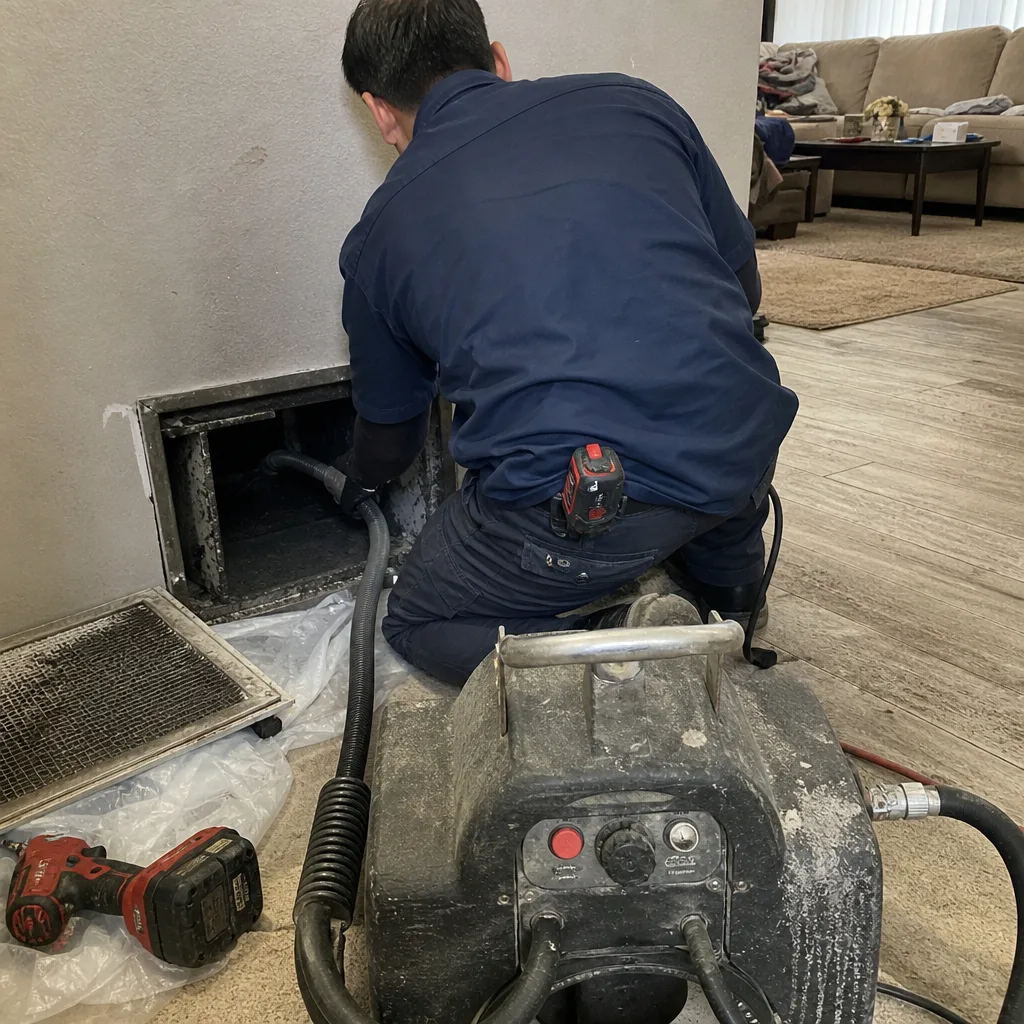
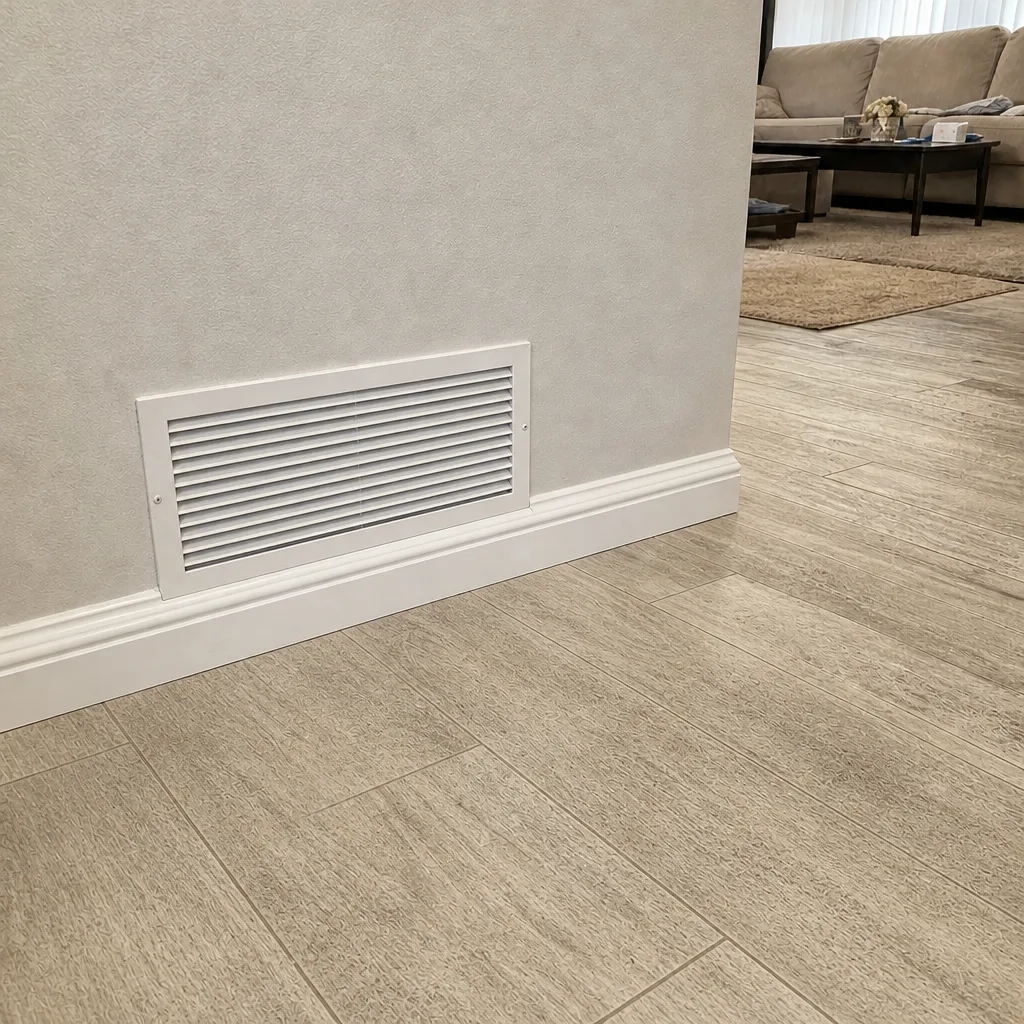
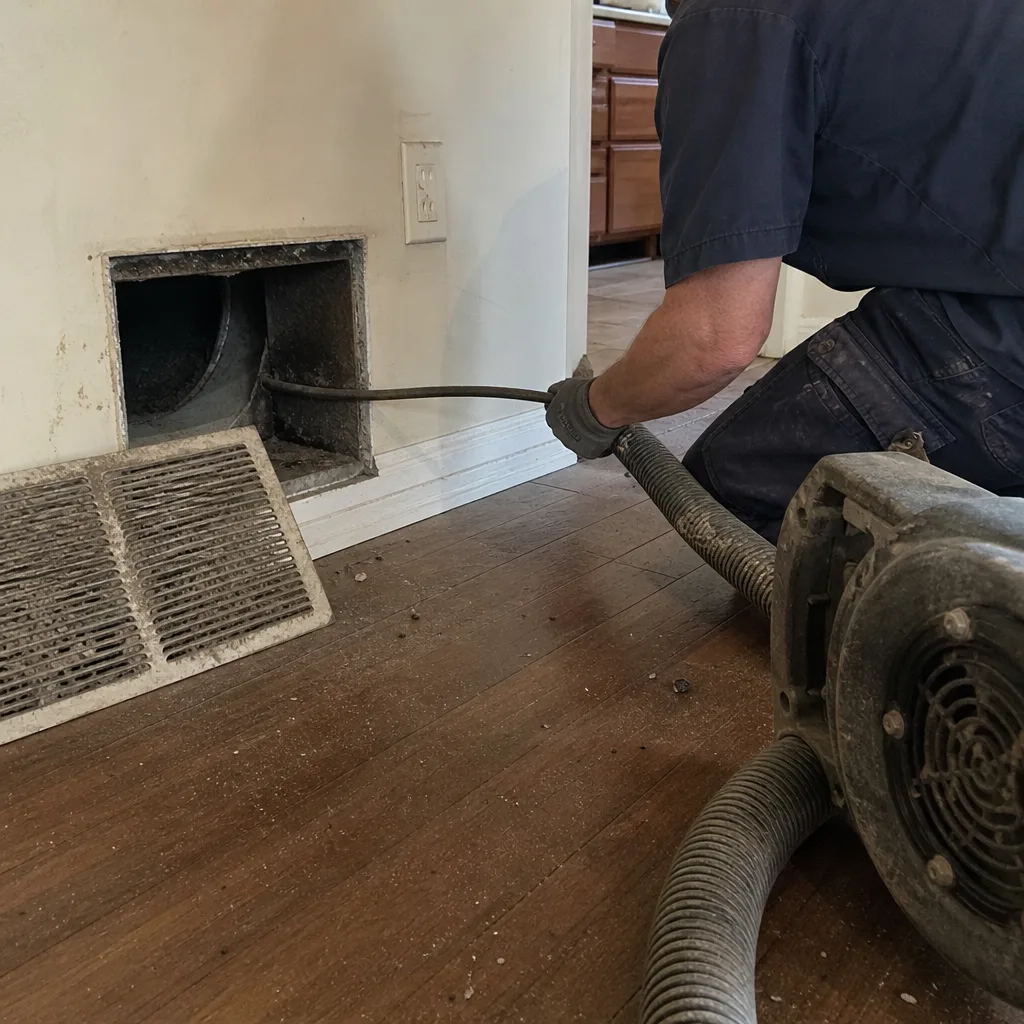
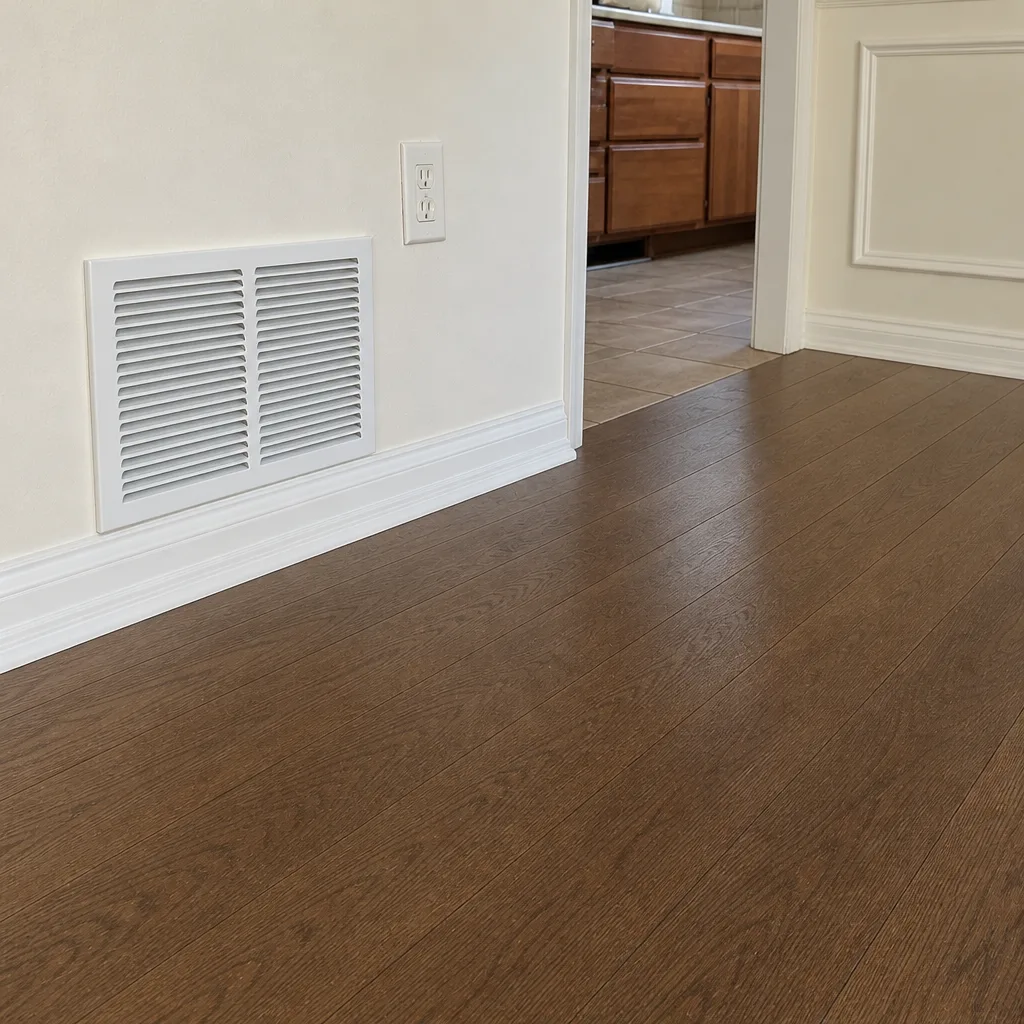
- No before-and-after photos. A professional service documents what it found and what it left behind. Ask for those photos in advance.
- Twenty minutes on site for a whole house. A true whole-system cleaning takes hours, not a quick visit.
- No containment equipment used. If the crew dislodged debris without running filtration equipment during the process, some of that material ended up in the living space.
- Same symptom returns within a few weeks. Either the cleaning was incomplete, or the underlying problem wasn’t a cleaning problem at all.
- No mention of the return side. Cleaning the supply ducts only and skipping the return is a partial job.
When we run air duct cleaning in Visalia, we photograph the interior of the ducts before and after, and we run Abatement Technologies filtration equipment during the service so dislodged particulates are contained rather than blown into the living space. That’s the standard the work should meet. If a previous job didn’t, it’s worth a walkthrough to see what’s actually there. One flat price per system, agreed before work starts.
See the difference
 Before
 After
 Before
 After
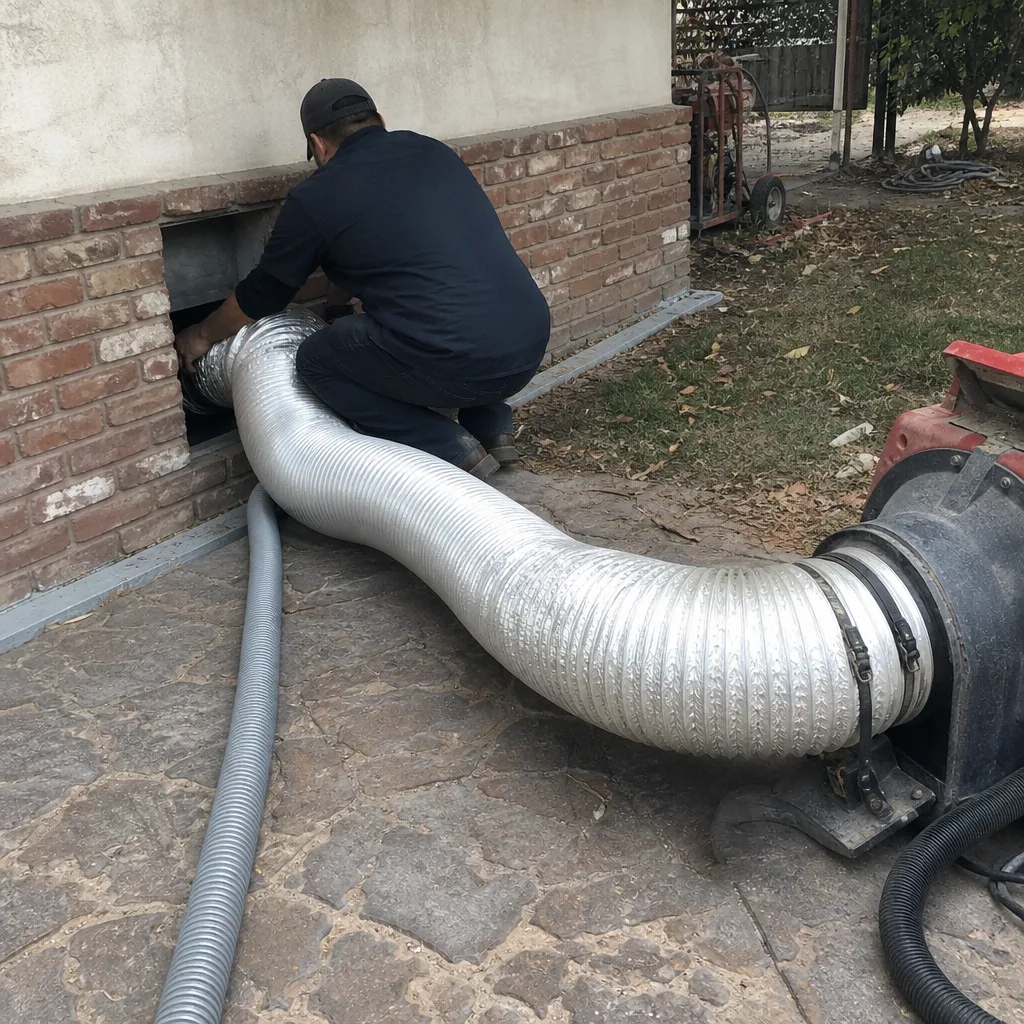 Before
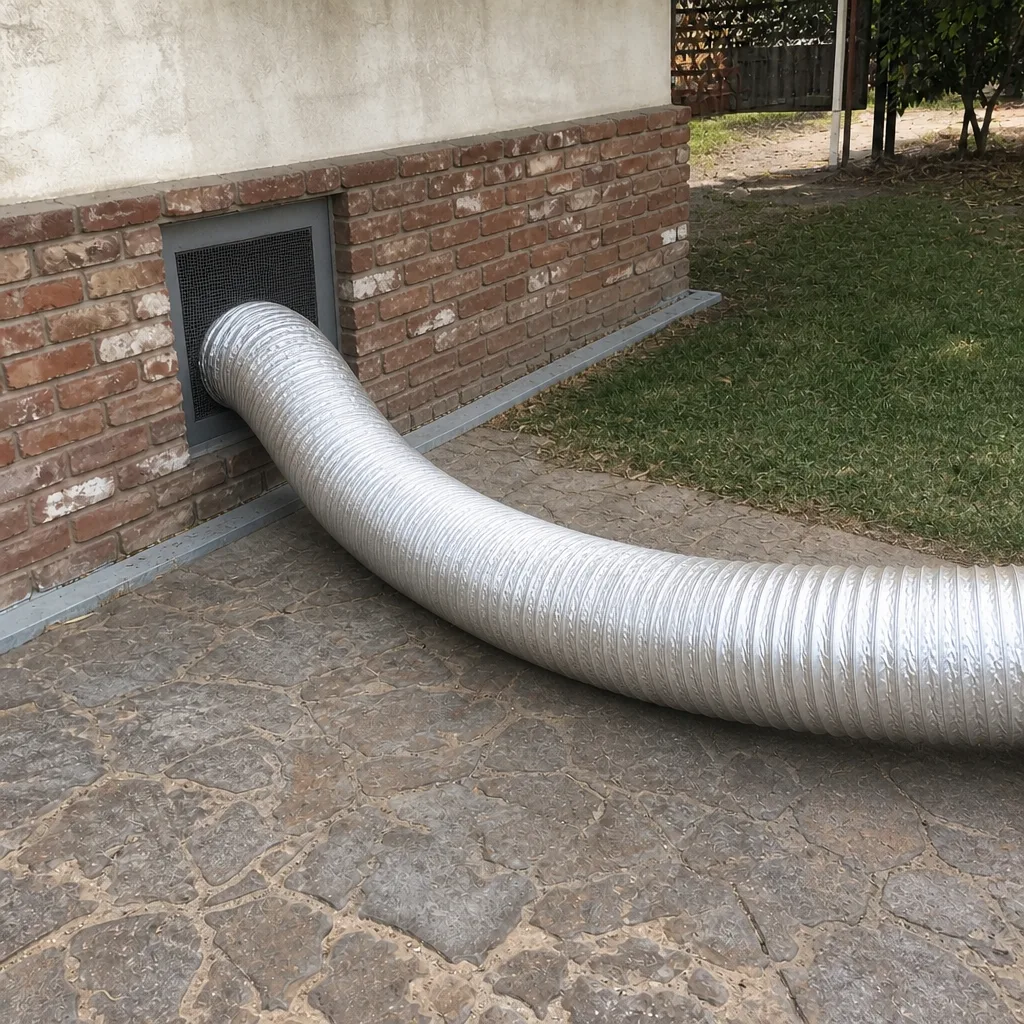 After
Dryer Vents: A Separate System With Its Own Troubleshooting
Dryer vents are a completely separate duct system from the one that heats and cools your home, and they deserve their own troubleshooting. The failure modes are also more serious. A clogged dryer vent is a fire risk, and the U.S. Fire Administration recommends annual dryer vent cleaning as a fire-prevention measure. Visalia’s dry months and high summer temperatures don’t improve the risk. Lint buildup is flammable, and the longer it accumulates, the more heat it traps.
Signs your dryer vent needs attention:
- The dryer takes noticeably longer to dry a load than it used to.
- The dryer feels hot to the touch on the outside during a cycle.
- Clothes come out damp after a full cycle.
- The exterior vent flap doesn’t open fully or stays closed.
- There’s visible lint around the outside vent or behind the dryer.
- A burning or scorched smell during the cycle.
Dryer vent troubleshooting is diagnostic in much the same way as duct troubleshooting: check the shortest, easiest failure first. A crushed flexible hose behind the dryer is the most common culprit, and a clogged exterior termination cap or a bird’s nest in the exterior hood is second. Beyond the back of the dryer, you’re dealing with a run you can’t see, and that’s when dryer vent cleaning becomes the right call. It’s offered as a standalone service, so you don’t have to bundle a whole-house duct cleaning to get it done.
Common Mistakes to Avoid
- Skipping the filter before anything else. Half the “weak airflow” complaints we hear would resolve with a filter change. Check it first, every time.
- Buying a per-vent quote without asking for the total. Per-vent pricing looks cheap until you add up twenty registers. Ask for the whole-system number, then compare.
- Cleaning without addressing leaks. In Visalia’s older neighborhoods, disconnected flex runs are common, and cleaning a system that’s pulling attic air will be undone within weeks.
- Assuming all musty smells mean cleaning. If there’s active moisture reaching the ducts, cleaning alone won’t fix it, and the growth returns.
- Letting a contractor run a blower without containment. Dislodged debris has to go somewhere. Without filtration equipment running during the service, it goes into the house.
- Skipping the return side. Returns carry more dust than supplies in most homes. A cleaning that skips them isn’t a whole-system cleaning.
- Ignoring the dryer vent because it still dries clothes. Slower drying is the early signal. Fire risk is the late one. Don’t wait for the second.
When to Call a Professional
Call a professional when your visual inspection turns up anything you can’t clearly identify as a simple filter issue, when you can see debris or damage inside the ducts and don’t know which problem you’re looking at, or when a musty smell persists after the obvious moisture sources have been ruled out. Call sooner if the system has never been serviced and you’ve been in the home for years without touching it, if you’ve just completed a renovation, or if anyone in the household has asthma or allergies and the dust load in the house feels higher than it should. Duct Cleaning Visalia offers free estimates in Visalia, with the price set per system by the written estimate before any work begins. Call (855) 970-3448. We answer 24/7. Fast dispatch from 7am to 7pm, Sunday through Friday.
Frequently Asked Questions
Air duct cleaning in Visalia typically costs $350 to $700 for a single-story home and $550 to $950 for a two-story home, with the written estimate setting the final price. Repairs to disconnected or damaged duct sections are quoted separately once the technician sees the problem. Call (855) 970-3448 for an exact quote – estimates are free.
Because the cheap quotes usually cover less work: fewer registers, no return side, no containment equipment, and no documentation of what was cleaned. A low teaser price converts into a much larger invoice once the technician is on site, which is the pattern to watch for. One flat price per system, agreed before work starts, is the number to compare. Call (855) 970-3448 to talk through what a whole-system price actually includes.
Before-and-after photos of your own ducts, taken on site, are the clearest proof, and a professional service provides them without being asked. Look for evidence that the return side was cleaned, not only the supply registers. Our crew runs Rotobrush rotary-brush equipment and photographs interior duct surfaces before and after the visit. Call (855) 970-3448 to ask for a sample of what we provide.
Most homes benefit from duct cleaning every three to five years, and many go considerably longer without problems. Homes with pets, recent renovations, allergy or asthma sufferers, or a history of moisture in the system usually fall toward the shorter end. If your inspection turns up visible debris or a persistent musty smell, don’t wait for the calendar. Call (855) 970-3448 for a free assessment.
Usually not. Weak airflow to a single room is most often a disconnected, crushed, or undersized duct run rather than a dirt problem, which is why the inspection step matters so much. Cleaning is the right fix only when the ducts themselves are the source of the symptom. Call (855) 970-3448 and describe what you’re seeing; we’ll tell you which problem it sounds like.
Yes. Duct Cleaning Visalia handles air duct cleaning, dryer vent cleaning, and structural air duct repair, so a disconnected or damaged section found during the visit is repaired rather than left for a separate contractor. Cleaning and repair together are common in Visalia homes, where flex runs through the attic take a beating from summer heat. Call (855) 970-3448 for a free estimate on both.
The Bottom Line
Troubleshooting your ducts comes down to reading the symptom correctly before you spend anything. A single room with weak airflow usually has a disconnected or crushed run, not dirty ducts. Uneven temperatures across the house usually point to design or balancing. A musty smell means moisture, and the moisture comes first. Cleaning is the right fix for contaminant problems, repair is the right fix for leakage, and mixing up the two means paying twice. If your own inspection leaves you uncertain, that’s exactly the point to bring in someone who can tell the difference. We stock and recommend Honeywell and Aprilaire filtration products for ongoing air quality, and our technicians have up to 15 years of experience reading these exact symptoms.
Contact
If your inspection turned up something you can’t clearly identify, call us. Duct Cleaning Visalia offers a free estimate, one flat price per system agreed before work starts, and before-and-after photos of your own ducts. Call (855) 970-3448. We answer 24/7. Fast dispatch from 7am to 7pm, Sunday through Friday.
Written by the team at Duct Cleaning Visalia.