
Last updated November 15, 2026
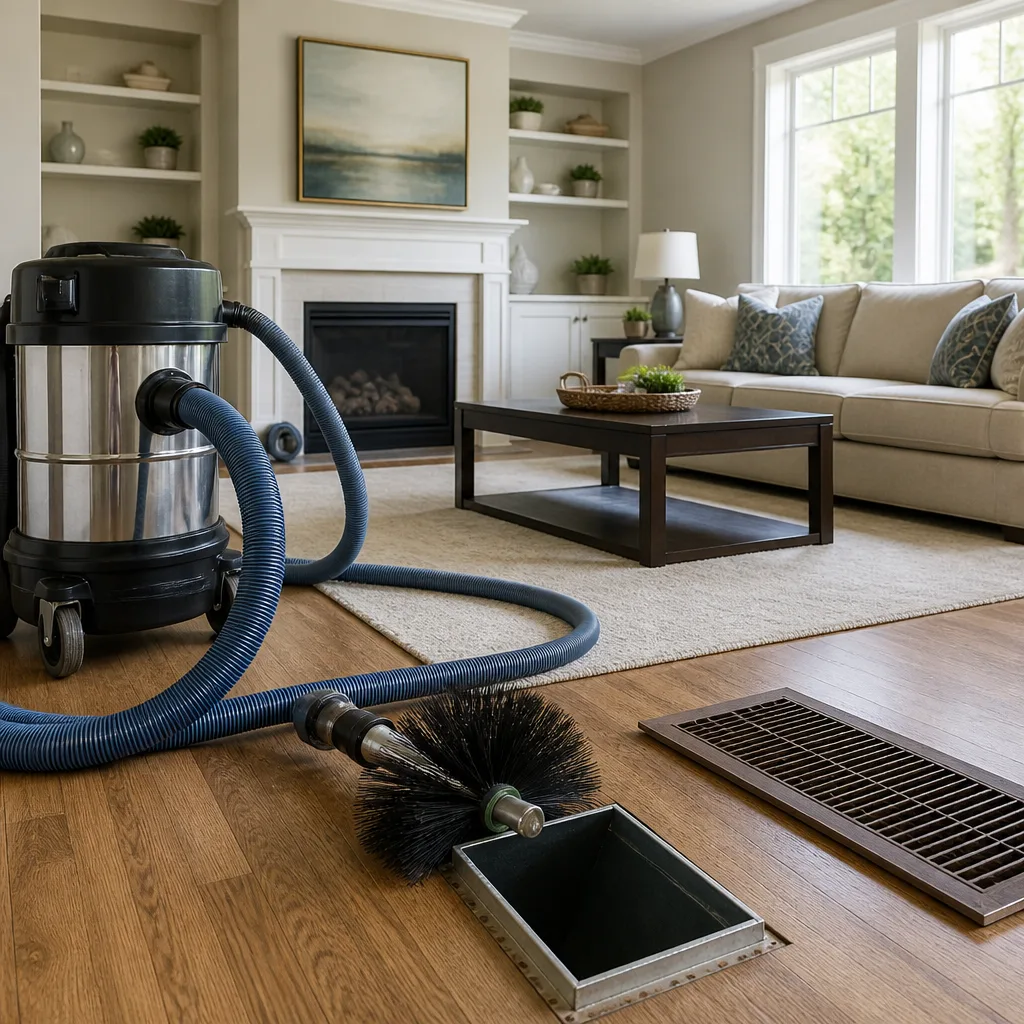 Whole-home duct cleaning
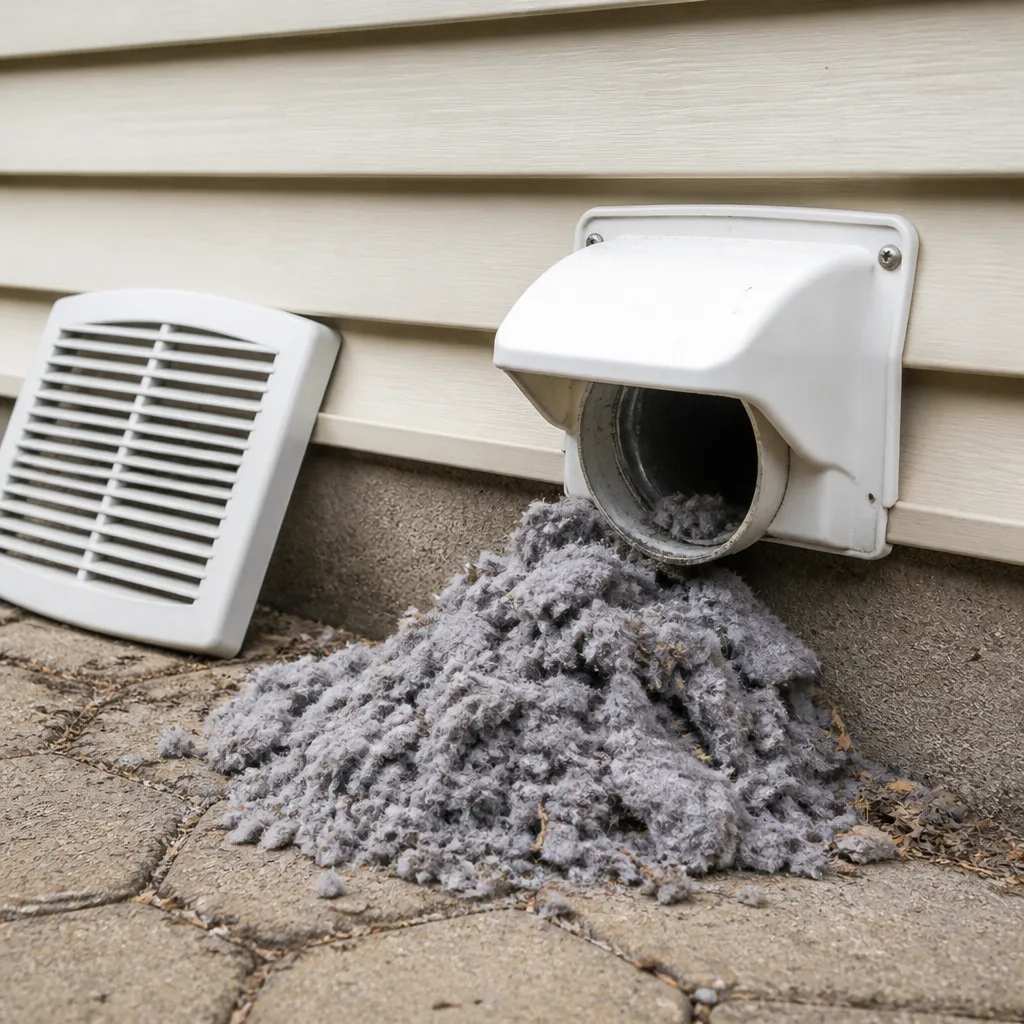 Dryer vent cleaning
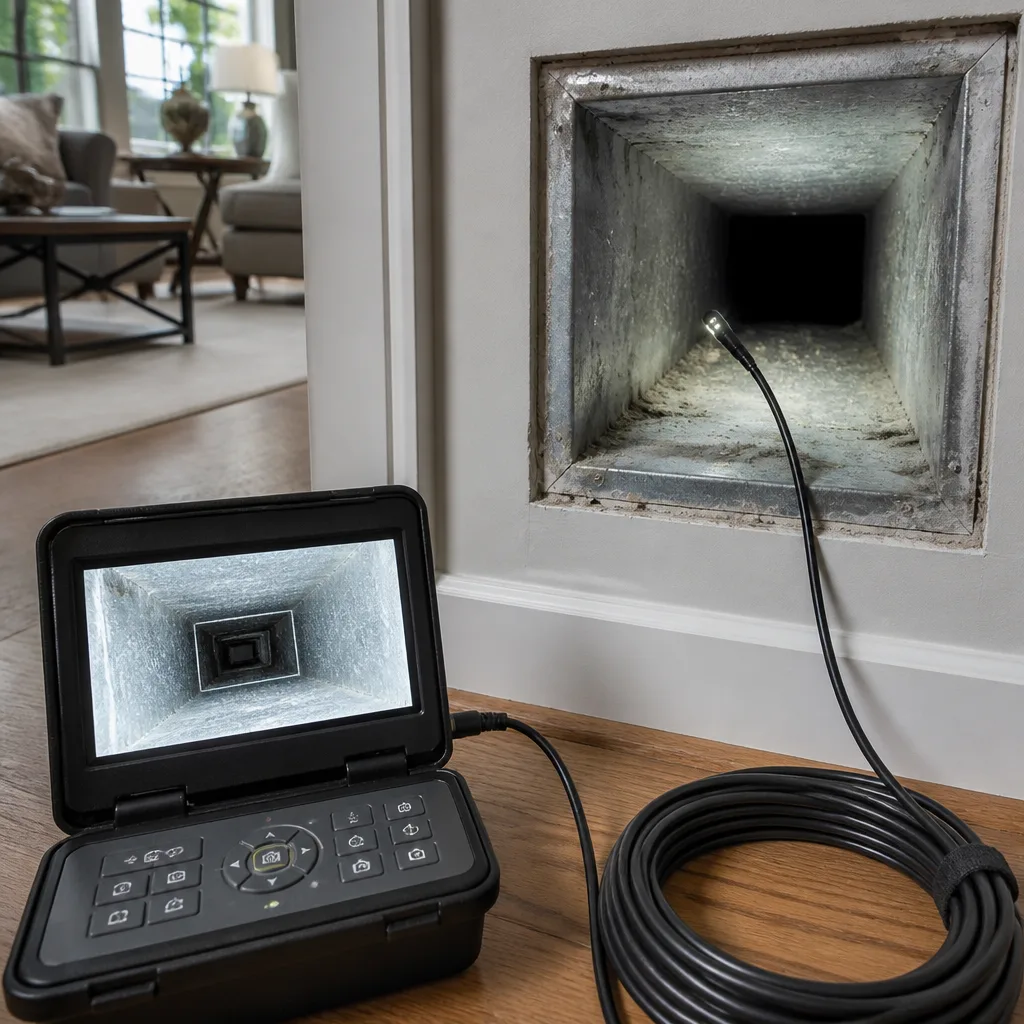 Camera inspection
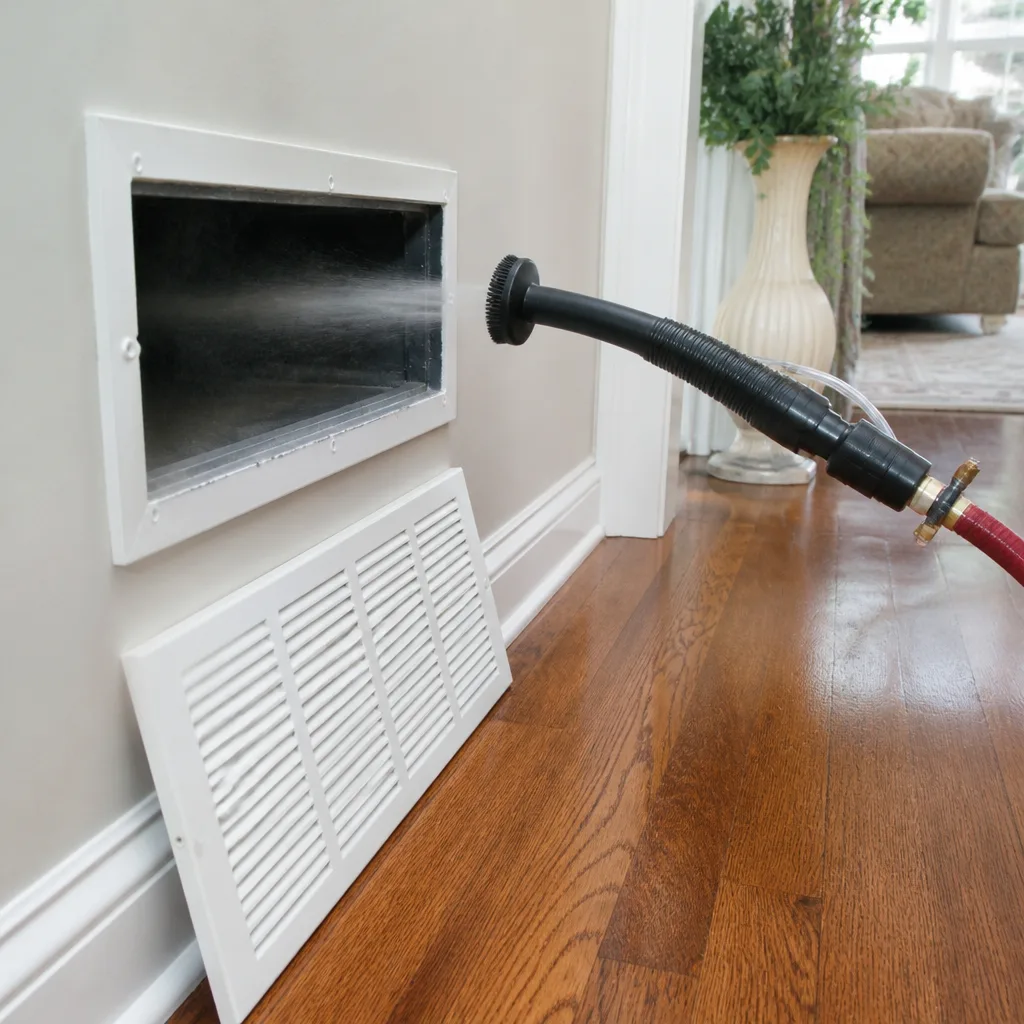 Sanitizing & deodorizing
Whole-system duct and dryer vent check with before-and-after photos - you see exactly what came out of your vents
That "$99 whole-house special" is a bait ad - the real number appears once they are in your hallway, or the "clean" is a shop-vac at the register. We photograph the inside of your ducts before and after instead.
Air Duct Cleaning Warning Signs: A Visalia Homeowner’s Reference Guide
If your allergist has told you to stay indoors on bad air days but your indoor air quality monitor reads worse inside than out, your duct system isn’t protecting you. It’s amplifying the problem, releasing stored contamination every time the fan kicks on. Most homeowners in Visalia never suspect the ducts because duct problems hide behind symptoms we blame on something else: the thermostat, the bathroom, the pollen count, the neighbor’s landscaping. This guide reframes those everyday complaints as a diagnostic trail that leads back to the ductwork. You’ll learn which signs point to a cleaning issue, which point to a mechanical problem, and which mean you should stop reading and call someone today.
Quick Answer
The clearest warning signs your air ducts need cleaning are dust returning to surfaces within 48 hours of cleaning, rooms that never reach the temperature the thermostat calls for, a musty smell when the air conditioner first starts, visible dust buildup around supply registers and return grilles, and allergy symptoms that worsen indoors during heating and cooling season. In Visalia’s dry valley climate, where the AC runs for months and the air carries fine dust from surrounding farmland, these signs tend to show up faster than they would in a damper climate. If you notice a burning or chemical smell rather than a musty one, treat it as an urgent issue and call a professional before running the system again.
Styles & brands we work with
- Whole-home duct cleaning
- Dryer vent cleaning
- Camera inspection
- Sanitizing & deodorizing
Table of Contents
- Mapping Common Household Symptoms to Their Likely Duct Cause
- Duct Contamination vs. HVAC Mechanical Problems: How to Tell Them Apart
- What You Can See at the Registers and Returns
- Smell Classification: Mildew, Burning, and Chemical Odors
- Urgent Health Response vs. Scheduled Maintenance
- Why Visalia’s Climate Makes Duct Problems Show Up Differently
- When the Problem Is Damaged Ductwork, Not Just Dirt
- What You Can Check Yourself and What Needs a Camera Scope
Mapping Common Household Symptoms to Their Likely Duct Cause
Most homeowners treat each household complaint as its own separate annoyance. The dust is just dust. The hot bedroom is just a hot bedroom. The smell in the hallway is just the bathroom fan not working. In our experience, when three or four of these complaints show up in the same house at the same time, they usually share one source: the duct system is moving more than air.
Here’s the mapping we use when a homeowner describes their situation over the phone. Match your complaint to the likely cause:
- Dusty surfaces 48 hours after you’ve cleaned: This is the strongest single indicator of contamination in the supply runs. If your dust rag comes back gray again two days after wiping the furniture, particulate is being pushed out of the registers and settling everywhere. It’s not coming from outside. It’s coming from inside the ducts.
- Rooms that never reach the thermostat setting: Usually a distribution problem, not a furnace or AC problem. A room that stays four degrees warmer than the rest of the house is often fed by a run with a crushed section, a disconnected joint, or a boot that’s pulled away from the register. The equipment is working; the delivery line isn’t.
- Musty odor on first AC startup: The signature of biological growth in the evaporator coil area or in the return ductwork. The AC sits idle for months in Visalia, then the first hot afternoon hits and anyone standing near a register smells it. This isn’t a “wait and it will clear” situation.
- Visible dust trails around the register edges: Air is escaping at the joint between the register and the drywall or floor. That means the boot connection has failed or is loose, and dust is being pulled in through the gap rather than delivered through the room.
- Allergy symptoms that get worse indoors in the evening: The house is tighter in the evening, the fan cycles more, and the body is finally resting. If your symptoms improve at work and worsen at home, the ducts deserve a hard look.
- Headaches or throat irritation that come and go with the HVAC cycle: Air is moving something with it that shouldn’t be in the air. This is a sign to schedule a look, not to open a window and hope.
Each of these symptoms on its own could be something else. Two together means call us to schedule an air duct cleaning assessment. Four or more together usually means the ducts have not been cleaned in a long time, and the contamination has compounded.
Duct Contamination vs. HVAC Mechanical Problems: How to Tell Them Apart
Knowing whether your problem sits in the equipment or in the ductwork changes who you call. We’re a duct specialist, not an HVAC installer, so we’ll tell you plainly when the issue is on the mechanical side and you need a different trade. Here’s how we separate the two.
Signs the problem is in the air handler or mechanical equipment
- Short cycling: The system turns on and off too often in a short window. That’s a control, refrigerant or thermostat issue.
- Insufficient cooling from every register at once: If no room gets cold, the equipment has a capacity or charge problem, not a distribution problem.
- Ice forming on the refrigerant lines or the indoor coil: A charge or airflow restriction at the coil, which is an HVAC service call.
- Loud banging or screeching at startup: Blower or motor bearing issues. Turn it off and call an HVAC tech.
- Breaker trips when the system comes on: Electrical fault at the air handler. Do not keep resetting it.
Signs the problem is in the distribution system (the ducts)
- Some rooms get air, others don’t: One side of the house is comfortable while the other is stale. Classic duct problem.
- Dust returns after cleaning: The system moves air fine, but it’s moving particulate with it.
- Odor at the register but not at the air handler: Contamination is in the runs, not the equipment.
- Whistling or hissing at a register: A leak or an undersized opening. Air is escaping before it reaches the room.
- Visible debris inside a register boot when you shine a light in: The ducts themselves are dirty.
The honest answer for a lot of Visalia homes is “both.” A dirty system with a sagging flex run and a coil that hasn’t been checked in years has more than one issue. What we can do is clean the entire duct system, clear the dryer vent cleaning side of the house, and repair damaged sections on the same visit, so you are not coordinating three trades. If your system needs a new compressor, we’ll tell you so and point you to an HVAC contractor. That’s the boundary of our specialty and we respect it.
What You Can See at the Registers and Returns
Before scheduling anyone, you can do a simple visual inspection of your own registers and returns. It takes ten minutes, a flashlight, and a stool. What you find will tell you a lot about how overdue the cleaning is – and whether a camera scope is warranted.
Signs that cleaning is overdue (visible without a scope)
- Remove a supply register cover and look at the inside of the boot. A thin film of light gray dust is normal. Dark, matted, or fuzzy buildup means significant contamination.
- Look at the return air grille. The return is a filter, and it’s supposed to catch what the filter misses. If the grille itself is coated in a thick gray layer, the filter behind it is probably in the same shape or worse.
- Press a white paper towel against the inside of the boot and pull it away. If it comes back heavily marked, the ducts are moving dust. If it comes back clean, the ducts are fine on that run.
- Check the return duct interior with a flashlight. If you can see visible debris, dust webs, or rodent droppings, stop investigating and call.
- Look at the air handler cabinet (the metal box on the furnace or above the coil). If the outside of the cabinet is dusty, the inside almost certainly needs attention.
Signs that need a camera scope to assess
- A run that delivers no air: The dust inside is not the problem; the line is disconnected, crushed or blocked. Only a scope can see the collapse.
- Water staining on ceiling or drywall near a duct run: There may be moisture in the duct or an adjacent leak causing it. A scope plus a moisture reading tells the story.
- Rodent activity suspected: Droppings at a register mean there’s a breach and animals inside the system. That’s a scope job with containment, not a surface wipe.
- Recent renovation: Drywall dust and construction debris settle deep in the runs. A scope shows whether the contamination is only in the visible sections or throughout.
- A burning or chemical smell anywhere in the system: The source location matters, and a scope is how a technician finds it.
If you’re moving into a home in Visalia that was vacant for a season, or finishing a renovation, the visible sign is often nothing at all. The contamination is downstream of the register. That’s a scope call. Call (855) 970-3448 and we’ll set up an inspection during fast dispatch from 7am to 7pm.
Smell Classification: Mildew, Burning, and Chemical Odors
Odor is the most underrated diagnostic tool a homeowner has. The nose is often more sensitive than any monitor, but only if you classify the smell correctly. Three categories matter, and each points to a different cause with a different response time.
Mildew smell (biological growth)
The smell is like a damp basement or an old towel left in a bag. It shows up strongest when the AC first kicks on after a period of inactivity, or when humidity has been high. This points to biological growth somewhere in the system, usually the evaporator coil area or the return plenum. In Visalia, this shows up more often in spring and early summer than in the dead of the dry season, because the AC sits between runs and the coil stays damp.
Mildew smell is a scheduled-maintenance signal, not an emergency, but it does not clear on its own. Cleaning the system and then reviewing the return-side filtration is the standard response. We recommend Honeywell or Aprilaire filter cabinets here, because the return side is where the moisture sits and a properly housed filter traps what’s cycling before it becomes growth.
Burning smell (dust on heat strips)
A burning smell on first heat of the season is dust settled onto the electric heat strips or the heat exchanger, burning off. A faint smell for the first ten or fifteen minutes after you turn on the heat is usually this – and it’s harmless. It should not persist past the first cycle. If the burning smell continues, or if you smell something hotter than “first-heat dust,” shut the system off and call. This is a point where we hand off to an HVAC tech if the smell comes from the heat exchanger itself.
Chemical smell (off-gassing)
A chemical or plastic smell coming from the ducts points at the duct board or an interior lining that’s aging and off-gassing. In older Visalia homes, this is most often duct board in the return plenum. It’s also the smell that shows up when flexible duct liner has degraded. A chemical smell is a scheduled-maintenance signal, but a persistent one deserves a look, because degraded liner is a material that shouldn’t be moving air.
If you can’t place your smell in any of these three categories, describe it to us on the phone. We answer 24/7 and we can usually narrow it down with a few questions. Call (855) 970-3448.
Urgent Health Response vs. Scheduled Maintenance
Not every warning sign carries the same urgency. A dusty register in a healthy household is a maintenance item. The same dust in a home with a child on asthma medication or an adult in chemotherapy is a different situation. Here’s how we separate urgency from routine so you know whether you’re scheduling a job or making a call now.
Call us today (urgent)
- An asthmatic household member whose symptoms are worsening indoors: If inhaler use is going up while the system runs and dropping when it doesn’t, the system is the suspect. This is a same-day call in our book.
- Visible rodent droppings at a register or return: Droppings in a duct carry pathogens. Stop running the system, tape the register shut, and call.
- A burning or chemical smell that doesn’t clear: Shut the system off, call us, and if the smell is sharp and electrical, call an HVAC tech or the fire department first.
- Post-renovation dust visible inside the registers: Drywall dust is fine particulate and takes a different cleaning process than standard dust. Get it addressed before occupancy.
- A dryer vent that takes longer than one cycle to dry a load, or feels hot to the touch: This is a fire risk. We treat dryer vent calls as urgent because the U.S. Fire Administration identifies lint buildup as a leading cause of residential dryer fires.
Schedule this week or next (routine)
- The “dust returns in 48 hours” sign in a household with no respiratory concerns.
- A single room that’s warmer than the rest, with no health symptoms involved.
- Musty smell on AC startup in an otherwise healthy home.
- Visible film at supply registers in a home that hasn’t been cleaned in years.
- Post-move-in inspection of a property that sat vacant.
The line here is simple: if someone in the home has lungs that don’t do well with particulates, treat every sign as urgent. If everyone’s healthy and the signs are cosmetic, you’re scheduling. Either way, an estimate is free. Call (855) 970-3448.
Why Visalia’s Climate Makes Duct Problems Show Up Differently
Visalia sits in the San Joaquin Valley, and that shapes how duct contamination behaves here in ways that a guide written for a national audience won’t capture. Three local factors matter.
The AC runs a long cooling season. The number of days your system operates each year here is higher than in most of the country, which means the fan is pushing air through the ducts for more hours. Contamination accumulates on run-time, not calendar time. A duct system in Visalia can go from “cleanish” to “needs work” faster than the same system in a climate where the AC runs a few weeks a year.
Fine agricultural and valley dust. The air here carries fine particulate from surrounding farmland and from the valley floor. Some of that makes it past the filter. The return side of your system handles more fine particulate than a system in a coastal city – and that’s exactly why we run Nikro HEPA-rated vacuums and Abatement Technologies filtration during service. Standard shop-vac setups recirculate fine particulate back into the home instead of capturing it.
Dry summers with wet winters, and a shouldering season in between. The AC goes from daily to off in a week. That on-off transition is when a damp coil sits idle, which is why musty startup smell is such a reliable warning sign here. In our experience, the first week the AC turns back on in Visalia is the week most homeowners notice their problem.
Homes near downtown Visalia, in the older neighborhoods around Mooney Grove, and in newer subdivisions off Riggin Avenue all see the same fundamental issue: the ducts that were installed when the house was built are the ducts that are still there. What happens inside them depends on how the system was used. If you’re not sure where your house stands, our guide to Visalia service and scheduling is a good place to start.
When the Problem Is Damaged Ductwork, Not Just Dirt
Not every dirty duct is a cleaning job. Some are repair jobs wearing a cleaning job’s clothes. In our experience running duct repair through Visalia homes, a meaningful share of “my ducts are dirty” calls are actually “my ducts have failed at a joint, a boot, or a run.” Cleaning without repair leaves the problem in place.
Here’s what damage looks like from the homeowner’s side:
- A room that gets almost nothing while others get plenty: A flex run has detached or crushed behind a wall. Cleaning alone will not fix this.
- Dust concentrating at the register edges: The boot-to-drywall joint has opened. Air is bypassing the register and pulling dust at the leak.
- Visible sagging flex duct in the attic or crawlspace: A run has lost its support or has a kink. Airflow is choked at the kink.
- Rattling or “flapping” at a specific duct during startup: A section has separated inside the run and is vibrating. Not a fan problem.
- Mold or water staining at a boot: A duct that isn’t sealed properly has been drawing in humidity from the surrounding space.
Our position is simple: repair and clean together on the same visit. A homeowner shouldn’t have to call a duct cleaner, then an insulation person, then a handyman. Duct Cleaning Visalia runs Rotobrush rotary-brush cleaning, Nikro HEPA vacuum capture, and structural repair as one job, using the same professional-grade equipment used in restoration and remediation work. We contain what we clean with Abatement Technologies filtration so the dust from repair work doesn’t end up in your living room. If you’re chasing a specific symptom and want the wider picture on duct service, our Duct Cleaning Visalia overview walks through the full scope.
If you’re not sure whether your issue is cleaning or repair, the answer is often “both” – and the only way to know is an inspection. Call (855) 970-3448. We answer 24/7. Fast dispatch from 7am to 7pm, Sunday through Friday.
What You Can Check Yourself and What Needs a Camera Scope
We’d rather you know your own house than guess. Here’s the practical split between what a homeowner can check safely and what genuinely needs a technician’s scope.
What you can check yourself
- Visual at each register: Flashlight into the boot. Look for dust buildup and any debris. Do not remove flex duct or open walls.
- Visual at each return: Grille condition, filter condition. Change the filter if it’s loaded.
- Airflow test at each register: A tissue held at the register face tells you roughly how much is moving. Note which registers barely move the tissue.
- Temperature differential: A $15 infrared thermometer reads the supply register temp vs. room temp. If some registers show a large spread and others small, you’ve located a distribution problem.
- Smell test during the first ten minutes of AC or heat startup: Classify what you smell as mildew, burning, or chemical. Write it down and describe it accurately when you call.
- Check the dryer vent outside: A flap that won’t fully open, or lint escaping around the outside vent, is a sign the vent is restricted.
What needs a camera scope
- Any run that delivers no air.
- Post-renovation assessment of the deep system.
- Suspected rodent intrusion.
- Any wall or ceiling cavity you suspect has a crushed or disconnected line.
- Mystery smells where the source isn’t at a visible register.
Don’t crawl through an attic or drop ceiling to investigate duct problems yourself. It’s easy to damage duct wrap, flex duct, and the air barrier through an unplanned step. The visual checks above tell you enough to know whether to call. The scope work stays in the technician’s hands.
Common Mistakes to Avoid
- Assuming “new house” means “clean ducts.” New construction in Visalia is often the dirtiest duct scenario, because drywall dust and construction debris settle in every run before the system ever runs a full cycle. Have them cleaned before you move in.
- Cleaning before diagnosing. If a run is crushed or detached, cleaning that run does nothing. Get an inspection first, then a cleaning-and-repair plan.
- Buying the cheapest coupon-book quote. “Blower-and-go” operations run a shop vac through your registers and call it a cleaning. Walnut-sized debris and fine valley dust need a real HEPA rig like the Nikro units we run. When the price is suspiciously low, the equipment and time reflect that.
- Forgetting the dryer vent. Homeowners schedule duct cleaning and then never think about the dryer vent, which is the actual fire risk. A lint-clogged dryer vent in a Visalia summer attic space is a serious problem. Have it cleared annually.
- Ignoring a smell because the system “still works.” The AC still cooling your house doesn’t mean the ducts are safe. Musty, burning, and chemical smells are information, not background noise.
- Doing the whole job in stages over months. Cleaning, dryer vent, and any duct repair done on the same visit are cheaper and more effective as one trip. Splitting them means three trips and three delays.
- Skipping the filter-path review after cleaning. Dirty ducts come back if the filtration and return side aren’t addressed. Ask what filter cabinet and filter grade your system actually wants – we recommend Honeywell, Aprilaire, or Guardsman gear because they give you a maintenance path after the cleaning.
See the difference
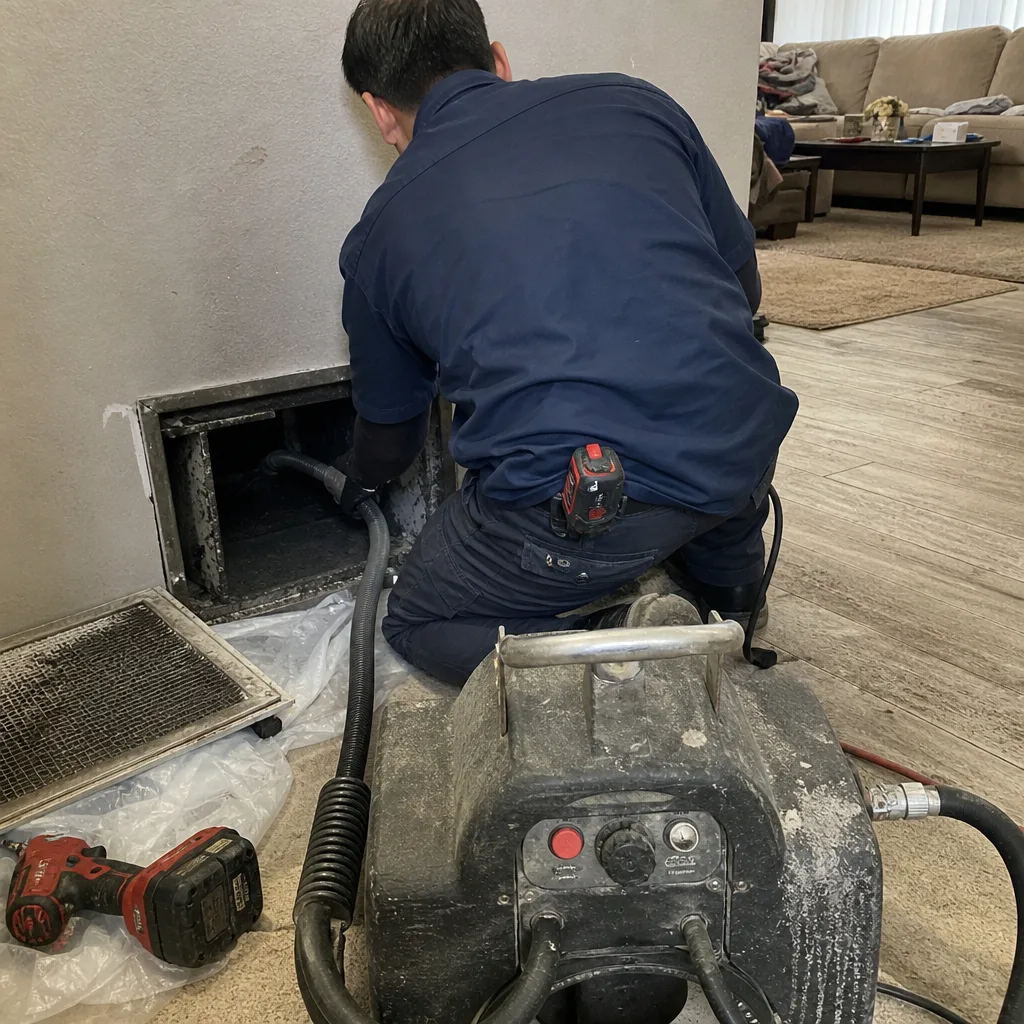 Before
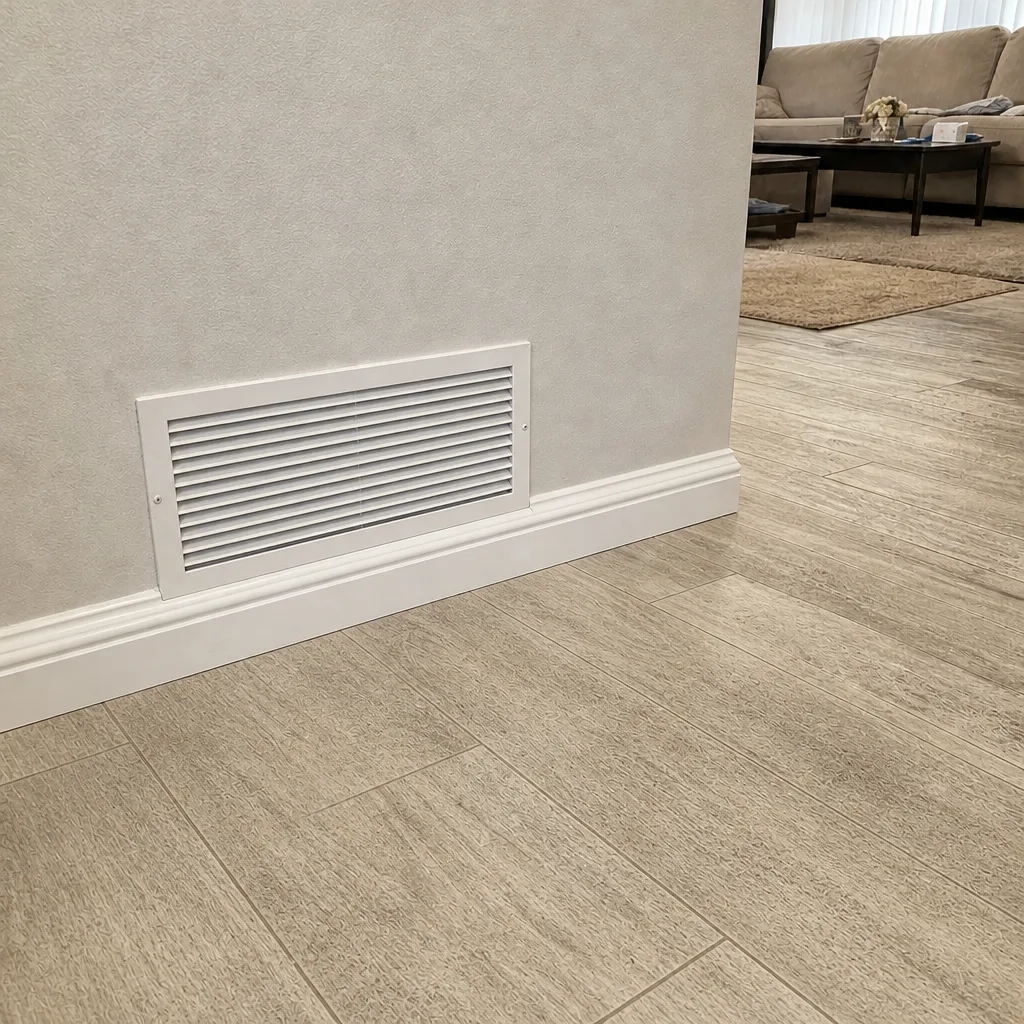 After
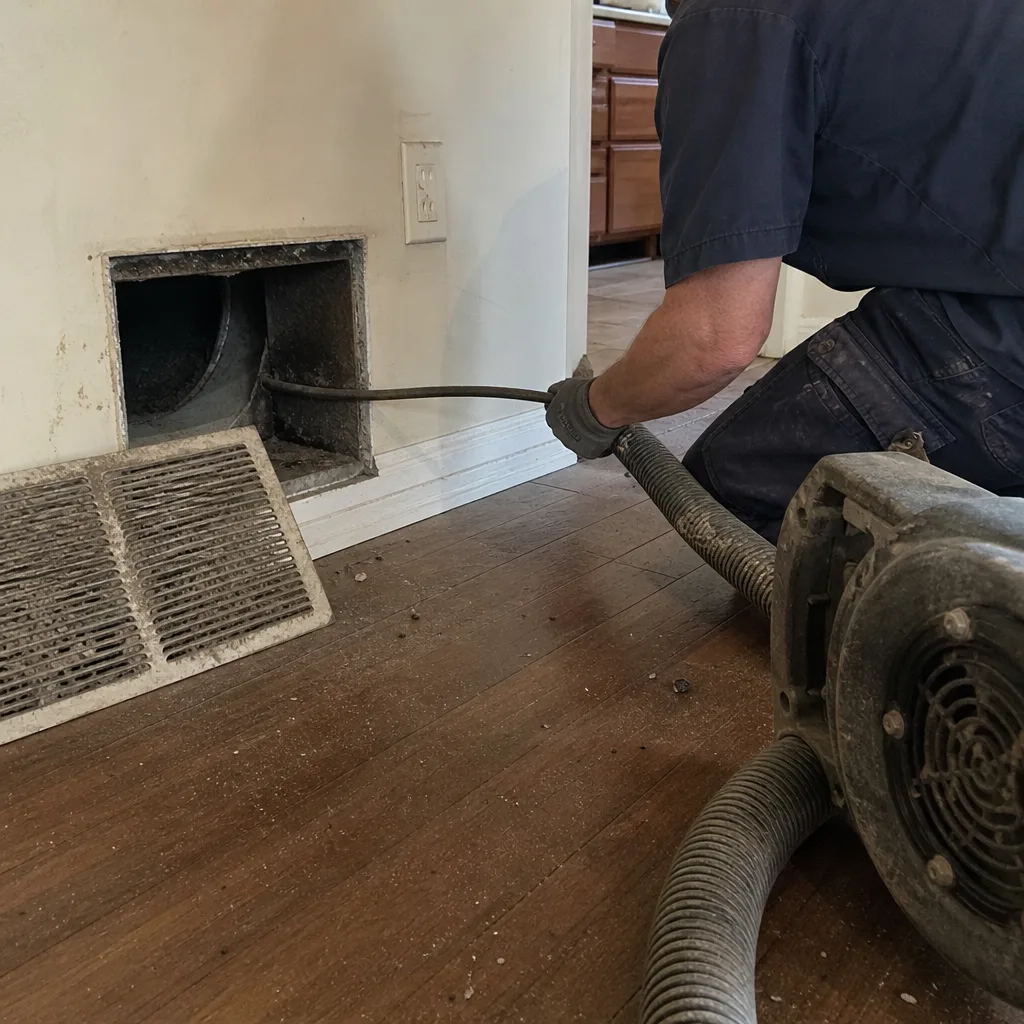 Before
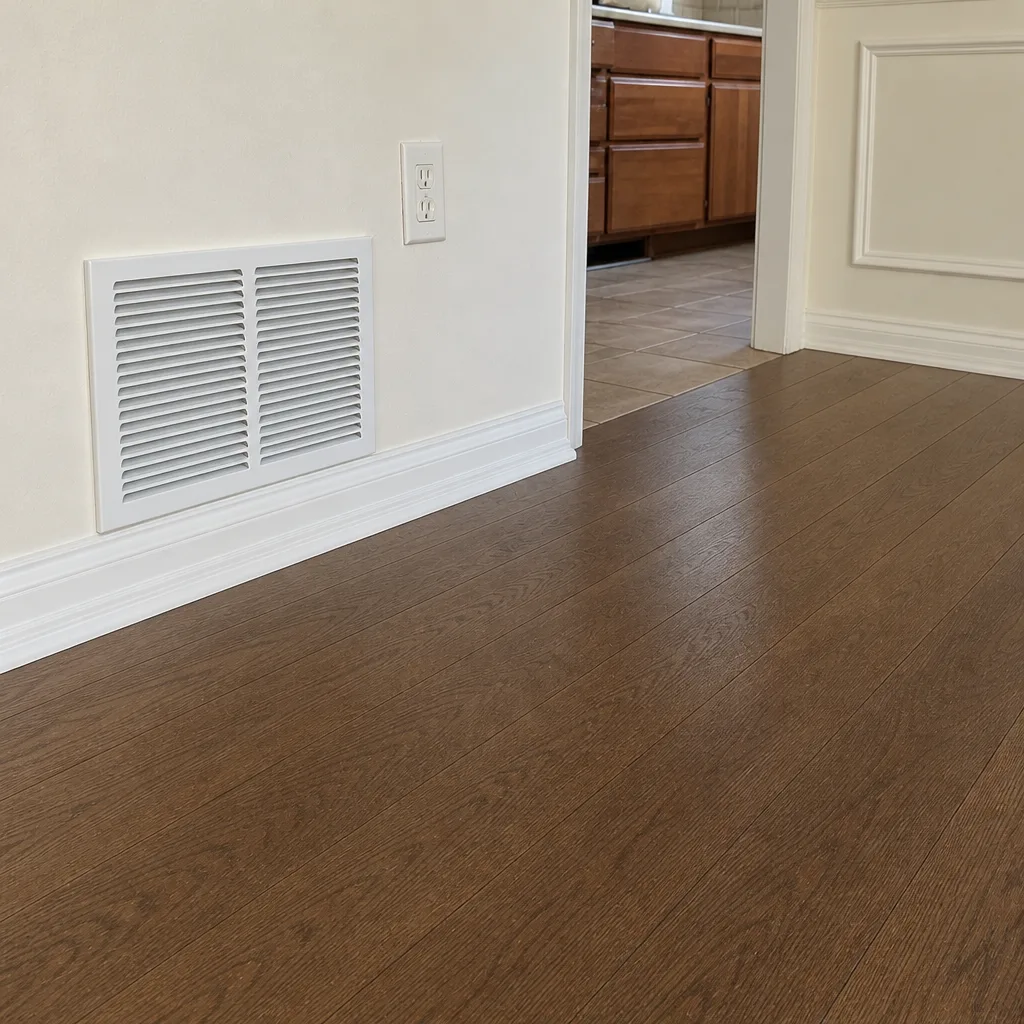 After
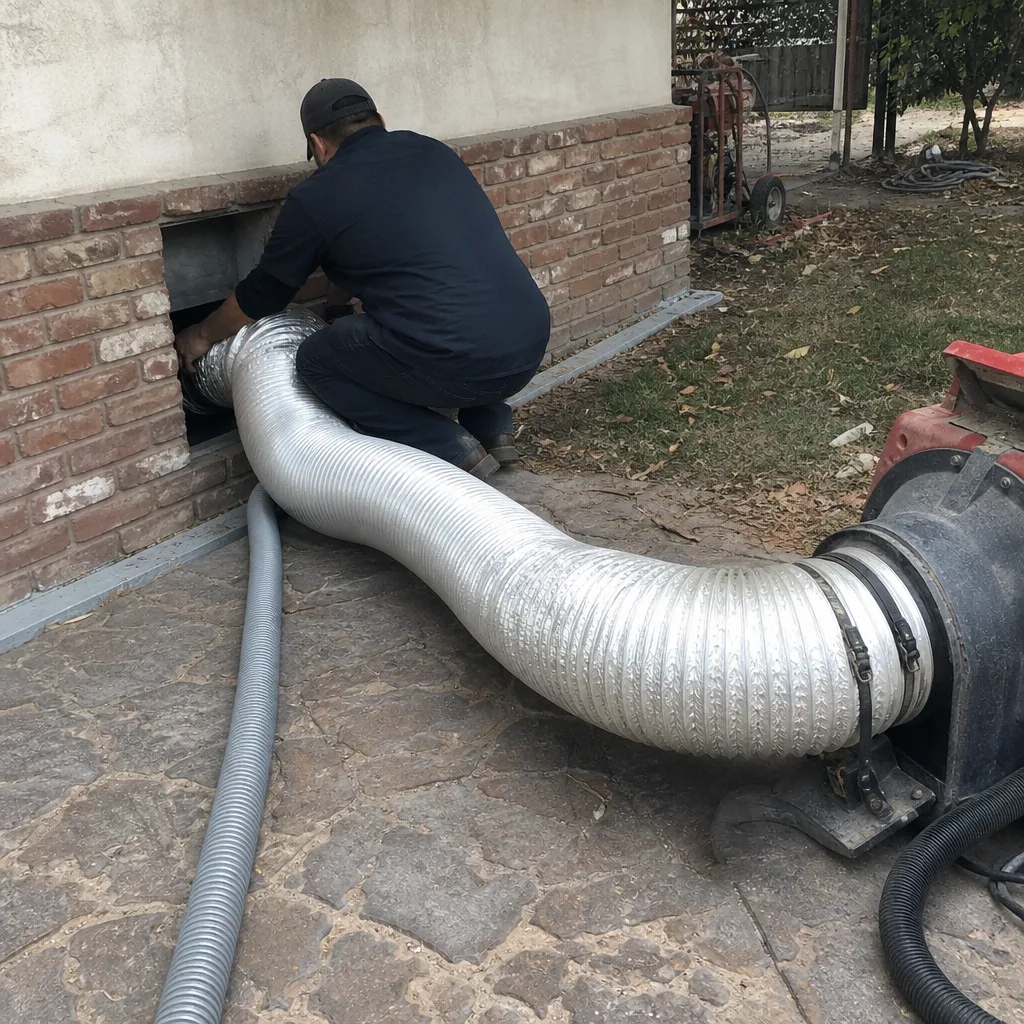 Before
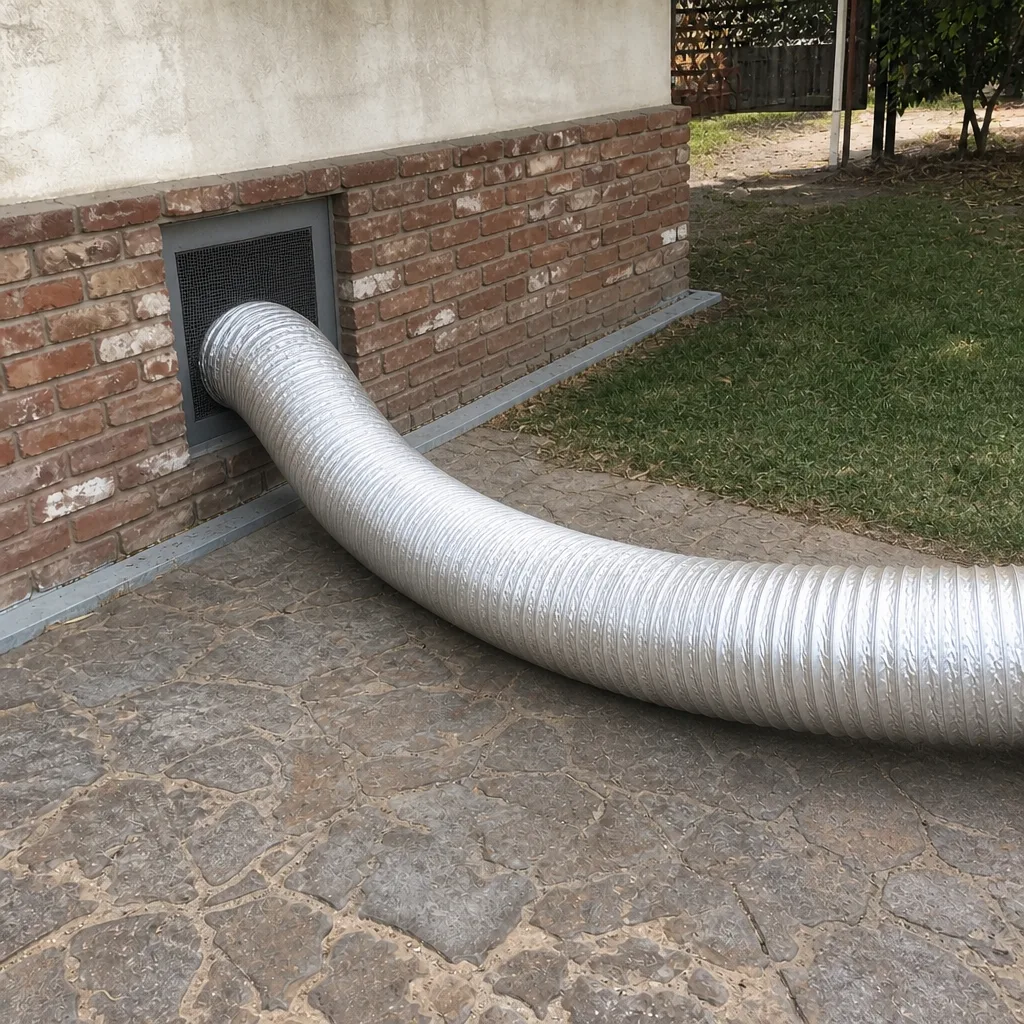 After
When to Call a Professional
Call us when your visual inspection turns up dark or matted buildup in registers, when dust returns to your furniture within 48 hours of cleaning, when a room never cools despite the thermostat set correctly, or when you smell something in the air that you’d rather not – mildew, burning, or chemical. Call when someone in the home has asthma or a weakened immune system and the indoor symptoms are worsening. Call if you’re moving into a Visalia home that sat vacant, just finished a renovation, or has a dryer vent you’ve never touched. Duct Cleaning Visalia offers free estimates in Visalia and can schedule a cleaning, dryer vent clearing, or duct repair on the same visit. Call (855) 970-3448. We answer 24/7. Fast dispatch from 7am to 7pm, Sunday through Friday.
Frequently Asked Questions
Most Visalia homes need air duct cleaning every three to five years, based on how often the system runs rather than calendar time. Homes with pets, recent renovations, or household members with allergies are usually on the shorter end. A call for an inspection is worth it if you’re not sure when it was last done.
A dusty register is normal; dust returning to surfaces within 48 hours of cleaning is a sign of a duct problem. The difference is whether the dust is being delivered by the system or just settling. If your cleaning routine has become a twice-a-week fight with the dust rag, the ducts deserve an inspection. Call (855) 970-3448 for an exact assessment – estimates are free.
Low quotes usually reflect equipment and time, not efficiency. A bargain quote typically means a shop vac run over the register boots rather than a full-system clean with HEPA capture. Professional-grade gear – Rotobrush rotary-brush cleaning and Nikro HEPA vacuums – takes longer and costs more to run, and that shows up in the quote. We price per job by written estimate, agreed before work starts, with before-and-after photos of your own ducts so you know the work was done.
Yes, treat it as a scheduled-maintenance item rather than ignoring it. A musty smell on AC startup is the signature of biological growth in the system, and it does not clear on its own. A chemical smell (plastic or off-gassing) is also a scheduled look. A burning smell on first heat that persists beyond the first cycle is a call-now item. Call (855) 970-3448 for an inspection.
No. A shop vac at the register is not a duct cleaning. It can dislodge debris without capturing it, which makes indoor air temporarily worse. Proper duct cleaning requires negative-pressure HEPA vacuums and rotary-brush agitation along the length of each run, plus containment so dislodged particulate doesn’t recirculate. That’s why we run Abatement Technologies filtration during every job.
Not with us. Duct Cleaning Visalia runs cleaning, dryer vent clearing, and structural air-duct repair as one service under one roof, so you don’t manage multiple vendors for connected problems. If a run is crushed or a joint is open, we fix it on the same visit rather than leaving it for a separate contractor. Call (855) 970-3448 to set up an inspection and estimate.
The Bottom Line
Duct problems announce themselves through symptoms you can see, feel, and smell – not through things you can inspect directly without a camera. Dust returning in 48 hours, uneven rooms, musty startup smell, and visible buildup in the boots are the primary signals. In Visalia’s climate, where the AC runs hard and the air carries fine valley dust, those signals show up faster than in most places. You don’t need to guess. Map the symptom to the cause, do the ten-minute visual inspection, and call for anything beyond the basics. An estimate is free and the pricing is set per job in writing before work starts. Call (855) 970-3448. We answer 24/7. Fast dispatch from 7am to 7pm, Sunday through Friday. Duct Cleaning Visalia handles cleaning, dryer vent clearing, and duct repair with the same professional-grade equipment used in restoration work, so what gets cleaned stays clean.
Written by the team at Duct Cleaning Visalia.