
Last updated November 15, 2026
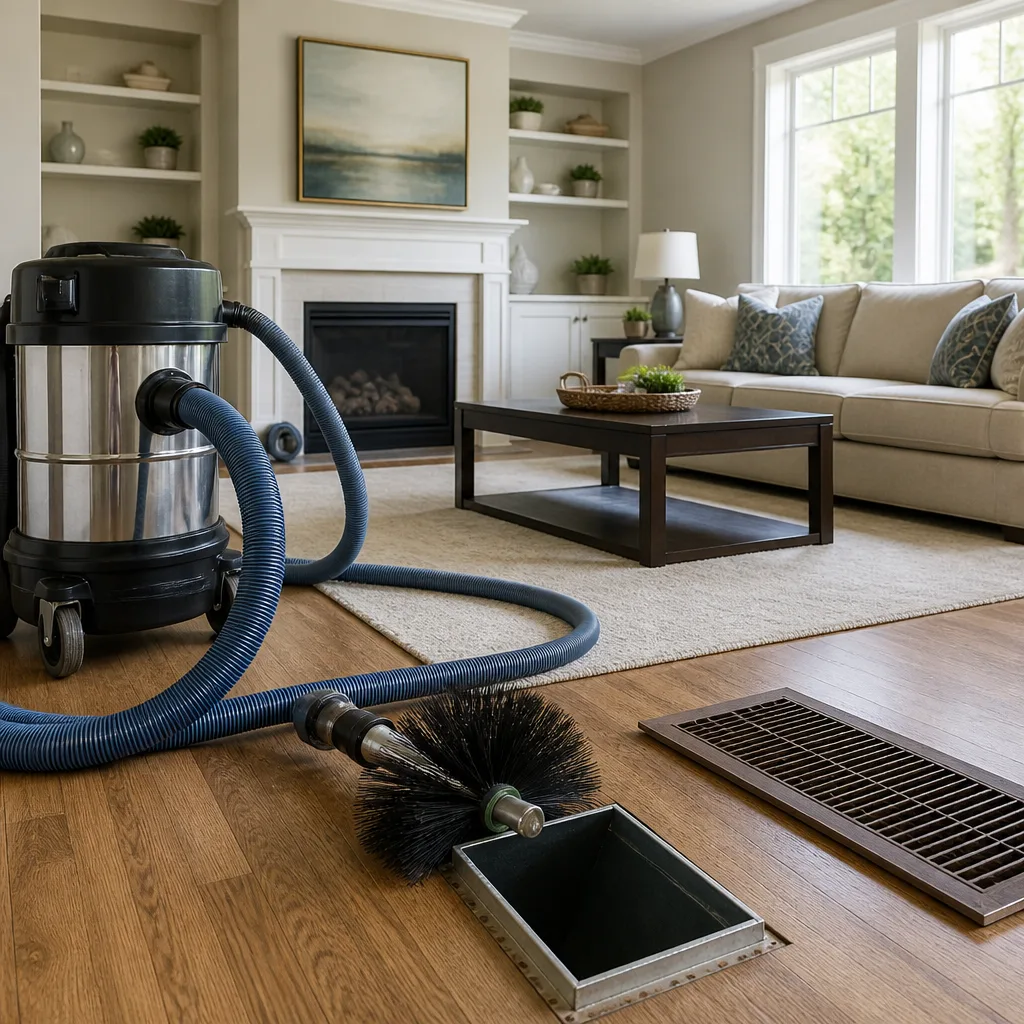 Whole-home duct cleaning
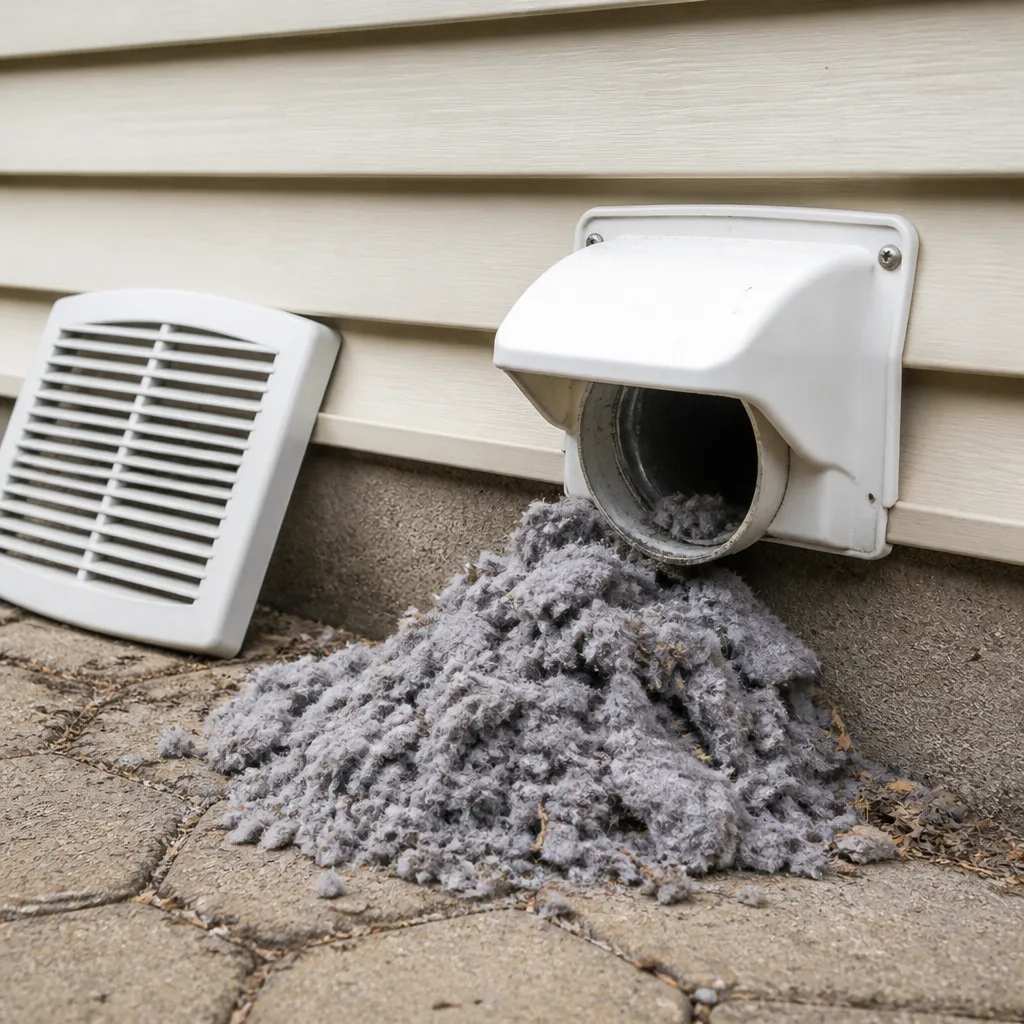 Dryer vent cleaning
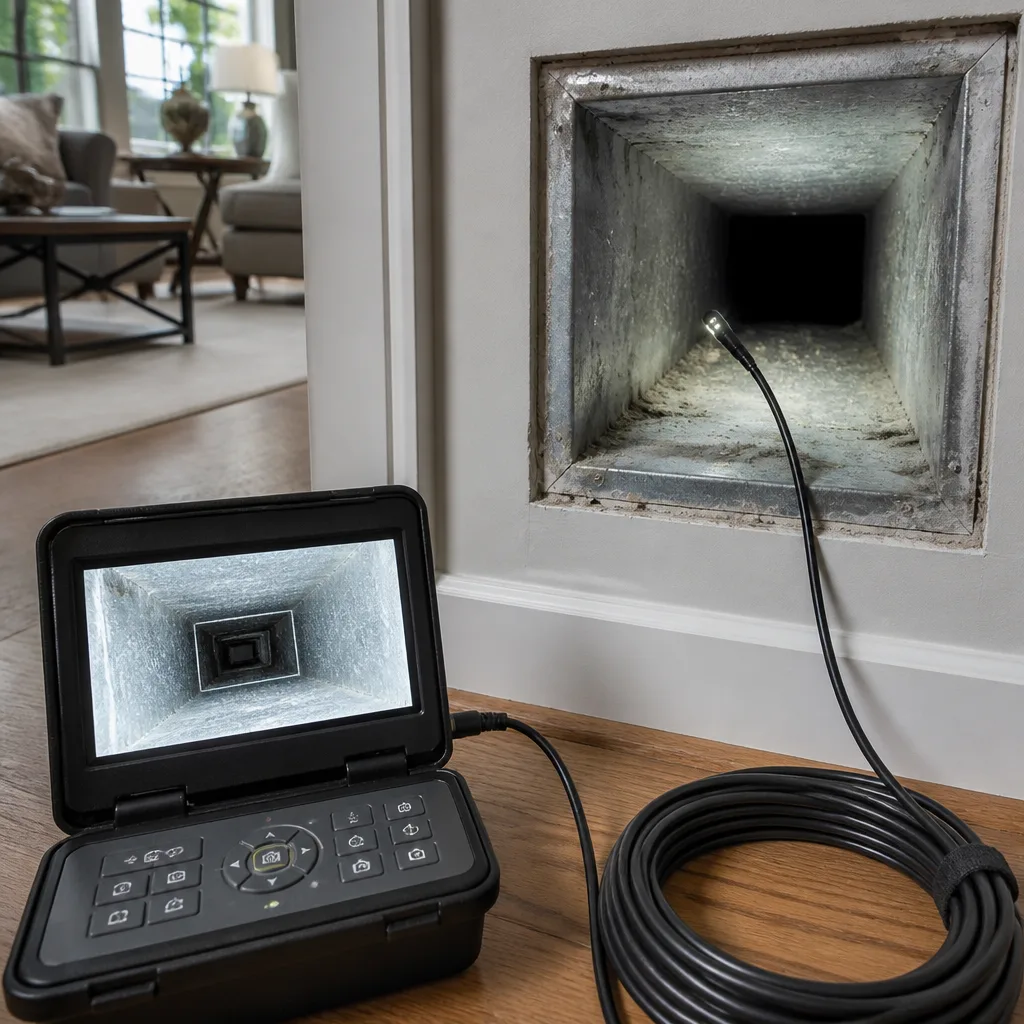 Camera inspection
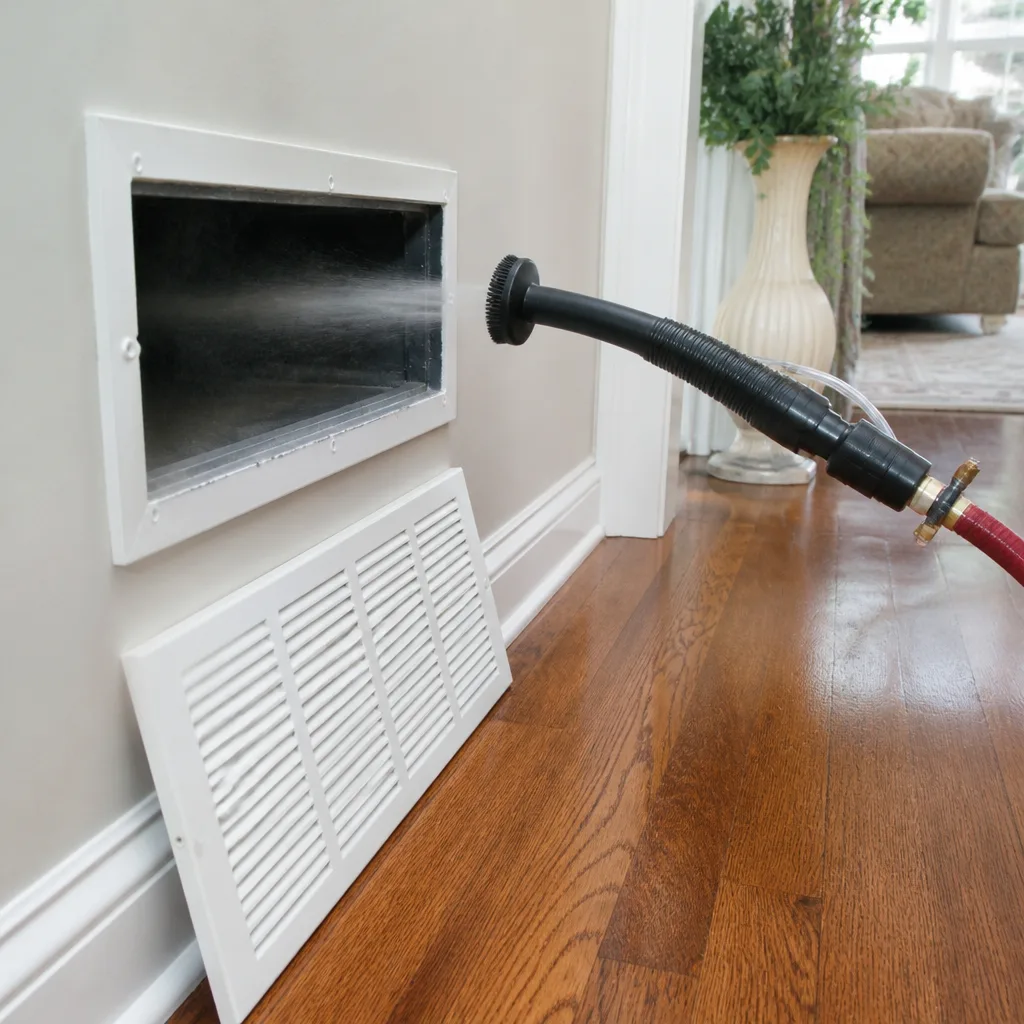 Sanitizing & deodorizing
Whole-system duct and dryer vent check with before-and-after photos - you see exactly what came out of your vents
That "$99 whole-house special" is a bait ad - the real number appears once they are in your hallway, or the "clean" is a shop-vac at the register. We photograph the inside of your ducts before and after instead.
Choosing the Right Air Duct Cleaning Brand: A Buyer’s Guide for Visalia
The duct cleaning brands you recognize fastest in Visalia are often the ones with the smallest equipment. National franchise vans, coupon mailers, a logo on a church bulletin – name recognition in this trade runs in the opposite direction of technical rigor. A branded van with a portable blower can move a fraction of the negative pressure a restoration-grade truck mount generates, and that gap is the single most reliable clue to how clean your ducts will actually end up. This guide teaches you to read equipment lineage and operator credentials instead of logos. You’ll learn how to vet a duct cleaning company in Visalia, what CSLB and NADCA checks actually obligate, and the three questions that separate specialists from generalists.
Quick Answer
The right air duct cleaning brand in Visalia is the one running contractor-grade equipment – a truck-mounted negative air machine or a Nikro HEPA rig paired with a Rotobrush rotary brush – operated by technicians who can explain their vacuum specs, show you pre- and post-cleaning photos, and repair damaged ductwork on the same visit. Brand logos tell you little. Equipment, credentials through the California State License Board, and a written flat price per system tell you almost everything. Find a company that is single-trade focused on ductwork, not a generalist who added duct cleaning to a menu.
Styles & brands we work with
- Whole-home duct cleaning
- Dryer vent cleaning
- Camera inspection
- Sanitizing & deodorizing
Table of Contents
- Why Equipment Is the Best Quality Test
- What Truck-Mounted Negative Air Machines Do
- What Restoration-Contractor-Grade Equipment Means
- Franchise vs. Independent Operators
- How to Research a Visalia Operator in Seven Steps
- Three Questions for a Discovery Call
- Visalia Climate, Housing and What Grows in Ducts Here
- What Inspection and Post-Job Verification Should Look Like
Why Equipment Is the Best Quality Test You Can Run
Ask a duct cleaning company what equipment they run and the answer tells you more than the van, the logo or the Google reviews. Duct cleaning involves a simple physical problem: loosen the debris, then remove it from the system without pushing it into the living space. Every step of that depends on hardware. The vacuum’s airflow and negative pressure determine whether loosened debris leaves the house or settles elsewhere in the duct run. The agitation tool determines whether the debris ever leaves the duct wall in the first place. When contractors in Visalia quote a job, the equipment quote should come before the price.
The reason is that equipment is hard to fake. Sales training is easy. Rehearsed scripts are easy. But a homeowner can look at a job and ask two blunt questions: what is the vacuum’s rated airflow, and whether the agitation tool is a rotary brush or a whip. A whip is flexible plastic that spins with the airflow. A rotary brush is an actual brush head driven by a motor that scrubs the duct wall. They are not equivalent tools.
Three equipment categories dominate the market:
- Portable blower-and-vacuum setups. Small motorized units, often 1-2 horsepower, generating modest airflow. Common in bargain operations. Fine for a single vent if used slowly, weak across a whole house.
- Portable high-efficiency systems. Rotobrush-style machines and Nikro HEPA vacuum rigs. Contractor-grade, capable of strong agitation and HEPA filtration in the same footprint. What a focused duct shop runs when a truck mount isn’t practical.
- Truck-mounted negative air machines. A dedicated engine driving a large vacuum pump, connected to the duct system at one or two points. Generates the highest sustained negative pressure and the largest debris-carrying capacity.
Each category is a legitimate answer under some conditions. But you cannot buy the same result at every price. That’s why the equipment question outranks every other brand signal you’ll see.
What Truck-Mounted Negative Air Machines Actually Do
A truck-mounted negative air machine is the single most important piece of hardware in the duct cleaning trade. It’s a dedicated engine in the truck driving a large vacuum pump, connected to your duct system through a flexible hose attached at a main trunk or return. Once connected and sealed, the pump holds the entire duct system under steady negative pressure – the whole system behaves like a straw with a vacuum on the other end. Debris dislodged anywhere in the runs gets pulled toward the connection point rather than blown into the room.
What makes it different from portable equipment is scale and reach. A truck-mount holds negative pressure across long, branched residential duct runs – the kind common in Visalia’s established neighborhoods where homes have been added to or reconfigured over multiple decades. Portable equipment can match the pressure for one nearby branch but struggles to hold consistent vacuum at the far end of a whole-house system. That’s a physical limitation, not a marketing point.
Four things to know about truck mounts:
- They need a hose length limit. Too far from the truck and pressure drops at the connection. Ask what hose setup the operator uses.
- They confine debris outside the living space when connected and sealed correctly. That matters more than the CFM number on the spec sheet.
- They pair with agitation. The vacuum pulls; a rotary brush or air whip loosens. Neither works well alone.
- They are the standard in restoration work. Companies handling fire and water damage use truck mounts as a baseline because the alternative is invisible soiling left behind.
If you’re comparing two Visalia duct cleaning quotes and one carries a truck mount with a rotary brush while the other shows up with a portable blower, the difference in what leaves your ducts is not subtle. Visit Duct Cleaning Visalia to see how equipment-first pricing works in practice.
What “Restoration-Contractor-Grade” Equipment Means in Practice
Restoration contractors clean ducts after fires, floods and other events where contaminants cannot be left behind. Their equipment is chosen for that standard, not for a maintenance tune-up. When a duct cleaning company uses the same tool class – and we’re talking about the Rotobrush rotary-brush system and Nikro HEPA vacuum rigs, plus Abatement Technologies air-filtration units running during the job – they’re benchmarking against a much higher bar than the average consumer needs. That’s the point. Equipment rated for a worse day than yours tends to do a very good job on a typical day.
The specific pieces matter because each solves a distinct problem:
- Rotobrush rotary brush. Motor-driven brush head scrubs the duct interior. Loosens adhered dust, dander and construction debris that airflow alone won’t move.
- Nikro HEPA vacuum technology. Captures fine particulates at the vacuum exhaust. Standard shop-vac setups push sub-micron particles back into the room. HEPA filtration doesn’t.
- Abatement Technologies air-filtration units. These run inside the home during the job, scrubbing ambient air while debris is dislodged. It’s the reason we say “we contain what we clean” – the point is to hold dislodged particulates inside the work zone rather than recirculate them through your living room.
Restoration-grade equipment is also a signal about operator training. A technician who runs this class of gear on a daily basis learns the failure modes: suction drop at long runs, seal failures at the truck connection, agitation that’s too aggressive on flex duct, dust leakage at joints. Those skills don’t transfer from unrelated trades. Our technicians have up to 15 years of experience specific to duct systems, and that experience is the reason the equipment works the way it’s supposed to.
Franchise vs. Independent Operator: The Real Trade-Off
Franchise systems sell consistency. Independent specialists sell depth. Neither label automatically equals better work, but the trade-off is worth seeing clearly before you hire in Visalia. A franchise can guarantee that the script you hear in Visalia matches the script a customer hears in Modesto. That’s real value for a multi-property landlord who wants the same experience across locations. What a franchise often cannot deliver is equipment investment at the top of the market. Franchise operators pay a fee to the parent brand, and equipment upgrades are a cost the local operator absorbs alone. A portable blower setup tends to survive the budget review that a truck-mounted negative air machine doesn’t.
Independent specialists have different economics. Without a franchise fee, the capital that would have gone to a parent brand often goes to hardware. The result is that a single-trade independent shop is more likely than a franchisee to be running a Rotobrush and a Nikro rig than a generic portable blower. Independents also tend to build deeper knowledge of one market. In Visalia that means knowing the mix of newer tract homes and older established neighborhoods, understanding how the local summer heat and agricultural dust load affect HVAC systems, and being able to repair duct damage on the same visit rather than referring it to another contractor.
How to weigh them:
- Match the vendor to the job. Simple maintenance cleaning in a single-family home rarely needs a franchise’s process consistency. Complex systems, older retrofit ductwork or post-renovation cleaning usually benefit from an independent specialist.
- Ask what equipment they’ll bring. The answer is the answer regardless of franchise status.
- Check credential obligations. Verify whether the operator is a NADCA member and holds a CSLB contractor license. Credentials create accountability that process consistency alone does not.
- Look at the service scope. A specialist offers cleaning, dryer vent cleaning, and repair under one roof. A generalist outsources the parts of the job outside their skill set.
- Price the whole system. One flat price per system, agreed before work starts, beats a per-vent quote every time.
Read every proposal through the equipment lens first. A franchise brand name is worth very little if the truck arriving at your home is a portable blower rig.
How to Research a Visalia Operator in Seven Steps
Google reviews are useful color. They are not due diligence. Use the following sequence and you’ll know more about a duct cleaning company in Visalia in twenty minutes than a review page can tell you in an hour.
- Search the NADCA member directory. The National Air Duct Cleaners Association publishes a lookup tool. NADCA membership obligates a company to follow an industry standard for assessment, cleaning and restoration of HVAC systems. It’s voluntary, so membership tells you the operator chose to be held to a written standard.
- Verify the CSLB license. The California State License Board runs a public lookup at cslb.ca.gov. Enter the license number from the contractor’s written estimate and confirm the license is active and matches the legal business name. A CSLB license obligates the contractor to state law compliance, specified contract terms, and bond requirements.
- Ask what equipment is on the truck. The answer should name a make and model, not a category. “Rotobrush and Nikro HEPA” is a specific answer. “Industrial equipment” is not.
- Ask for the inspection protocol. A specialist inspects with a camera or opens accessible sections before quoting. A generalist quotes from the phone without seeing the system.
- Ask for pre- and post-cleaning photos. Before-and-after photos of your own ducts – not stock photos – prove the work happened. Insist on this in the estimate.
- Request a written flat price per system. Per-vent pricing is the bait-and-switch structure: a low base price for one vent, escalating from there. Whole-system pricing fixes cost before the truck rolls.
- Confirm the service scope. Does the quote include duct repair if damaged sections are found? Is dryer vent cleaning offered as a standalone service, priced separately?
Those seven checks aren’t exotic. What most homeowners actually run is steps zero through two: Google search, phone number, book. Running all seven is the difference between proving the work happened and hoping it did.
Three Questions That Separate Specialists from Generalists on a Discovery Call
One phone call is enough to rank a duct cleaning company if you know what to ask. These three questions are calibrated to produce answers a generalist cannot fake.
Question 1: What equipment will you bring, and can you give me make and model? A specialist answers comfortably. They’ll describe the rotary brush head, the HEPA vacuum, the containment filtration running inside the home. A generalist hedges, says “industrial equipment,” or claims all equipment is the same. It isn’t. Note whether the answer includes a truck mount or a portable high-efficiency system or both. The follow-up: “How do you seal the vacuum connection?” A specialist knows the answer is a custom gasket or collar fitted to the main trunk – a generalist sometimes doesn’t know what that means.
Question 2: What is your inspection protocol, and what do you inspect before you quote? A specialist describes a real inspection: removing a supply register or two, looking into the duct with a camera or a flashlight, checking the air handler closet, checking whether flex duct is present and intact. A generalist quotes without seeing anything. The follow-up: “What would make you tell me not to clean?” A specialist will name cases – flex duct that’s collapsed, mold inside the duct, a system already clean. A generalist never says no to a job.
Question 3: How do you verify the work after cleaning is done? A specialist describes before-and-after photos of your own ducts, running the system after cleaning to confirm airflow, and documenting what was found. A generalist offers a verbal “all done.” Ask whether the photos will be shared with you that day. Ask whether the technician will tell you what they found – a specific answer here is a strong quality signal.
We’ve watched these three questions separate the field across Visalia for years. The variance is larger than you’d expect. Both technicians on a good call and technicians on a bad call say “yes, we do a thorough job.” Only one of them can name the tool in the truck.
Visalia Climate, Housing and What Actually Ends Up in Ducts Here
Visalia’s air is not generic. Sitting at the south end of the San Joaquin Valley, the city runs hot, dry summers with long stretches over 100 degrees, and that changes the duct picture in ways a national guide won’t cover. Air conditioners here run for months on end, which means every cubic foot of air recycled through the system carries whatever is in the outdoor air: agricultural dust from surrounding orchards and fields, pollen through spring and early summer, and particulate from residential and vehicle sources. A duct cleaning company in Visalia that has never worked through a summer here can still run good equipment, but they won’t anticipate what they’ll pull out.
Housing shapes the job too. Larger and newer homes in Visalia often have long branched duct runs feeding multiple zones. That structure stresses portable equipment; the far branches are exactly where a truck mount or a second connection point matters. Older and established neighborhoods – where ductwork may have been added to, extended or reconfigured – often benefit from an inspection before cleaning. Flex duct is common in retrofit sections and requires softer agitation than metal duct. Damaged or leaking sections need repair, not just cleaning; our air duct cleaning service includes structural air-duct repair on the same visit for that reason.
The other local factor is scale. Visalia is a working-agriculture city where ducts see a heavier particulate load than a suburban market of similar size would. Homeowners moving into a resale property should assume the ducts have not been serviced in at least a decade unless a prior invoice says otherwise. Landlords turning over units between tenants should factor duct cleaning into the turnover budget. Renovations – kitchen remodels, additions, new flooring – all generate construction dust that migrates into the duct system. If any of those circumstances applies, cleaning should happen after the last of the work, not before.
If you’re mapping out service for a home in Visalia, plan the timing first: post-renovation, post-move-in, or just before summer. That sequence avoids cleaning twice.
What Inspection, Repair and Post-Job Verification Should Look Like
A duct cleaning is a documented process, not a visit. Here’s what we consider a complete service, in sequence.
- Pre-cleaning inspection. Accessible registers removed, camera or visual inspection of the air handler and main trunk, notes on flex versus rigid duct, seals and any damaged runs.
- Structural repair if needed. Damaged or leaking duct sections repaired before the cleaning run. Cleaning a leaking duct is wasted effort; the system will recontaminate within weeks.
- Containment filtration setup. Abatement Technologies air-filtration units running in the home during the job so dislodged particulates remain in the work zone rather than the living space.
- Vacuum connection and seal. Rotobrush rotary brush or Nikro HEPA vacuum attached at the appropriate connection points. Custom sealing at the main trunk keeps negative pressure consistent.
- Cleaning the full system. Supply, return and main trunk cleaned as a system. Rotary brush agitation on metal duct, softer tools on flex.
- Dryer vent cleaning if included. Ducts and dryer vents are different systems with different risks. Dryer vent cleaning is a documented fire-prevention measure recommended annually by the U.S. Fire Administration – not a maintenance afterthought.
- System run and verification. HVAC system run after cleaning to confirm airflow. Before-and-after photos taken and shared with the customer. Notes on what was found and any sections that should be rechecked.
- Filtration product recommendation. If ongoing air-quality improvement makes sense, we recommend Honeywell, Aprilaire or Guardsman filtration products and can supply them. These products extend what the cleaning visit accomplished.
Two parts of that sequence matter more than they appear. Repair before cleaning prevents a recontamination loop. Post-job photos are the proof most bargain operators can’t provide because they don’t take them. Ask on the discovery call which of these steps are included in the flat price.
Common Mistakes to Avoid
- Trusting a national brand name before the equipment. A recognizable franchise logo tells you the franchisee paid a fee. It tells you nothing about the vacuum pressure or the rotary brush. Ask the make and model question first.
- Booking a per-vent quote. Per-vent pricing lets a company advertise a low number and escalate from there. A whole-system flat price agreed before work starts is the only version that can’t surprise you.
- Cleaning ducts before a renovation instead of after. Construction dust migrates into the duct system weeks after the work is finished. Clean after the last of the renovation, not before.
- Assuming a clean duct doesn’t need repair. Leaking or damaged duct sections recontaminate a cleaned system within weeks. If the estimate doesn’t include structural inspection and repair capability, find a company that does.
- Believing “we use HEPA” without asking for the rig. HEPA filters come in many grades. Standard shop-vac setups push fine particulates back into the room. Ask whether the vacuum is HEPA-rated at the exhaust.
- Skipping the dryer vent. Dryer vent cleaning is a fire-prevention service, not an add-on. It’s recommended annually by the U.S. Fire Administration. Ask what the dryer vent service costs as a standalone.
- Booking the cheapest in-town quote without a written estimate. Written estimates lock in the price, the equipment and the service scope. Verbal estimates are the structure of the bait-and-switch.
See the difference
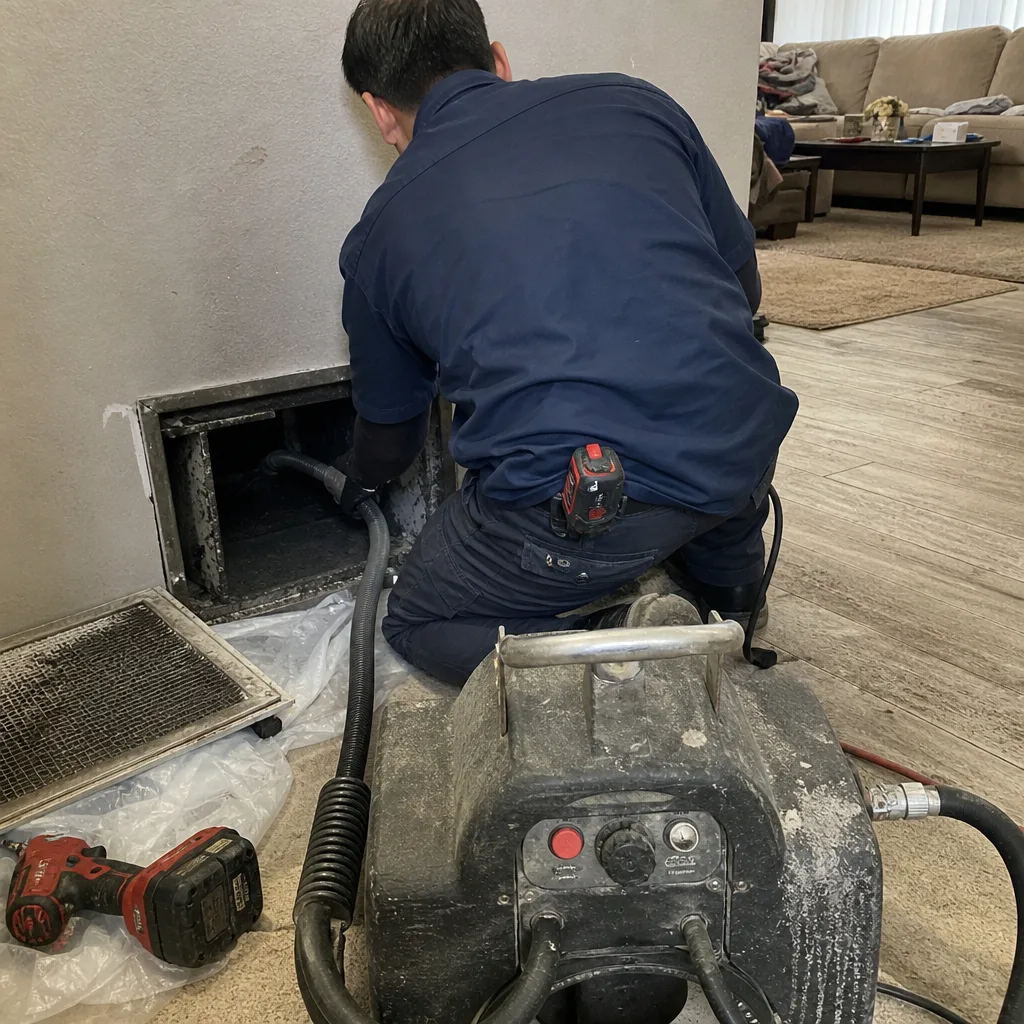 Before
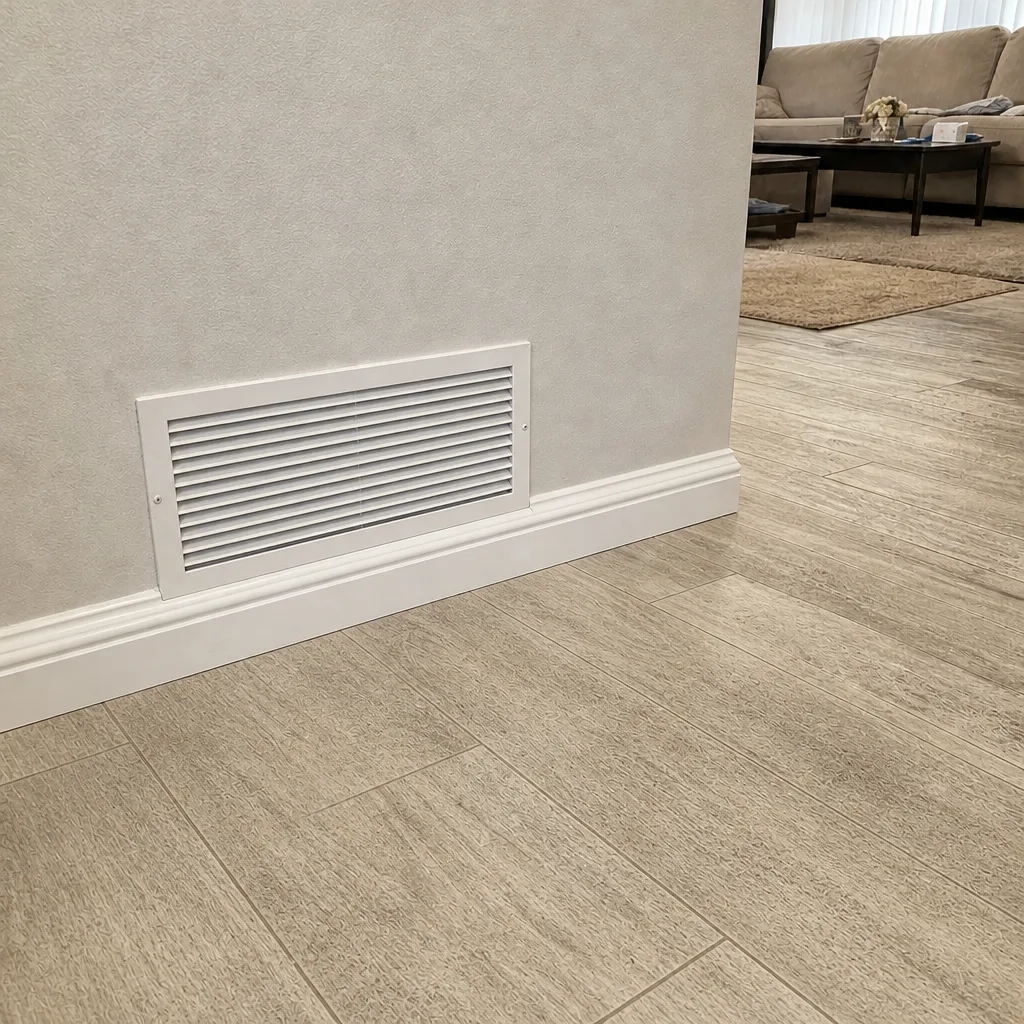 After
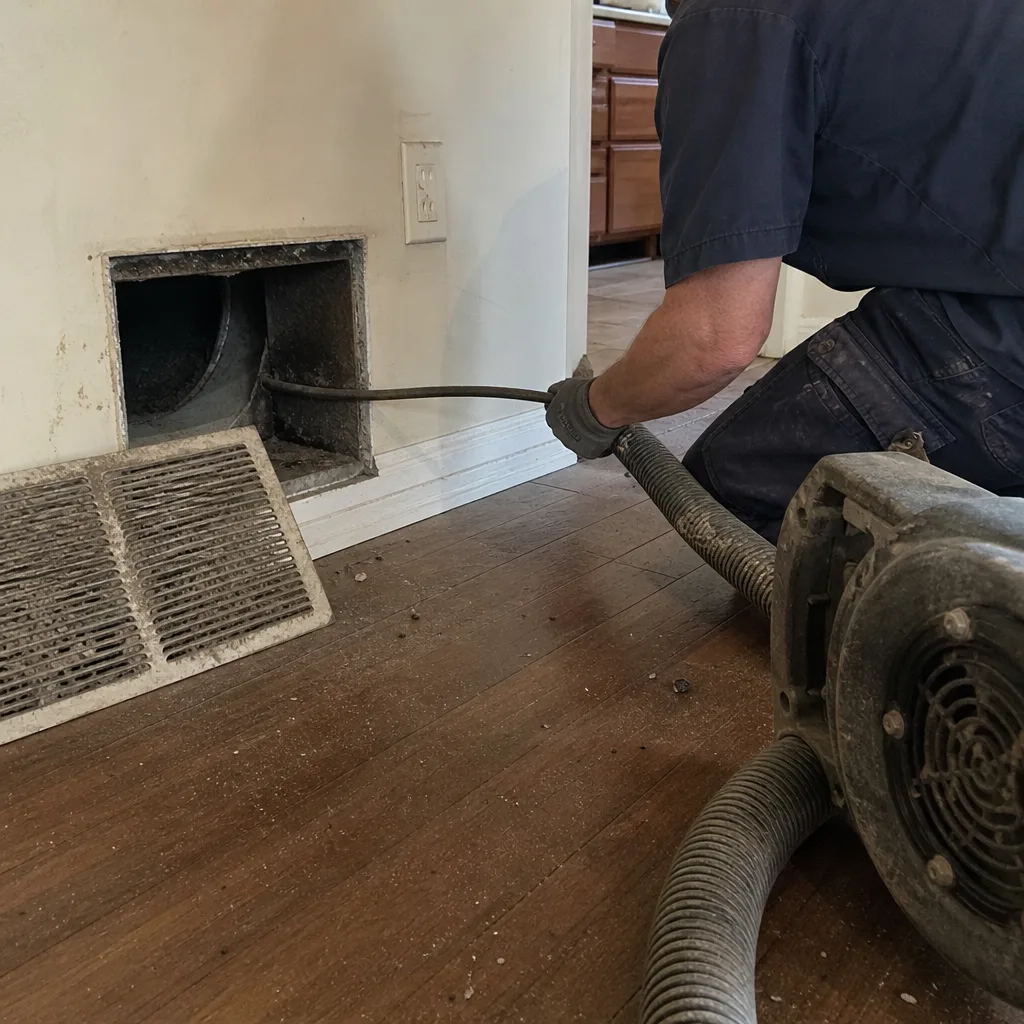 Before
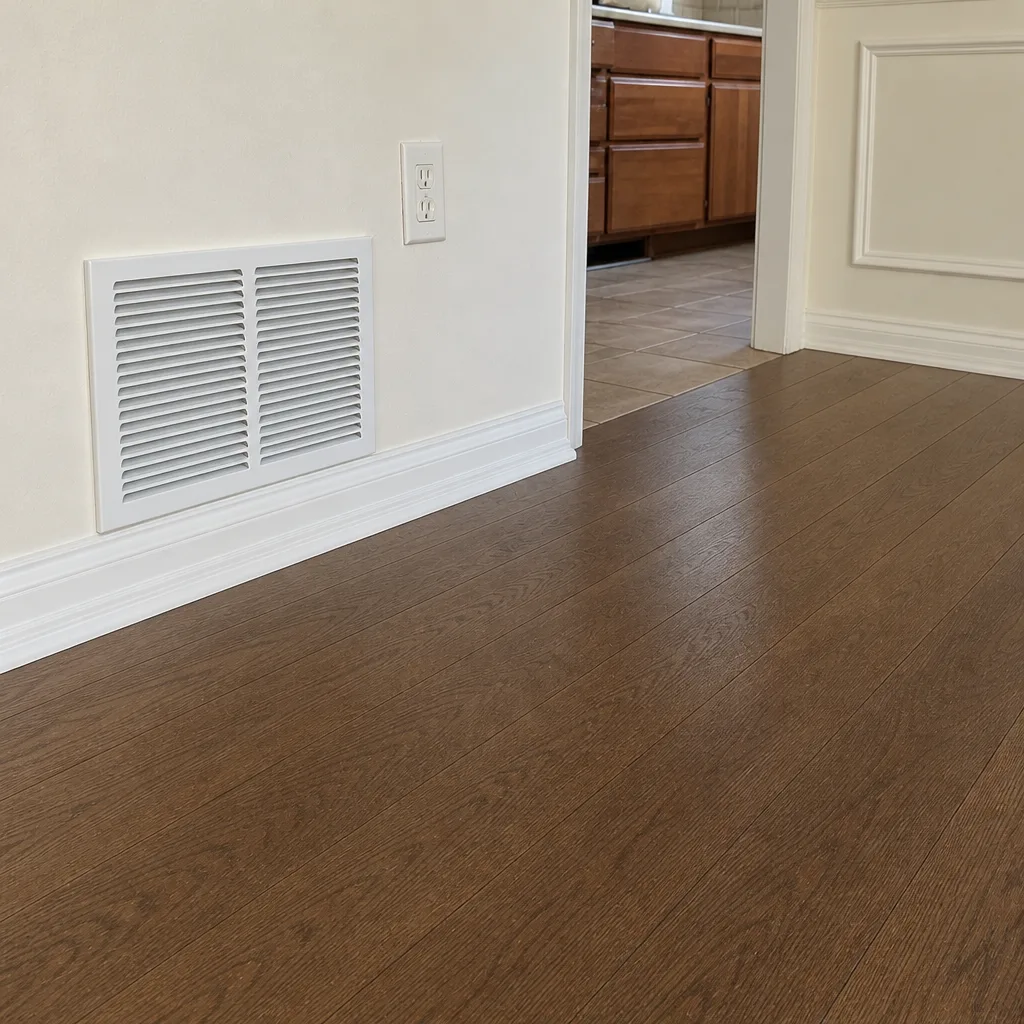 After
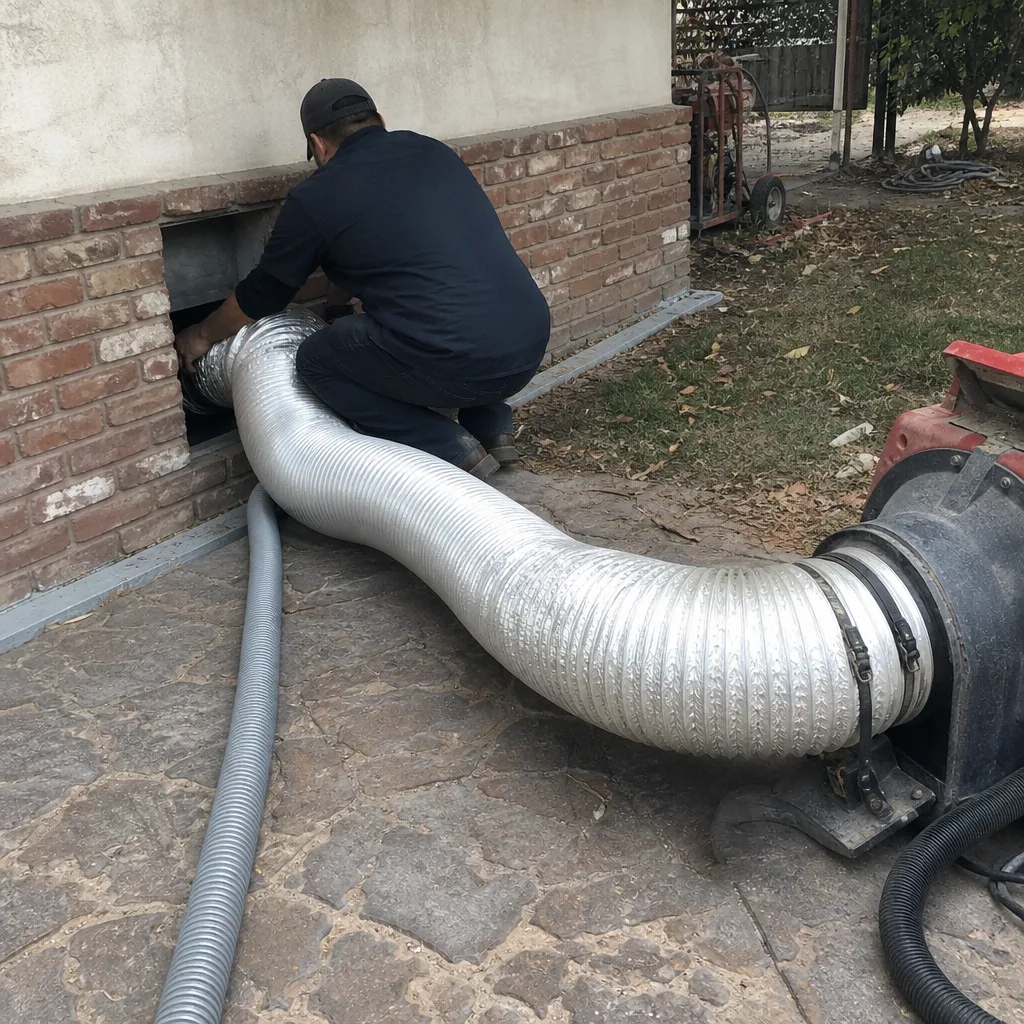 Before
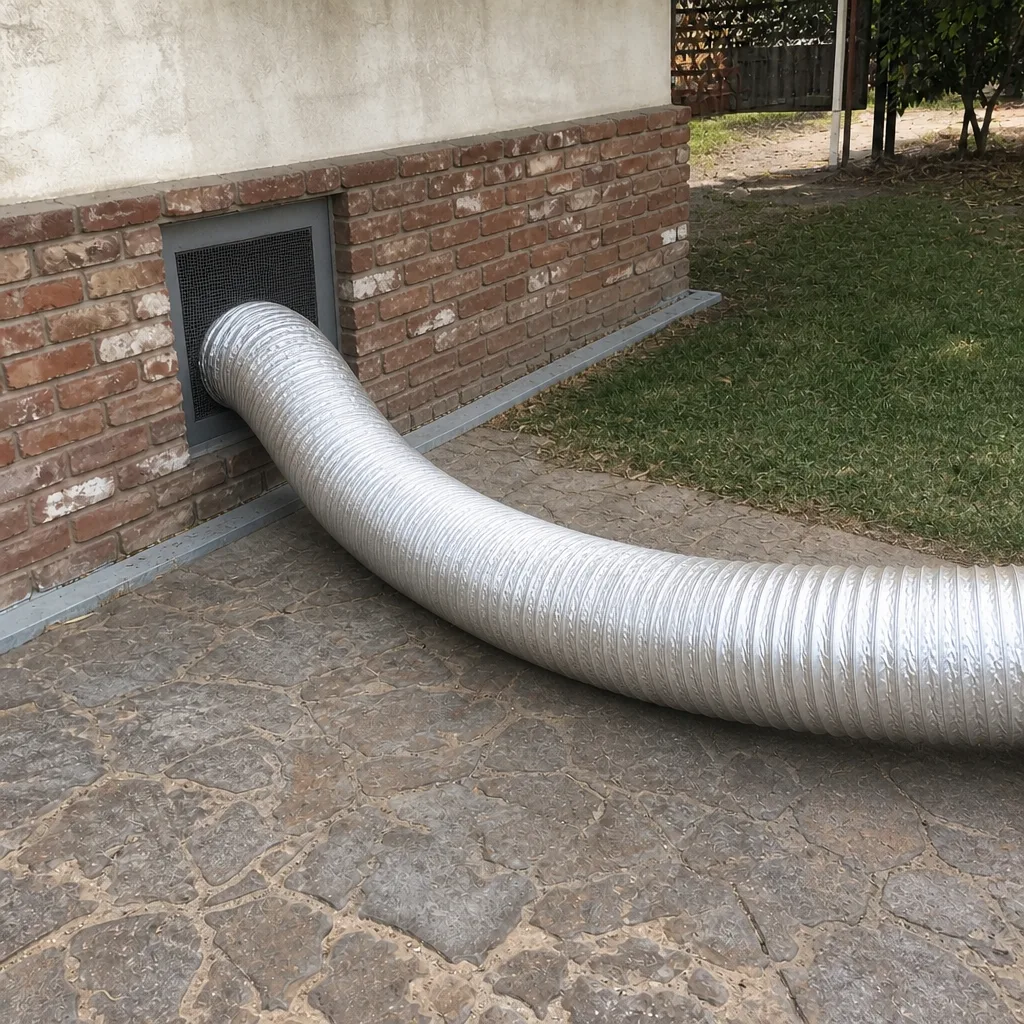 After
When to Call a Professional
Some things don’t need a professional call. A dusty air filter is a filter swap. But ducts that haven’t been serviced in a decade, a home you just moved into, a unit you just finished renovating, or a unit a landlord is turning over: all four are reasons to have the system inspected. The hard signals are stronger. Visible dust at the supply registers that comes back within days of wiping. Airflow that has dropped without a filter change. A dryer that now takes longer than it used to. Allergies that got worse after a move. Damage to flex duct you noticed during an inspection. Any of those should trigger a call, and the sooner the better. Duct Cleaning Visalia offers free estimates in Visalia – call (855) 970-3448. The estimate is per system, flat, and agreed before any work starts. We answer 24/7. Fast dispatch from 7am to 7pm, Sunday through Friday.
Frequently Asked Questions
Air duct cleaning in Visalia is priced per system, not per vent. Whole-system cleaning for a typical single-family home generally falls in the range a specialist will quote in writing after inspecting the system, and the written estimate sets the final price. Per-vent pricing is the structure bargain operators use to advertise low and escalate. Call (855) 970-3448 for an exact quote – estimates are free.
Cheap quotes come from cheap equipment. The largest cost inside a duct cleaning job is the vacuum and agitation hardware; a portable blower setup costs a fraction of a truck-mounted negative air machine or a Nikro HEPA rig, and that difference shows up on the invoice. Cheaper stays cheaper for a reason. If a quote is dramatically lower, ask what equipment is arriving and whether the quote is per system. Call (855) 970-3448 for a fair, equipment-first quote – estimates are free.
Professional-grade duct cleaning includes before-and-after photos of your own ducts, taken during the job and shared with you that day. If a company doesn’t offer photos, you’re paying for a promise instead of proof. Every job includes photos. Call (855) 970-3448 to book an estimate – estimates are free.
Most homes don’t need yearly cleaning. For a typical Visalia home, three to five years between cleanings is a common interval, shorter after renovation, a move-in from an unknown prior history, or for homes with allergy and asthma occupants. Dryer vent cleaning is different – it’s recommended annually by the U.S. Fire Administration as a fire-prevention measure. Call (855) 970-3448 to schedule either – estimates are free.
Yes if the company is quoting or performing work in California. The CSLB license lookup at cslb.ca.gov lets you verify the contractor’s license is active and matches the legal business name on the estimate. A licensed contractor is obligated to state contract law compliance, including a written estimate that fixes the price. Ask for the license number on the written estimate.
Yes. Dryer vent cleaning and air duct cleaning are separate systems but often booked on the same visit since both use similar vacuum equipment and both benefit from being handled on one trip. Ask whether both are included in one flat price when you request an estimate. Call (855) 970-3448 – estimates are free and fast dispatch from 7am to 7pm is standard.
The Bottom Line
Duct cleaning brand names mean less than they seem. The equipment on the truck and the credentials of the operator drive the outcome, not the logo on the door. Run the seven-step research ladder before you hire in Visalia; verify CSLB, check NADCA membership, ask for equipment make and model. Ask the three discovery-call questions and listen for names – Rotobrush, Nikro, Abatement Technologies, Honeywell or Aprilaire. Insist on one flat price per system instead of per-vent pricing. Insist on before-and-after photos of your own ducts. And when you’re ready, walk through the estimate with the operator in person rather than over the phone – it’s the last opportunity to close the door on the bait-and-switch structure that has earned this trade its reputation.
Call (855) 970-3448 for a free estimate. We answer 24/7. Fast dispatch from 7am to 7pm, Sunday through Friday. Your ducts. Cleaned. Repaired. Done.
Written by the team at Duct Cleaning Visalia.