
Last updated November 15, 2026
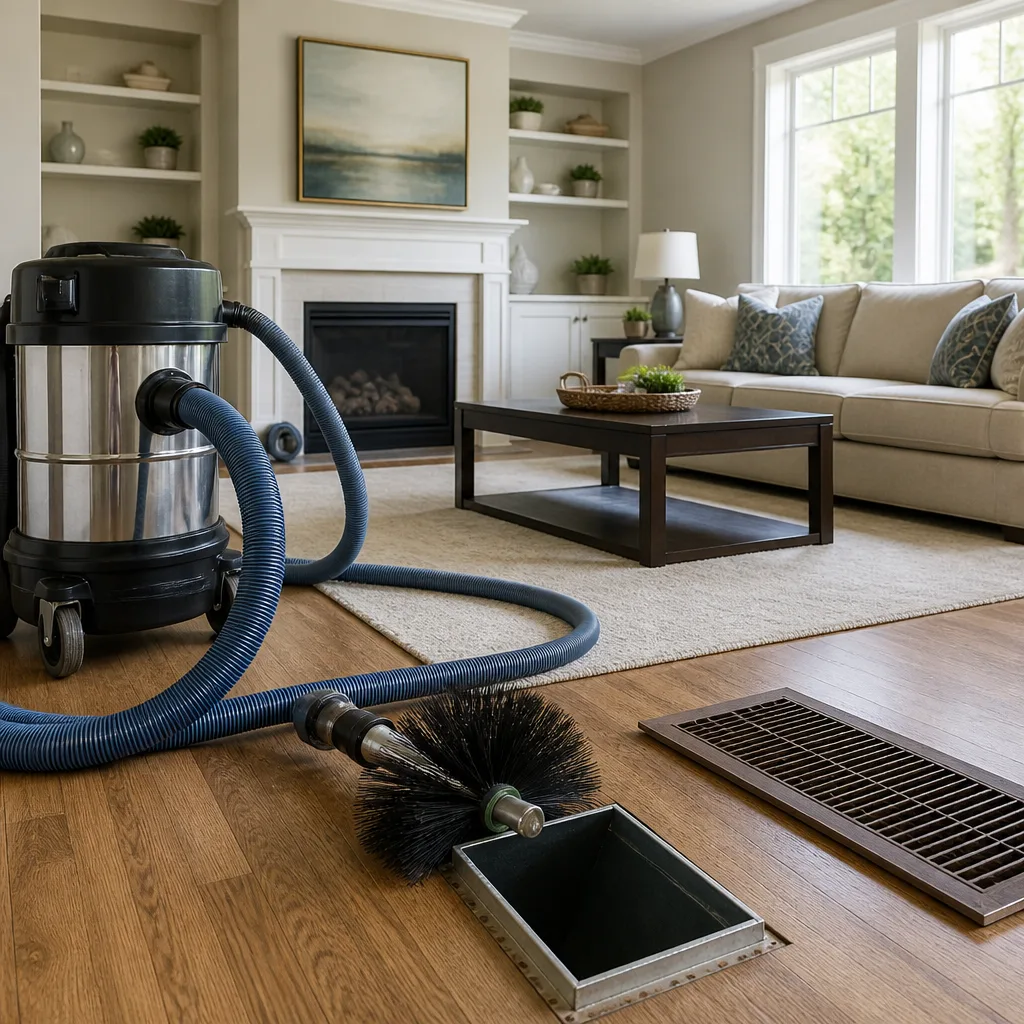 Whole-home duct cleaning
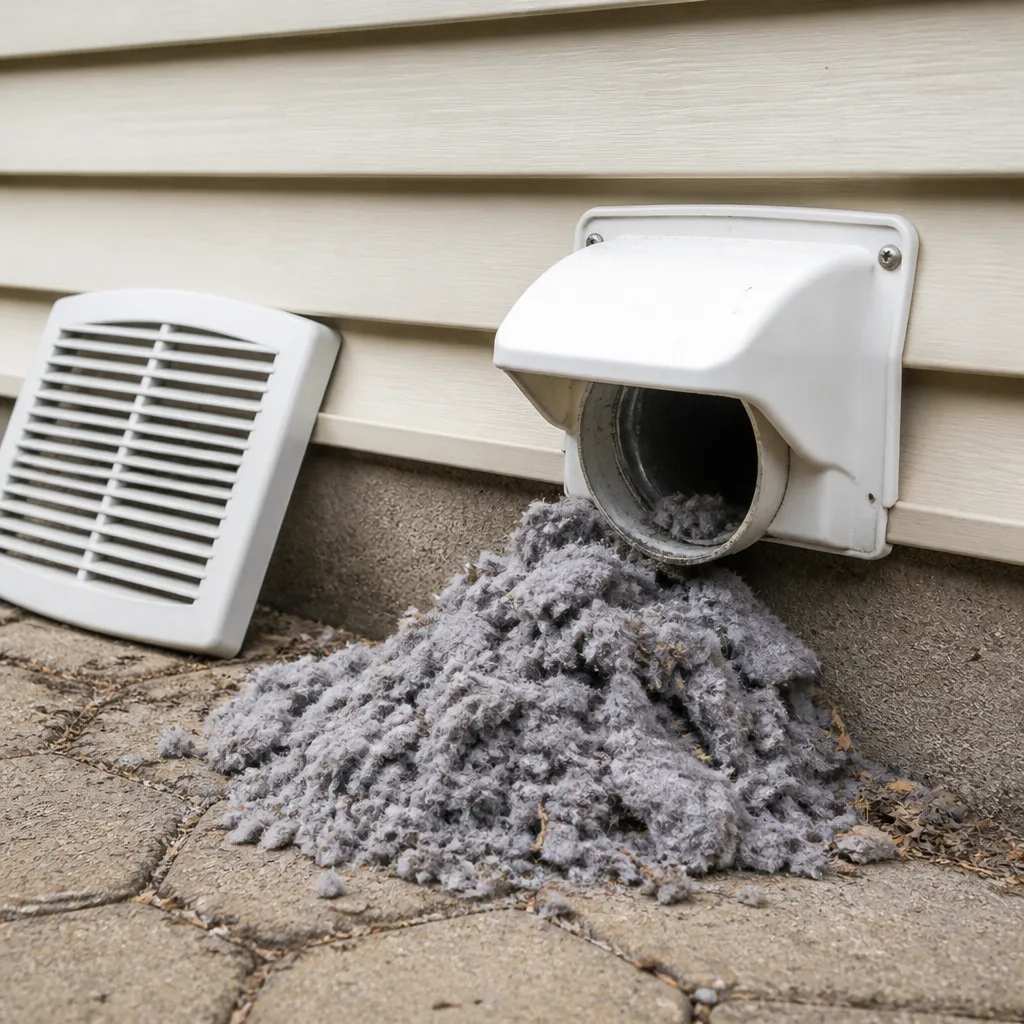 Dryer vent cleaning
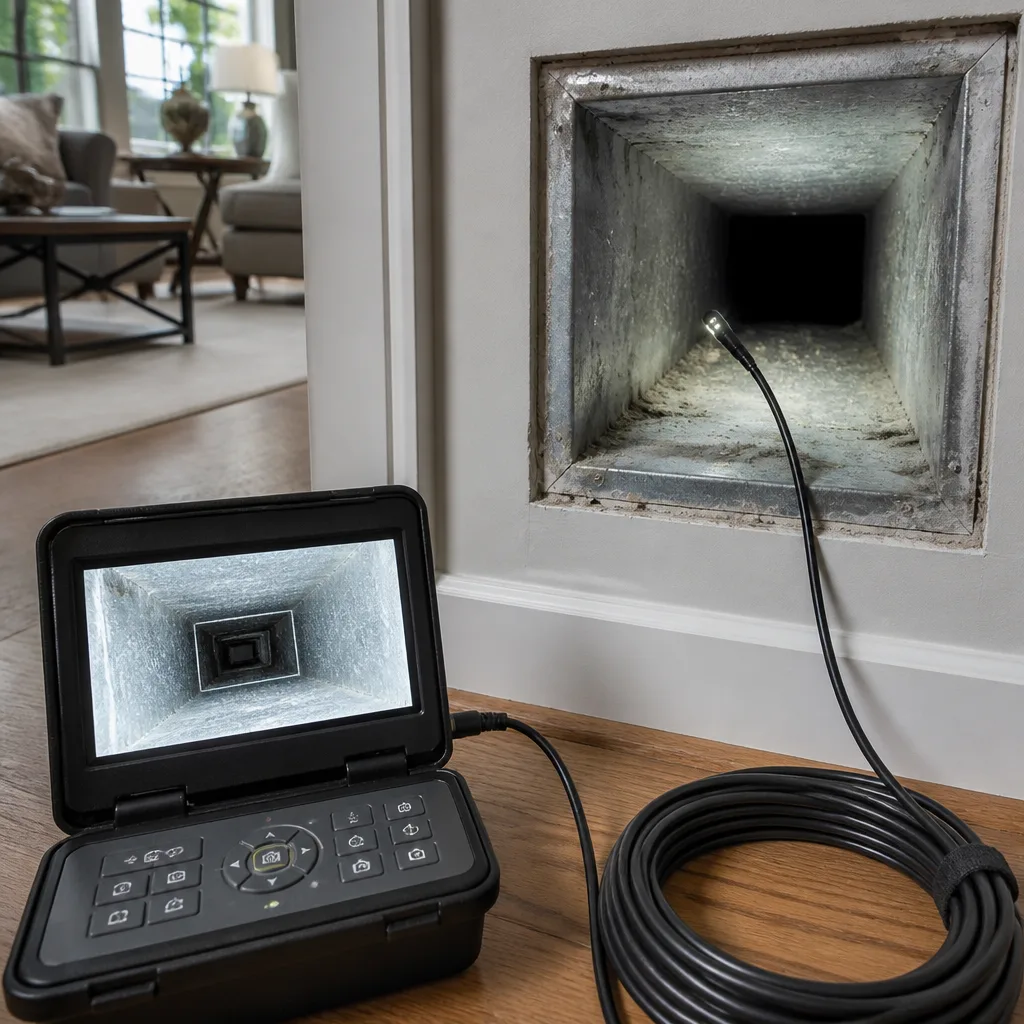 Camera inspection
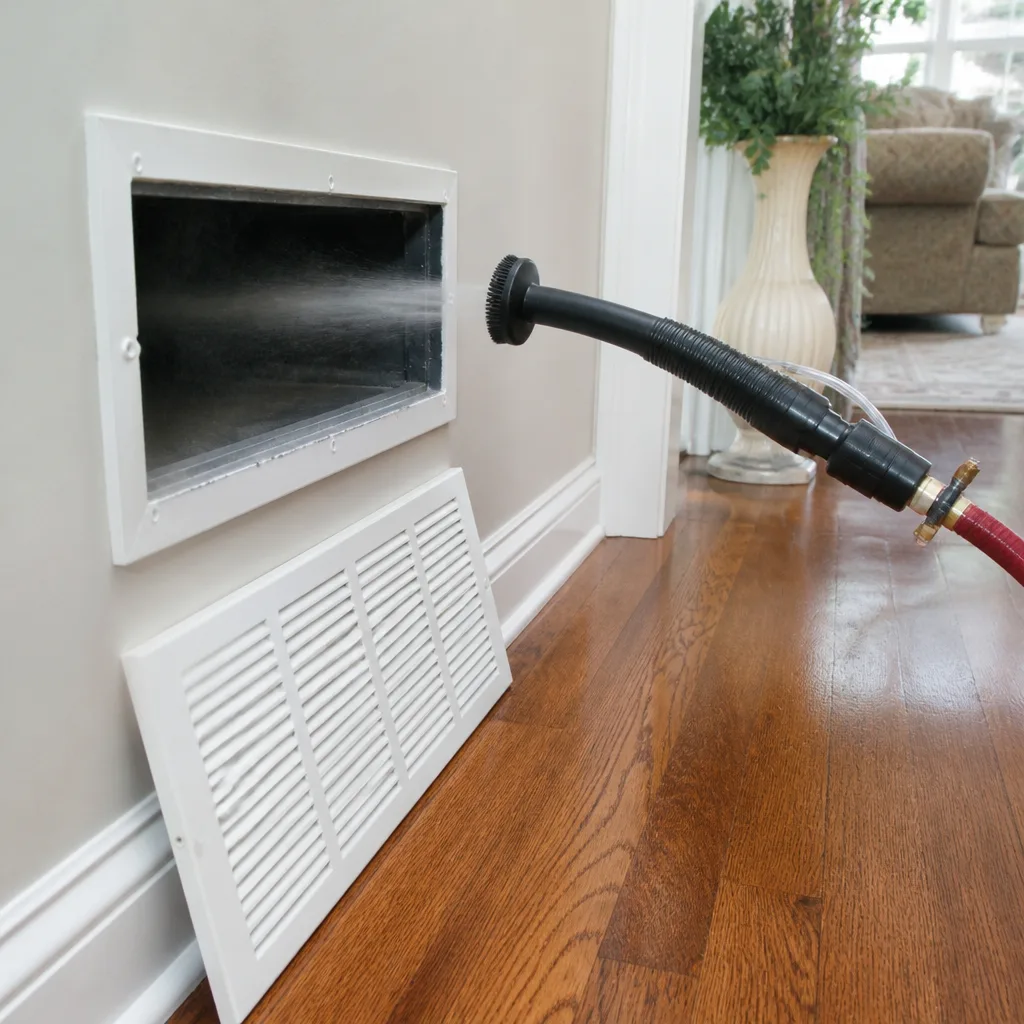 Sanitizing & deodorizing
Whole-system duct and dryer vent check with before-and-after photos - you see exactly what came out of your vents
That "$99 whole-house special" is a bait ad - the real number appears once they are in your hallway, or the "clean" is a shop-vac at the register. We photograph the inside of your ducts before and after instead.
The Complete Guide to Air Duct Cleaning in Visalia
Most homeowners here assume their ducts stay cleaner than ducts anywhere else because the system runs so hard that dust must get pushed through and out. The opposite is true. A Visalia HVAC system doesn’t sit idle between seasons: it runs long stretches through triple-digit summers, pulling Valley air through the same network of ducts hour after hour. That air carries fine agricultural dust, ash from fire season, and the ordinary household debris a family generates all year. The more hours the blower runs, the more of that material settles inside the duct walls, the plenum, and the registers. What follows is a practical guide to what’s actually inside Visalia ductwork, which cleaning methods work on which materials, and how to verify a job was done right instead of taking a technician’s word for it.
Quick Answer
Air duct cleaning in Visalia is a source-removal process: a rotary brush breaks contamination loose from the duct walls while a HEPA-rated vacuum holds it under negative pressure so it’s captured instead of blown back into the living space. The EPA’s “every 3 to 5 years” guidance is a national baseline, and in a region with as many poor-air-quality days as the San Joaquin Valley, many homes need to be on the shorter end of that window or assessed individually. The right method depends on the duct material, the length of the run, and how much contamination has built up.
Styles & brands we work with
- Whole-home duct cleaning
- Dryer vent cleaning
- Camera inspection
- Sanitizing & deodorizing
Table of Contents
- Why Visalia Ductwork Gets Dirty Faster Than the National Average
- Duct Materials in Visalia’s Housing Stock and How Each Must Be Cleaned
- What NADCA Source-Removal Standards Actually Require
- Professional-Grade Equipment vs. the Blower-and-Go Operators
- How to Verify the Work Was Actually Done
- Dryer Vents: A Fire Risk, Not a Maintenance Afterthought
- Air Duct Repair and Why It Belongs in the Same Visit
- Keeping Ducts Clean Between Visalia Summers
Why Visalia Ductwork Gets Dirty Faster Than the National Average
You can’t understand Visalia duct contamination by reading a guide written for a temperate East Coast suburb. The particulate load in the Valley is different: agricultural dust off orchards and dairies, fine soil from the surrounding farmland, ash and smoke residue from fire seasons, and pollen from the tree and crop cycle. Much of that material is smaller and more abrasive than ordinary household dust. It doesn’t clump neatly at the bottom of the duct. It coats the interior surfaces in a fine, sticky film that ordinary air movement won’t dislodge.
Add HVAC runtime. In a Visalia summer a system may run through most of the day and well into the evening, whereas a more moderate climate lets the same system rest for hours. Every hour the blower runs, another volume of unfiltered or under-filtered air passes over that coating. The result is that contamination accumulates on the duct walls and inside the supply plenum at a rate that the national 3-to-5-year baseline doesn’t account for. In our experience, homes here often show visible buildup, restricted registers, or a musty smell well before that interval is up.
The other local factor is infiltration. Older Visalia homes, especially those in neighborhoods with mature trees and open lots, pull unfiltered air through gaps around doors, attic accesses, and the return chase. A standard 1-inch filter catches larger particles but lets the fine fraction through. That fine fraction is exactly what coats ductwork.
- Agricultural and soil dust: finer and more abrasive than typical household dust, coats interior surfaces.
- Wildfire ash and smoke residue: leaves a persistent odor and a lingering film on duct walls.
- Long summer runtime: more air volume through the system every season than in milder climates.
- Infiltration through older building envelopes: bypasses the filter and lands on the duct walls.
Duct Materials in Visalia’s Housing Stock and How Each Must Be Cleaned
Visalia’s housing spans several decades of construction, and each era left its own duct material behind. Cleaning method has to match the material. A rotary brush run too aggressively on flex duct can tear the inner liner, and a vacuum-only pass on rigid sheet metal won’t break loose the bonded film that builds up there. Here’s how to think about the two dominant types.
Flex duct (common in 1980s – 2000s builds)
Flexible duct runs through tight attic spaces and connects the main trunk to the registers. It’s efficient to install and common in this region, but the inner liner is thin and easy to damage. Cleaning flex duct correctly requires a rotary brush with the right head and speed, introduced gently and worked along the run without snagging seams or collapsing the duct. HEPA vacuum capture must be maintained throughout so dislodged material doesn’t settle back into the run. A hard-brush pass that’s too fast or an operator who drives the brush through a kink will leave the duct worse than it started.
Rigid sheet metal (common in older homes)
Older Visalia homes frequently have rectangular sheet-metal trunk lines, sometimes with interior insulation. Metal takes a more aggressive rotary brush pass and often needs a separate mechanical tool to work the corners and seams. Any interior insulation paneling has to be inspected for damage first, because a degraded liner means the cleaning will need to work around it or the liner will have to be addressed. A cleaner who runs the same head through flex and metal without adjusting is using the wrong method on at least one of them.
Why the material matters
- Right tool for the material: rotary brush heads and speeds vary for metal vs. flex.
- Inspection first: check every run for damage, kinks, disconnects, or degraded liner before cleaning.
- Containment throughout: the HEPA vacuum stays on the same run while it’s being worked.
- Register removal: pull and clean every register, not just the ducts behind them.
- Re-inspection after: confirm no new damage was introduced by the cleaning.
What NADCA Source-Removal Standards Actually Require
NADCA, the National Air Duct Cleaners Association, publishes the accepted standard for what “duct cleaning” is supposed to mean. In plain terms, source removal means removing the contamination from the surfaces where it collects, not hiding it or blowing it into a different part of the system. That’s a higher bar than the low-end “blower-and-go” visit many Visalia homeowners have been offered. Here’s what the standard requires in practice.
- Containment: the work area must be held under negative pressure so dislodged material cannot escape into the home.
- Contact cleaning: every accessible surface of the duct interior must be physically contacted by a mechanical tool, not just air-washed.
- Full system coverage: the supply plenum, trunk, branch runs, and the return side must all be addressed, not just the visible registers.
- Component handling: registers, grilles, and accessible components are removed and cleaned separately.
- Verification: the work is inspected visually before the job is closed out, with before-and-after observation.
Where the standard gets bent in practice is at the return side and inside the plenum. A shortcut operator will clean the branch runs behind the registers and call it done, leaving the return chase and plenum – often the dirtiest parts of the system – untouched. In our experience, that’s the single most common gap we find when we inspect a system that has already been “cleaned” by someone else. If a quote is dramatically lower than the others, this is usually where the difference hides.
Every duct system in Visalia is a network of connected components, and treating it as a single unit is what separates a real cleaning from a cosmetic one. That’s the core of what air duct cleaning should deliver: full-system source removal, contained and verified.
Professional-Grade Equipment vs. the Blower-and-Go Operators
The equipment sitting in the driveway is the clearest signal of what kind of cleaning you’re getting. A shop-vac and a length of flex hose is not duct cleaning equipment. Professional cleaning relies on two things working together: a mechanical tool that breaks contamination off the duct wall, and a vacuum system strong enough to hold that contamination under negative pressure the entire time. One without the other doesn’t reach the standard.
The rotary brush is the workhorse. Rotobrush rotary-brush systems are the same class of equipment used in remediation and restoration work: the brush spins against the duct interior while a HEPA-rated vacuum pulls the loosened material into a sealed canister. That matters with Valley dust specifically, because the fine fraction is what a shop-vac filter lets through. Nikro HEPA-rated vacuum rigs capture that fine particulate; a consumer-grade blower setup does not. We also run Abatement Technologies air-filtration equipment during service to contain dislodged particulates inside the home rather than letting the working air recirculate. We contain what we clean.
Equipment also opens the door to a complete system service. Cleaning without inspecting means damaged flex runs and leaking sheet-metal seams go unnoticed. Because we handle cleaning, dryer-vent clearing, and structural air-duct repair, a torn or disconnected run found mid-cleaning gets addressed on the same visit instead of waiting for a separate contractor. Your ducts. Cleaned. Repaired. Done. That’s the practical advantage of a single-trade shop: every technician is trained specifically on duct systems, not a plumber or HVAC installer filling a slot between jobs.
How to Verify the Work Was Actually Done
This is the part most homeowners never get told. Duct cleaning happens out of sight, which is why it’s easy for an operator to cut corners and leave. There are three things you can insist on before, during, and after the job. Together they turn the visit from a verbal promise into something you can actually check.
1. Before-and-after photos of your own ducts
Ask the technician to photograph specific runs before cleaning and again after. You should see the difference inside the duct itself, not just a shiny register and a tidy drop cloth. If the operator can’t or won’t provide interior photos of your ducts, that’s your answer.
2. Static pressure readings
Static pressure is a measure of how much resistance the system is working against. A duct network packed with contamination, or one with leaking or disconnected runs, shows up as elevated static pressure. Taking a reading before and after cleaning tells you objectively whether the system’s airflow resistance came down. It’s a diagnostic step that professional duct shops use; a blower-and-go operator won’t have the instrument. Ask for the numbers.
3. Visual inspection with you present
Before the technician packs up, walk the system with them. Look into the accessible runs with a light. Confirm the plenum and return chase were addressed. Confirm the registers were removed and cleaned, and that no flex liner was damaged. A well-run shop expects this. In our experience, the homes that get the most value out of a cleaning are the ones where the homeowner stays involved for the ten-minute walkthrough.
- Ask for before-and-after interior photos of your own ducts.
- Request static pressure readings before and after.
- Walk the system with the technician before they leave.
- Confirm plenum and return chase were cleaned, not just the branch runs.
- Confirm registers were removed and cleaned separately.
- Confirm no flex liner or sheet-metal seams were damaged.
Dryer Vents: A Fire Risk, Not a Maintenance Afterthought
Lint is highly combustible, and dryer vents are where it accumulates. The U.S. Fire Administration cites dryer vent cleaning as a documented annual fire-prevention measure. That’s the reason a dryer vent shouldn’t wait until the dryer stops drying clothes in one cycle, or until you smell something warm at the back of the machine. The vent run is short, often flexible, and frequently routed through a wall with a couple of bends – bends are exactly where lint packs and stays.
Most Visalia homes have a dryer vent run that hasn’t been looked inside since the house was built or the appliance was replaced. The cleaning itself is straightforward: the run is brush-cleaned and vacuumed end to end, the exterior termination is checked for lint and pest screens, and any flexible section with crushed or torn liner is flagged for repair. We offer dryer vent cleaning as a standalone service, so it doesn’t have to wait for a full duct cleaning. If the dryer runs hot, takes two cycles to dry a load, or the exterior flap barely moves when the machine is on, the vent is the first place to look.
Air Duct Repair and Why It Belongs in the Same Visit
Cleaning and repair are two sides of the same problem. A duct system that leaks at the seams, has a disconnected flex run, or a crushed section in the attic is pulling unfiltered attic or crawlspace air directly into the supply side. Cleaning a system like that is a wasted visit if the disconnect stays. That’s why repair belongs in the same job as cleaning, not a separate booking weeks later.
Common repairs we handle include reconnecting and re-sealing flex runs at the plenum and register boots, replacing damaged sections of flex duct, sealing leaks in sheet-metal seams and at the plenum connections, and repairing or replacing register boots. Once the system is sealed, the cleaning holds – and the system stops pulling in the dust, insulation fibers, and attic air it was dragging in before. If your registers smell musty, dust reappears on the register faces days after cleaning, or one room never gets the airflow it should, a leaking or disconnected run is a likely cause.
Keeping Ducts Clean Between Visalia Summers
A cleaning is a reset, not a permanent fix. The particulate load here is constant, and how fast the ducts re-contaminate depends on filter quality, filter change habits, and whether the system has leaks. A few practical steps keep the interval reasonable.
- Upgrade the filter. A higher-MERV filter catches more of the fine Valley dust than a basic 1-inch filter. Check that the system can handle the added resistance before you make the switch.
- Change filters on the schedule your system and filter grade call for, not once a year. In a heavy-runtime summer, more often.
- Seal and repair leaks. Any disconnected or leaking run undercuts everything else.
- Keep the return chase and registers clear. Furniture and rugs blocking returns change airflow throughout the system.
- Consider name-brand IAQ products. We supply and recommend Honeywell, Aprilaire, and Guardsman filtration products – they’re a path to sustained air quality improvement after cleaning, not a substitute for it.
Homeowners in every corner of Visalia ask us the same question in different words: how often is “often enough” here? The honest answer is that no single national interval fits every home. A house with pets, a house near open farmland, and a house that sees heavy summer runtime will all load faster than a newer, sealed home with a good filter and no leaks. An inspection tells you where you stand; the cleaning interval follows from that, not from a calendar.
Common Mistakes to Avoid
- Booking on price alone. A quote far below the others usually means the return side and plenum won’t be cleaned. The cheap price is real; the service isn’t complete. Ask exactly what the price covers before you book.
- Accepting “we cleaned it” without photos. Interior before-and-after photos of your own ducts are the minimum proof. No photos, no confirmation.
- Letting an operator run a generic brush through flex duct. Flex liner tears easily. Method has to match material, and not every operator adjusts.
- Cleaning a leaking system without repairing it first. A disconnected or crushed run pulls attic air into the supply side, and the cleaning won’t hold. Repair and cleaning belong in the same visit.
- Ignoring the dryer vent. It’s a fire-prevention item, not a checkbox. Annual cleaning is the recommended baseline.
- Assuming the 3-to-5-year interval applies here unchanged. Long summer runtime and heavier particulate load push many Visalia homes to the shorter end, or sooner.
- Skipping the walkthrough. The ten minutes you spend inspecting the finished job with the technician is the cheapest insurance you’ll get against a shortcut.
See the difference
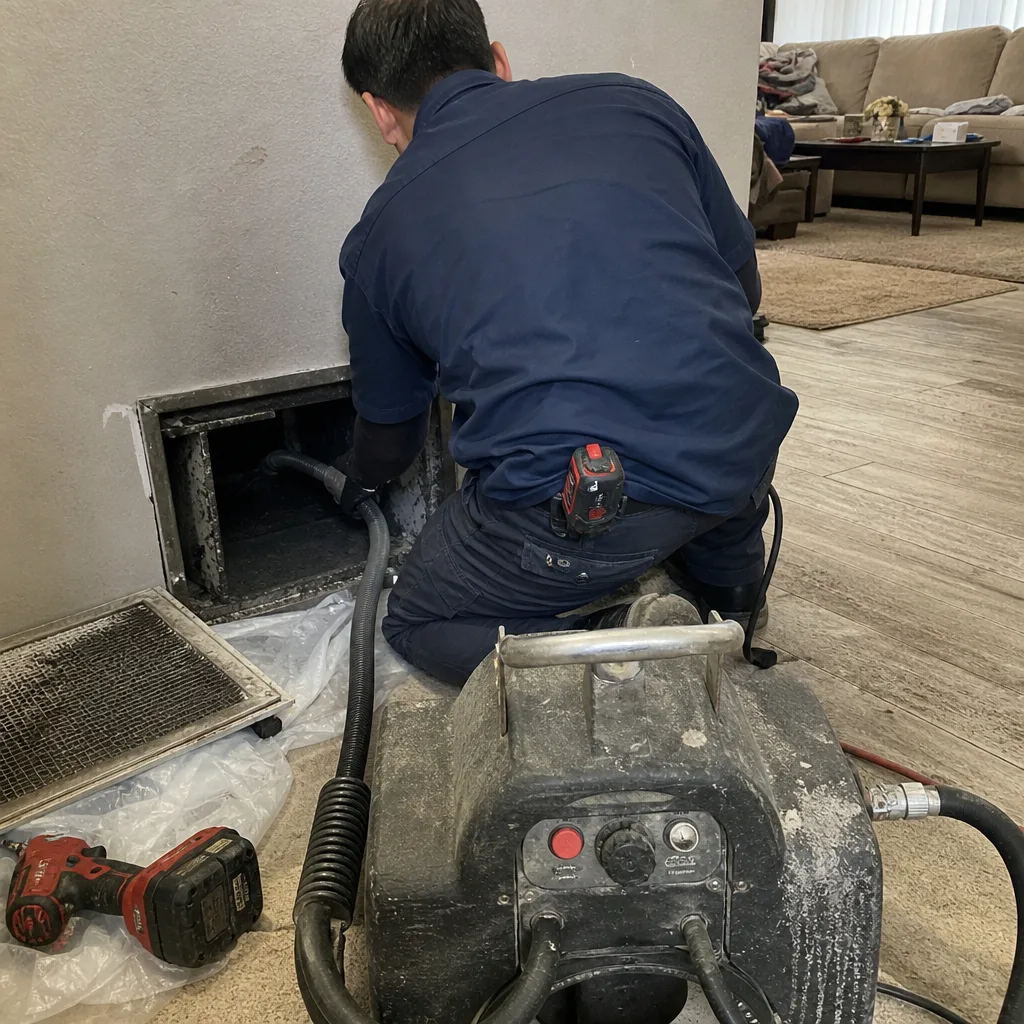 Before
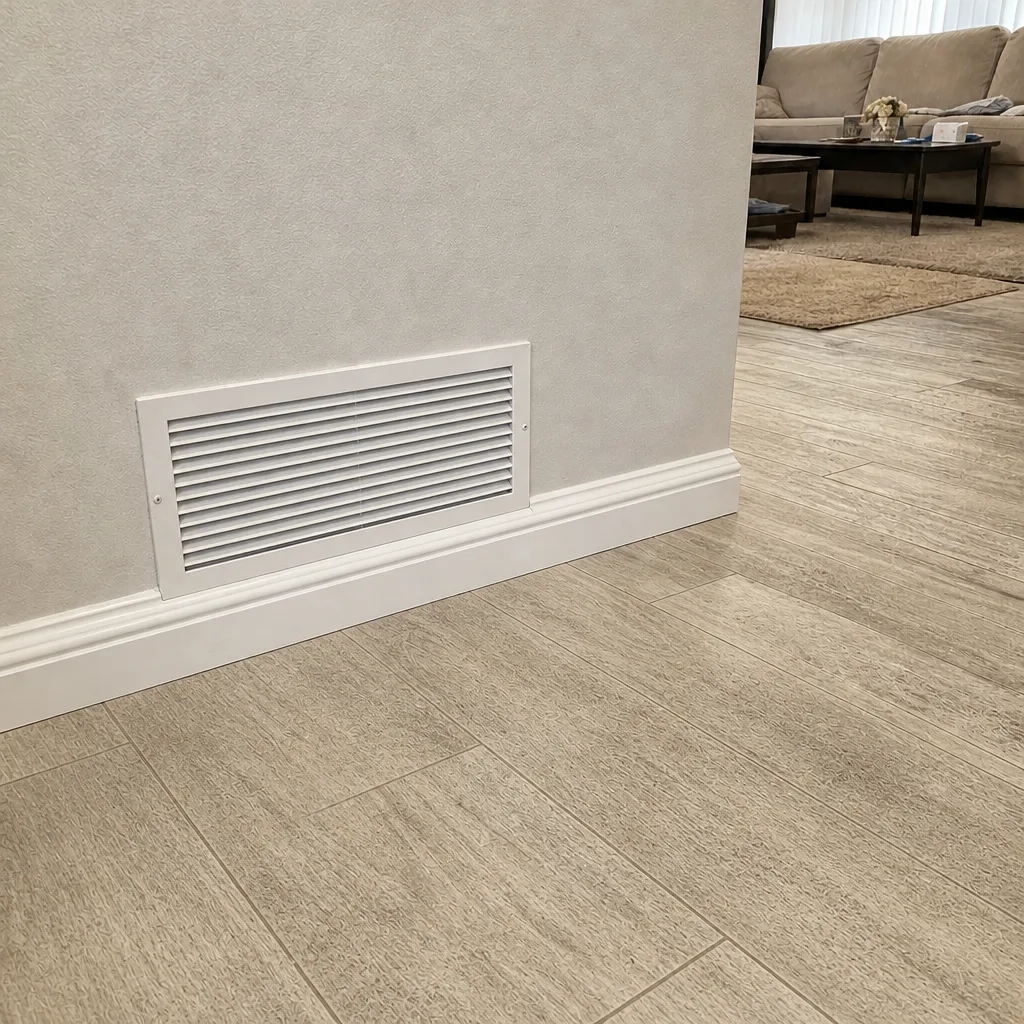 After
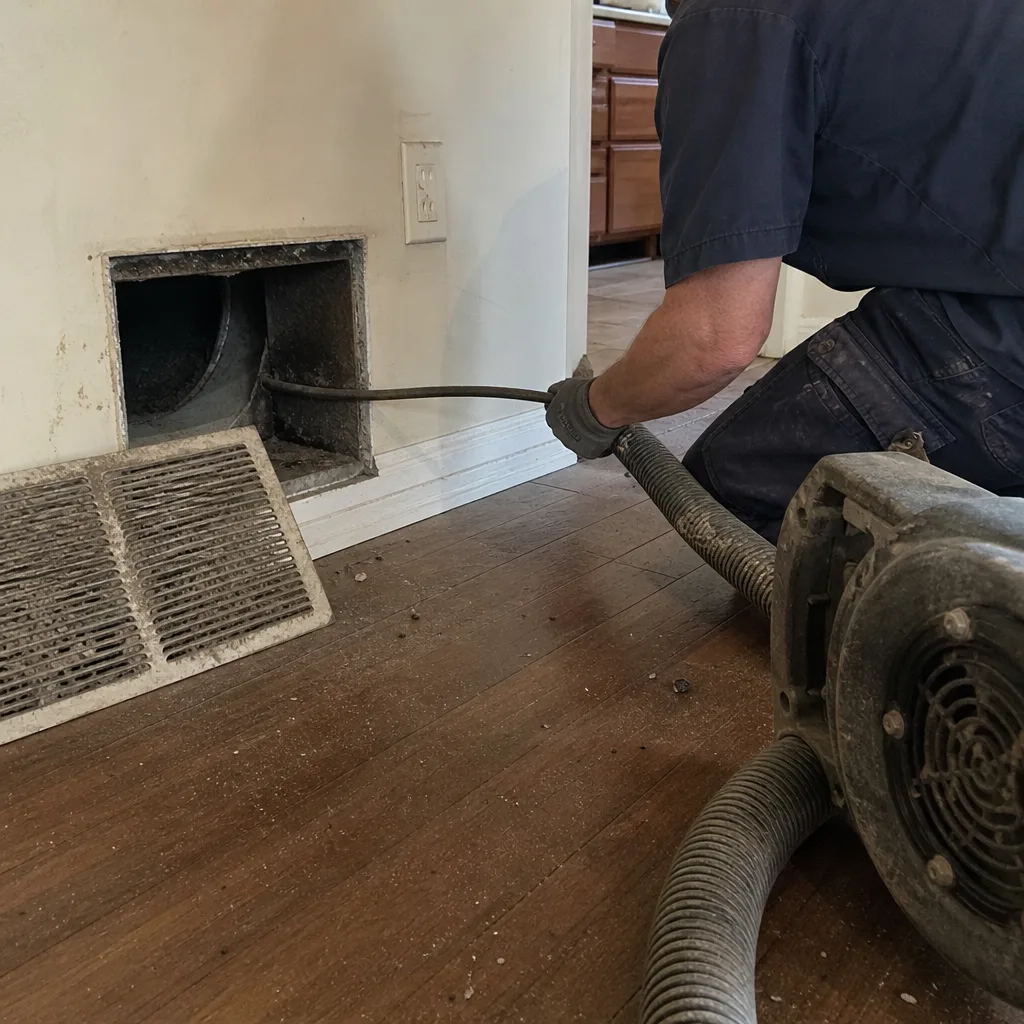 Before
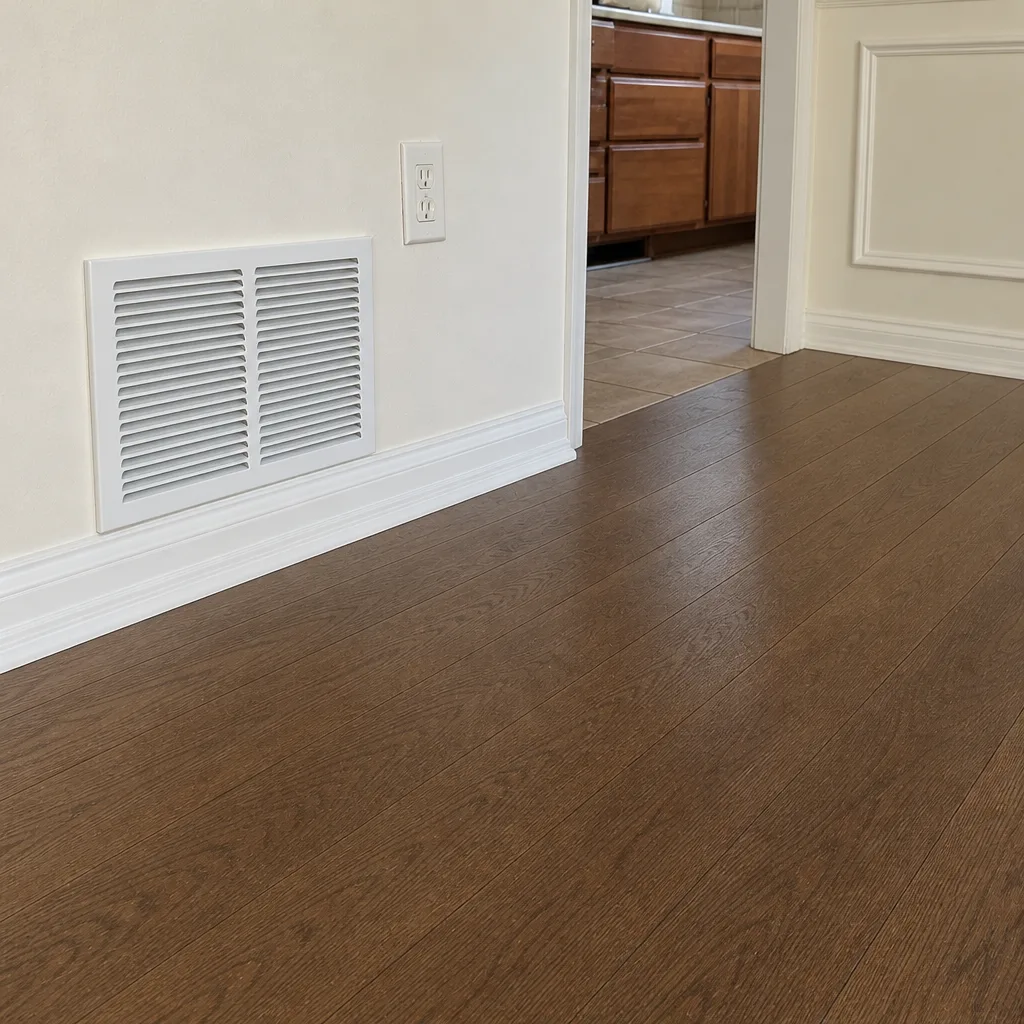 After
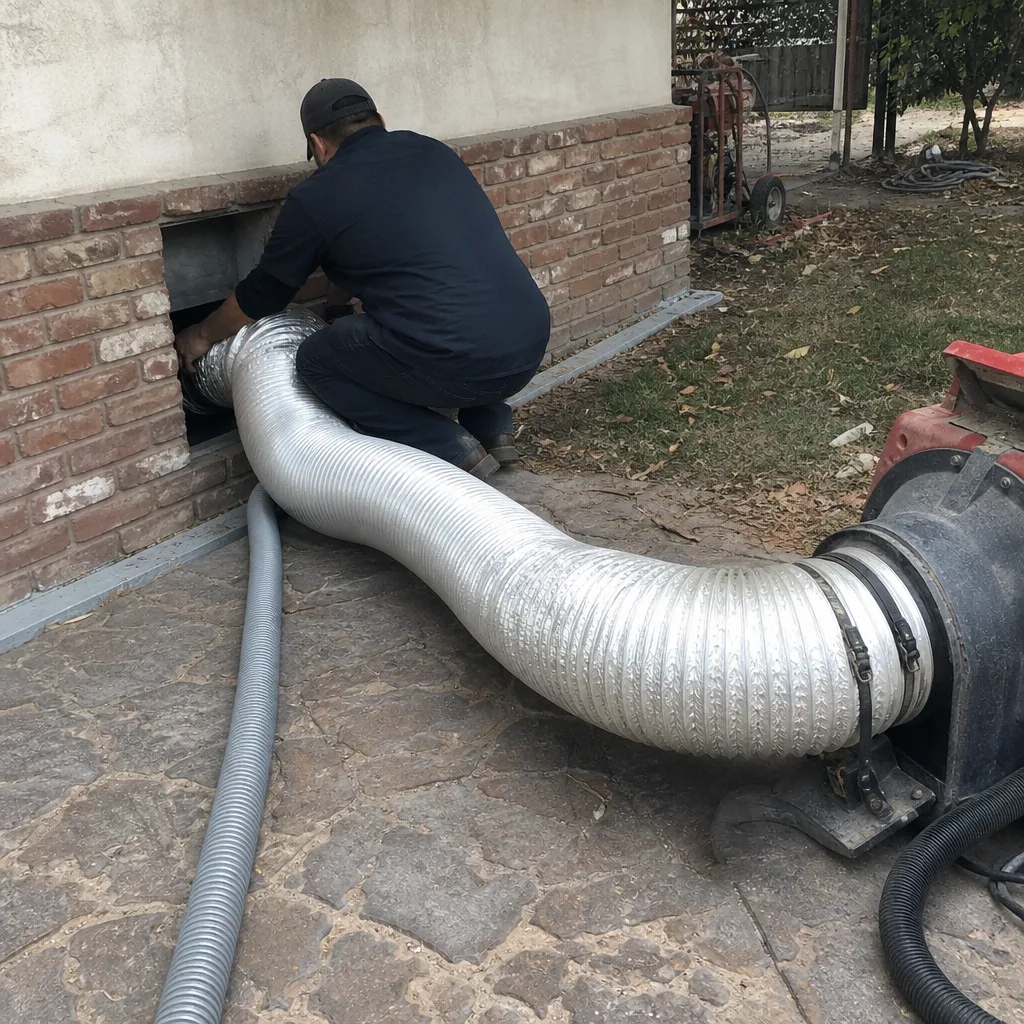 Before
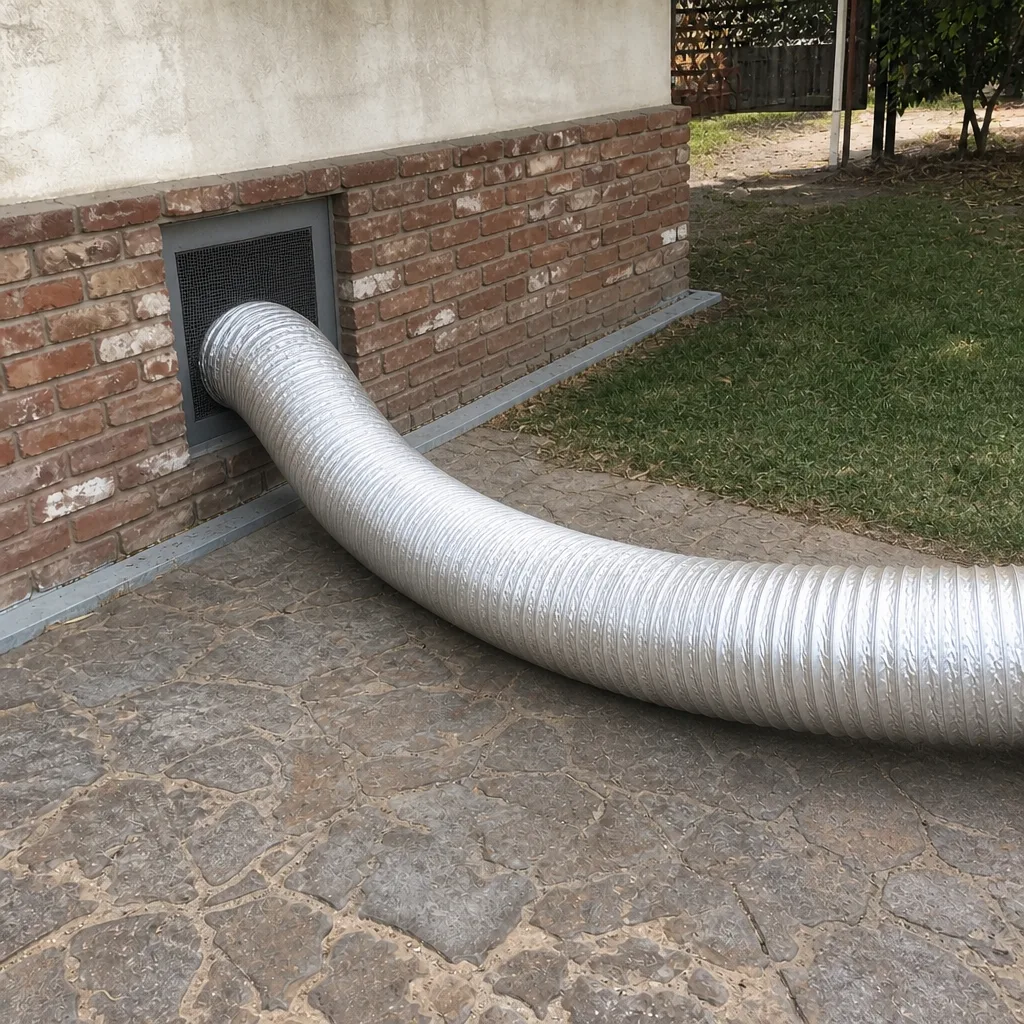 After
When to Call a Professional
Some jobs need a professional, and duct cleaning is one. Call when you see visible dust or debris inside the registers or when a register face gets dusty again within days of wiping it down. Call when the house smells musty or smoky when the system first comes on, or when allergy or asthma symptoms get worse during high-runtime months. Call when a renovation or a move-in leaves you unsure whether the ducts were ever serviced, or when the dryer takes more than one cycle to dry a load. Call when you suspect a disconnected flex run or leaking seam. Duct Cleaning Visalia offers free estimates in Visalia – call (855) 970-3448. We answer 24/7. Fast dispatch from 7am to 7pm, Sunday through Friday.
Frequently Asked Questions
The price is set per job by a written estimate after the system is assessed, because duct count, material, and condition vary from home to home. There’s no honest per-vent figure – a whole-system price is the only number that tells you what the job actually costs. Call (855) 970-3448 for a free estimate.
Largely because they cover less of the system. A low quote often skips the return chase and plenum, uses a shop-vac instead of HEPA-rated equipment, or runs a generic brush through flex duct without adjusting. The low price is real; the standard isn’t met. Ask each operator exactly what the price includes and whether they take before-and-after photos. Call (855) 970-3448 for an exact quote – estimates are free.
Ask for interior before-and-after photos of your own ducts, static pressure readings taken before and after, and a walkthrough of the system with the technician before they leave. A professional shop expects all three. If an operator can’t provide them, that tells you something. Call (855) 970-3448 to book an estimate.
More often than the national 3-to-5-year guideline suggests, because Valley dust and long summer runtime load the system faster. Many homes here benefit from an inspection well before that interval. The interval follows from the inspection, not a calendar. Call (855) 970-3448 for a free assessment.
Yes. Flex duct needs a gentler rotary brush pass and care at kinks and seams, while rigid sheet metal takes a more aggressive pass with attention to corners and interior insulation. A cleaner who runs the same head through both is using the wrong method on at least one. Call (855) 970-3448 if you’re unsure what your home has.
Yes. Dryer vent cleaning is available as a standalone service, and it’s a documented annual fire-prevention measure recommended by the U.S. Fire Administration. You don’t have to wait for a full duct cleaning to have the dryer vent cleared. Call (855) 970-3448 for an estimate.
The Bottom Line
Visalia is a hard place on ductwork. The Valley’s agricultural dust, fire-season ash, and long summer runtime load systems faster than the national 3-to-5-year guideline assumes, and the cleaning method has to match the duct material – flex or sheet metal – or the job makes things worse. Source removal, contained with HEPA-rated equipment and verified with before-and-after photos and static pressure readings, is the standard to hold any operator to. Cleaning and repair belong in the same visit, and the dryer vent is a fire-prevention item, not a checkbox. Get the interior photos, get the readings, walk the system. If you want a straight read on where your Visalia ducts stand, start with Duct Cleaning Visalia.
Call (855) 970-3448 for a free estimate. We answer 24/7. Fast dispatch from 7am to 7pm, Sunday through Friday. We’ll inspect the system, tell you what it actually needs, and give you a written estimate before any work starts – one flat price per system, agreed up front. Air you can’t see deserves equipment you can trust.
Written by the team at Duct Cleaning Visalia.